Masai Mara Photography Tour this Season to Catch the River Crossing
Trying to time your Masai Mara photography tour around the one moment every wildlife photographer dreams of, the river crossing? You’re asking the right question at the right time. Nail the timing, and you could be lying flat on a riverbank as a thousand wildebeest thunder past your lens. Miss it by two weeks, and you’re photographing empty water.
We’re Mara Siligi Camp, and photography isn’t a side offering for us , it’s who we are. Our camp is co-founded by Usha Harish, a wildlife photographer who has spent years reading this exact stretch of the Mara and mentoring guests on every masai mara photo tour she leads. This guide shares what we actually tell our guests when they ask us to time their Masai Mara photography tour packages around the crossing, not what a generic travel calendar says.
Table of Contents
- What Makes a Masai Mara Photography Tour Different From a Regular Safari
- When to Go: The Best Weeks to Catch the River Crossing
- Masai Mara Photography Tour Packages: What’s Included
- Where the Crossings Happen: Talek River and Beyond
- Gear, Vehicles, and Guiding That Actually Help Your Shots
- How to Book Your Masai Mara Photography Tour With Mara Siligi Camp
What Makes a Masai Mara Photography Tour Different From a Regular Safari
A regular game drive is built for sightseeing. A Masai Mara photography tour is built for light, patience, and positioning — three things a standard itinerary rarely prioritizes.
Here’s what actually changes when photography is the point of the trip:
- Drives are timed for light, not convenience. You’re out before sunrise and still shooting after most vehicles have turned back for dinner.
- Vehicles wait instead of rushing. A regular safari moves on after a quick look. A masai mara photo safari stays, because the best shot often comes ten minutes after everyone else leaves.
- Guides think in frames, not just sightings. Positioning for backlight, side light, or a clean background matters as much as finding the animal itself.
- Groups stay small. We keep it to three or four photographers per vehicle, so nobody’s shooting over someone’s shoulder.
If you’ve done a standard safari before and felt like you were always a beat behind the action, that’s exactly the gap a proper masai mara photography safari closes. It’s the difference between seeing wildlife and actually capturing it.
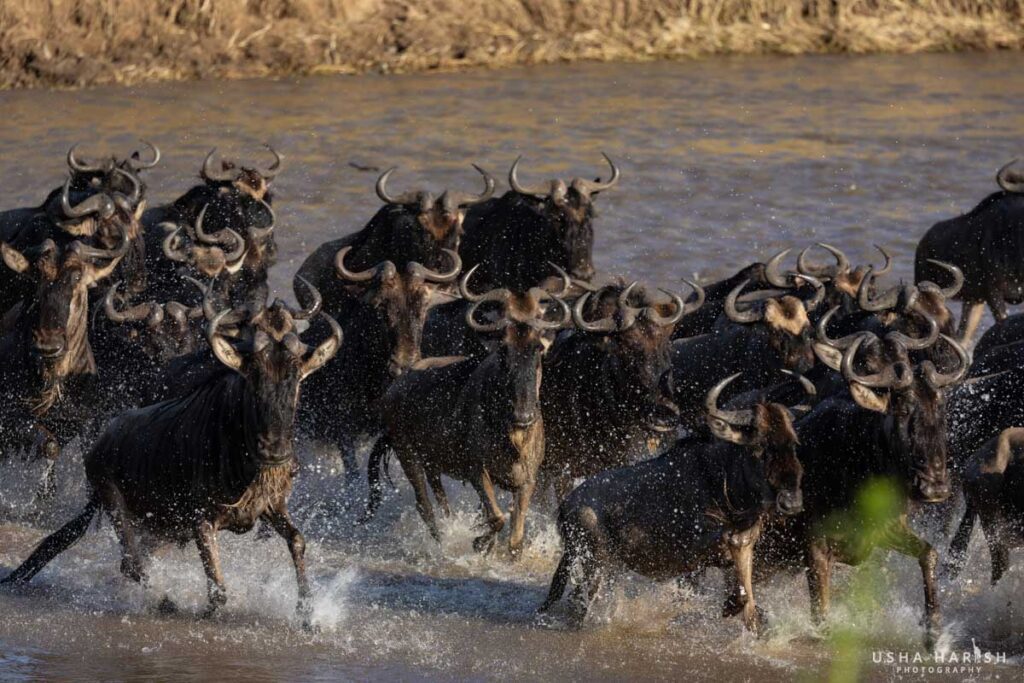
This distinction matters even more during migration season, when timing a shot can mean the difference between a photo of wildebeest grazing and a photo of wildebeest mid-leap into the water, spray flying, a crocodile’s jaw just visible below the surface.
It’s also why comparing a maasai mara photography trip to a generic kenya wildlife photography safari across multiple parks can be misleading. Spreading your days across several reserves sounds efficient, but it usually means less time at any single location — and migration photography rewards depth over breadth. One well-timed, well-located base beats three rushed stops every time.
When to Go: The Best Weeks to Catch the River Crossing
This is the question we get more than any other, so let’s be direct about it.
- Late June — Early herds start arriving from the Serengeti. Crossings are possible but not consistent. Fewer vehicles at the river, though, which photographers love.
- July — Activity builds steadily. This is when serious wildebeest migration photo tour bookings start filling up fast.
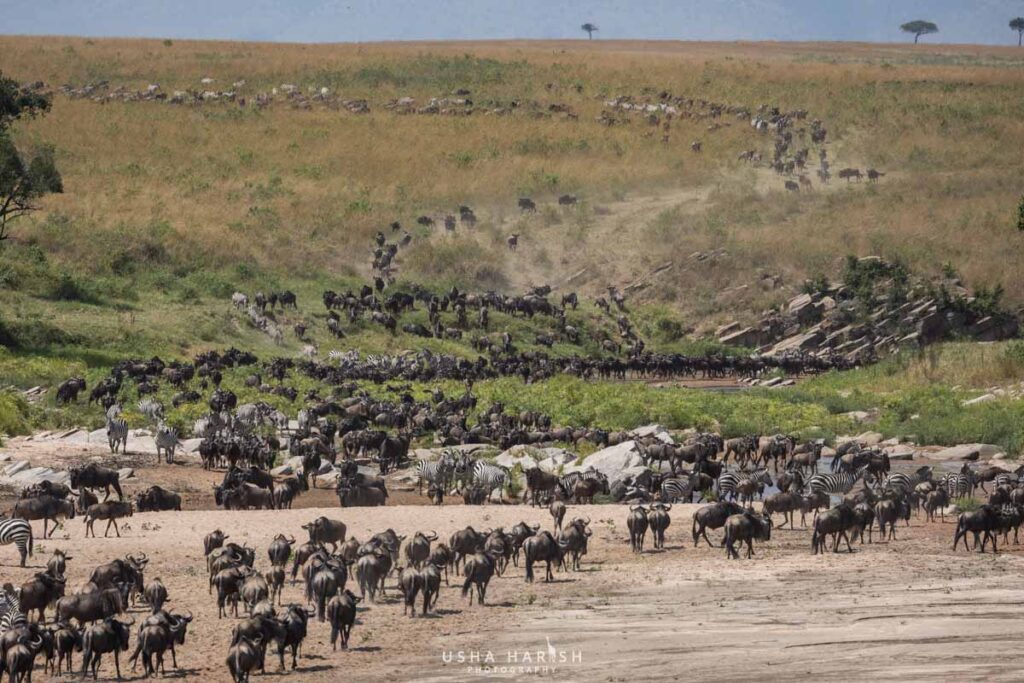
- Mid-August to mid-September — This is the sweet spot. The herds are concentrated near the river systems, and crossing attempts happen most frequently during this window. If you only have one shot at photographing a crossing, aim here.
- Late September into October — Herds are still present and moving, crowds thin out a little, and the light stays excellent. A strong choice if you want migration photography without peak-week vehicle congestion at the banks.
Here’s the honest part: no operator, guidebook, can promise you a crossing on a specific day. Wildebeest don’t check calendars. What does improve your odds dramatically is staying close enough to the river that your guide can reposition the moment word comes through that herds are massing at the banks. That’s a location advantage, not a lucky guess.
We recommend a minimum of four nights if a river crossing is your primary goal. Herds can sit at the water’s edge for hours, sometimes days, building up courage before they cross, and a longer stay gives your guide more chances to have you there when it finally happens.
If you’re weighing the best time for photography safari trips more broadly, not just for crossings, the dry months from July through October also give you the clearest skies, the driest tracks, and the most predictable golden hour light. Green season (November to May) has its own charm for photographers who love dramatic storm skies and newborn wildlife, but if the crossing is the shot you’re chasing, the migration window is non-negotiable.
Masai Mara Photography Tour Packages: What’s Included
Not all Masai Mara photography tour packages are built the same, and the difference shows up the moment you’re in the vehicle. Here’s what should be standard in any package worth booking:
- Photographer-first scheduling — early departures, late returns, and flexibility to stay at a sighting instead of moving on by the clock
- Small groups — three to four photographers per vehicle, not a full truck of mixed-interest tourists
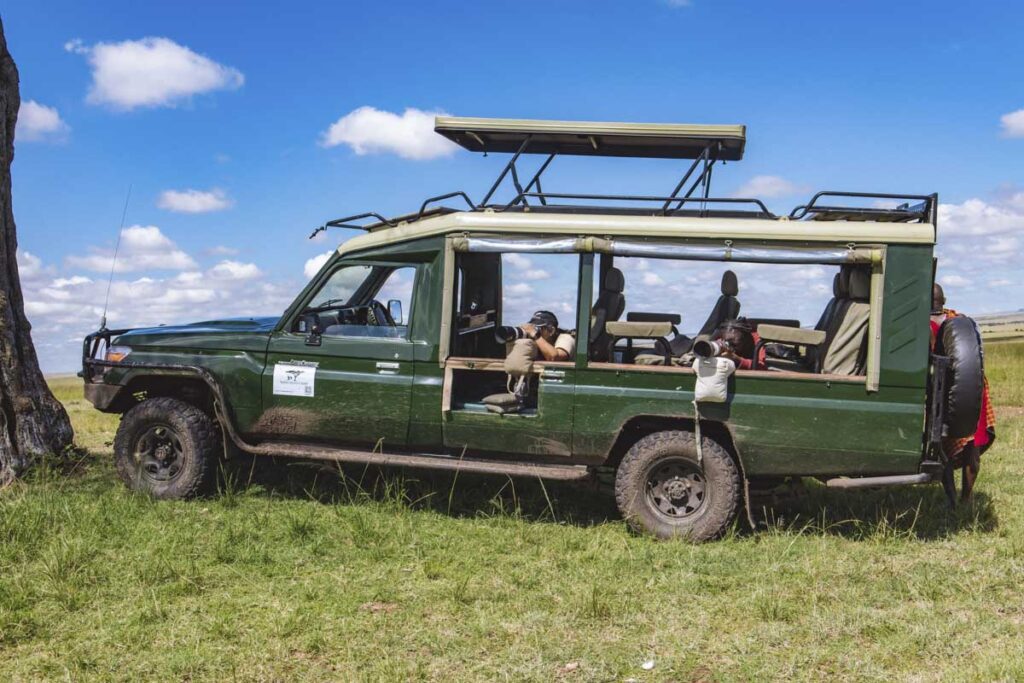
- Open-sided 4×4 vehicles — built for low-angle shooting and unobstructed sightlines, not standard tour-van windows
- Guiding that understands behavior, not just location — a guide who can read a cheetah’s crouch or a herd’s hesitation at the water’s edge is worth far more than one who simply knows where animals were yesterday
- Accommodation and meals built around your schedule — packed breakfasts for early drives, and a kitchen that can adjust meal timing around golden hour rather than the other way around
At Mara Siligi Camp, every one of our Masai Mara photography tour itineraries includes one-on-one mentoring from experienced photography guides, so whether you’re a beginner or a working professional, you’re getting feedback in real time, not just a driver.
We also structure our masai mara wildlife photography tour options in flexible lengths. three, four, five, or seven days. so you can match the trip to your actual goals. A quick three-day trip works if you’re combining the Mara with another destination. A five- to seven-day trip gives you the depth needed for migration-specific photography, when patience at the river pays off more than mileage covered.
Where the Crossings Happen: Talek River and Beyond
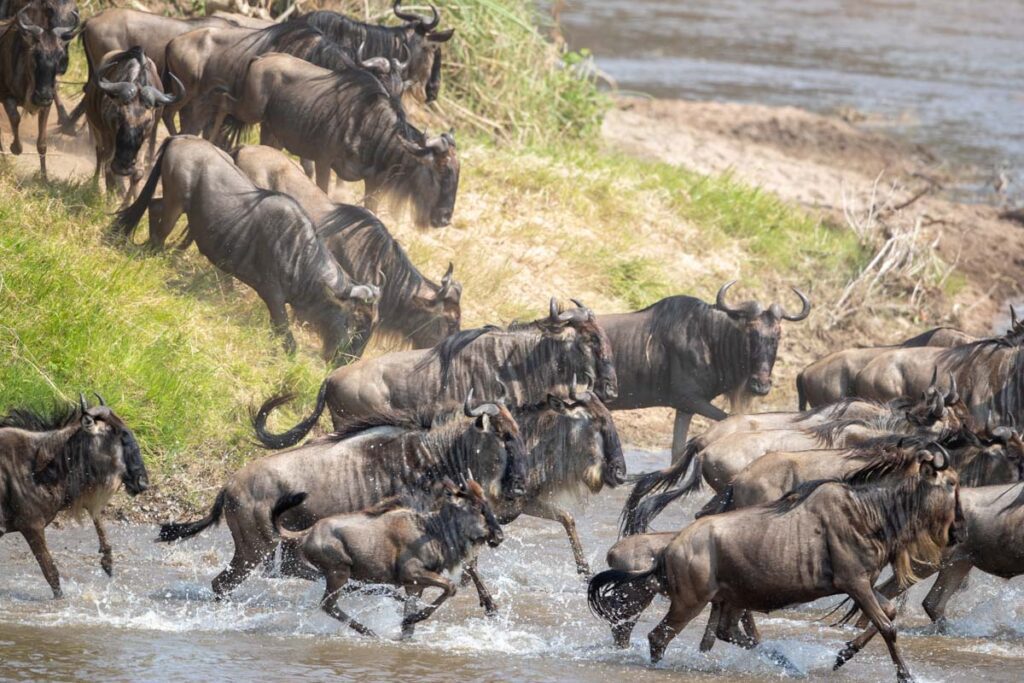
Photographers often assume there’s one single “crossing point,” but the Mara’s river systems create several active zones, and knowing them changes how you plan your trip.
- Talek River — Close to our camp, and one of the most consistently active zones during peak migration weeks. Its proximity means shorter response times when a crossing begins.
- Mara River — The most famous crossing location, associated with the largest herds and the most dramatic, high-volume scenes — but also the most crowded with vehicles during peak season.
- Sand River area — Quieter, less crowded, and worth considering if you’d rather trade herd size for elbow room at the bank.
Being based near Talek gives our guests a real edge here. When word comes through on the radio network that a crossing is building, minutes matter, and a camp positioned this close means you’re often already close enough to reposition before the moment passes. This is one of the clearest examples of why camp location is worth paying attention to when you’re comparing photography safari africa operators: proximity isn’t a nice-to-have, it’s the difference between capturing the moment and hearing about it from another vehicle afterward.
Gear, Vehicles, and Guiding That Actually Help Your Shots
You don’t need professional-grade equipment to get incredible images here, but a few choices make a real difference:
Camera gear
- A DSLR or mirrorless body with a zoom lens in the 200mm–600mm range for wildlife
- Extra batteries and memory cards, cold mornings and long drives drain both faster than expected
- A bean bag or monopod for vehicle stability, since tripods rarely work well in a moving 4×4
Vehicles
- Open-sided 4×4 Land Cruisers give you the low, unobstructed angles a closed-window van simply can’t offer
- Roof hatches help for wider shots of herds and landscapes, especially during a crossing when the scale of the scene matters as much as the individual animals
Guiding
- A guide who reads body language, ears back, tension building at the riverbank, a matriarch testing the water, gives you seconds of advance warning that make the difference between catching the leap and catching the splash
- Vehicle positioning for light direction matters more than proximity alone; a guide who angles for backlight during a crossing captures spray and motion in a way a straight-on shot never will
None of this replaces the fundamentals of a good masai mara photo safari, patience, timing, and a willingness to wait. But paired with the right guide and the right seat in the vehicle, your odds of walking away with a genuinely striking frame go up considerably.
We say this a lot, but it’s worth repeating: across every wildlife photography safari africa destination we’ve compared notes with other guides about, none offer the same combination of river-crossing density and camp proximity that the Mara does during peak season. That combination is what turns “we saw wildebeest” into “we watched them cross, and I got the shot.”
How to Book Your Masai Mara Photography Tour With Mara Siligi Camp
By now you’ve got a clear picture of the moving pieces: timing, location, package inclusions, and gear. Here’s how to pull it together.
- Lock in your dates early, especially if you’re targeting mid-August to mid-September — this window books out fastest every year.
- Choose a camp with river proximity, not just a Masai Mara address. The distance between your tent and the crossing point matters more than any brochure photo.
- Confirm group size before you book. Ask directly how many photographers will share your vehicle.
- Ask what mentoring is included. A guide is essential; a guide who also teaches you to read light and behavior is what turns a good trip into a portfolio-building one.
We live here, we shoot here, and we’ve spent years learning exactly where the light lands and where the herds gather. Usha’s own journey, from photographing this landscape as a personal passion to mentoring guests through usha harish photography sessions on every drive, shapes how we build each trip. It’s less a business transaction and more a story passed from one photographer to the next, which is exactly the spirit behind the great migration photo tour experiences we run each season.
Whether you’re after your first great wildlife shot or your next great migration frame, tell us your dates and your photography goals, and we’ll build a Masai Mara photography tour around exactly what you’re chasing.
FAQs
Mid-August into early September consistently sees the most crossing activity, though nature never guarantees an exact date.
Four nights minimum. Crossings can take hours or days to happen, and a longer stay means more chances to be there when it finally does.
No. A zoom lens in the 200–600mm range and a stable vehicle position matter more than having the most expensive body on the market.
Yes. Our masai mara photography safari guides mentor photographers at every level, from first-timers to working professionals refining their portfolio.