Wildebeest Migration Masai Safari Packages 2026
Planning a Great Migration trip and wondering what you actually need to pay extra for? You’re not alone. Every year, we get the same question from travelers comparing wildebeest migration safari packages 2026: what’s a genuine upgrade, and what’s just clever marketing?
At Mara Siligi Camp, we’ve hosted travelers through migration season after migration season, and we know exactly where your money makes a real difference, and where it doesn’t. Whether you’re comparing Masai Mara safari packages from three different operators or shortlisting the best masai mara migration packages for July, this guide breaks it all down so you can book with confidence, not guesswork.
We’re the camp, founded by Usha, a wildlife photographer, and Jacob, a Masai guide who has worked this land his whole life. Together they built Mara Siligi from barren ground into a 10-tent eco camp that now holds a 5.0 rating across more than 1,200 reviews on Google and TripAdvisor. That’s the perspective behind everything in this guide: real seasons on the ground, not a sales script.
Table of Contents:
- What’s Actually Included in Wildebeest Migration Safari Packages 2026
- Masai Mara Tour Packages: Why Camp Location Changes Everything
- Best Time to Visit Masai Mara for the Great Migration
- Masai Mara Safari Package Types Worth Paying For
- What’s Not Worth Paying Extra For
- How to Choose Your Masai Mara Holiday Package
What’s Actually Included in Wildebeest Migration Safari Packages 2026
Before you compare prices, you need to know what you’re actually comparing. A lot of operators quote low numbers, then add on the essentials later. Here’s what should already be part of any solid Masai Mara safari package:
- Accommodation — a tent, room, or lodge for every night of your stay
- Daily guided game drives — with an experienced, local driver-guide
- Park entry fees — these are non-negotiable and change often, so confirm they’re included
- All meals — breakfast, lunch, and dinner, not just “breakfast included”
- A qualified Masai guide — someone who reads the land, not just a map
At Mara Siligi Camp, we build every one of our Masai Mara tour packages around this exact list, so there’s nothing to negotiate once you land.
Where you should expect to pay more is for genuine upgrades: private vehicles, extended game drives, hot air balloon rides, or a camp positioned closer to the migration corridors. That’s real value.
A few smaller inclusions matter more than people expect once they’re actually on safari:
- Dietary accommodation — vegetarian, vegan, gluten-free, and allergy-specific meals shouldn’t cost extra or feel like an afterthought
- A packed breakfast and lunch option — for full-day drives, so you’re not rushing back to camp and missing golden hour sightings
- A lounge with WiFi — useful when you need to check in with home, even while you’re mostly here to disconnect
- A common area for downtime — a bonfire spot, a dining room, or a massage area after a long day in the vehicle
These aren’t luxuries. They’re the difference between a package that looks good on paper and one that actually holds up once you’re living inside it for four or five days.
Masai Mara Tour Packages: Why Camp Location Changes Everything
Here’s something most brochures won’t tell you: two travelers can book the same “migration safari” and have completely different trips, simply because of where their camp sits.
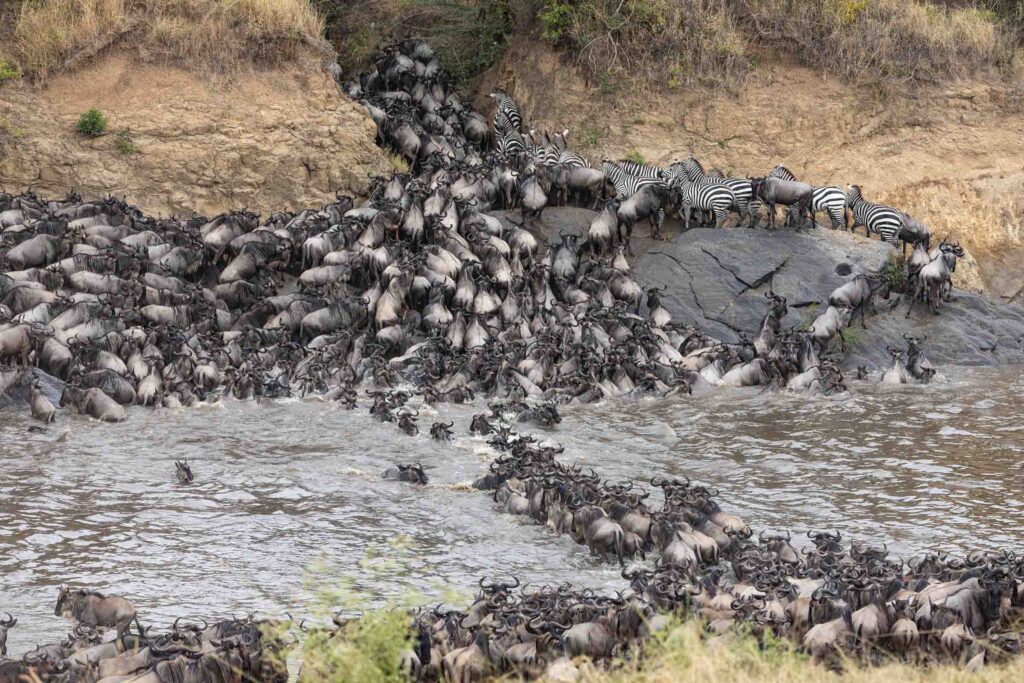
We’re based at the foothills of Oldonyo Loip Hill, just minutes from both the Mpuaai (Ol Kiombo) and Talek gates and that location is deliberate. When you’re chasing the Great Migration, every extra hour on the road is an hour you’re not watching wildebeest and zebra cross the Mara River.
Ask any operator these questions before you book your Masai Mara travel package:
- How far is the camp from the nearest gate?
- How long is the drive to known migration crossing points?
- Do you share vehicles with other camps, or do you have your own?
- Is the route tarmac, or will you spend hours on rough roads?
A camp positioned well inside the action is worth paying for. A camp that’s technically “near Masai Mara” but 90 minutes from the reserve gate is not, no matter how nice the marketing photos look.
This is also why we’re picky about what we call our accommodations. Our ten eco tents sit close enough to the reserve that you spend your mornings watching wildlife, not staring out a bus window.
Here’s what that location actually looks like in practice. Mara Siligi Camp sits at the foothills of Oldonyo Loip Hill, about 10 minutes from Mpuaai (formerly Ol Kiombo) Gate and 15 minutes from Talek Gate. We’re a small, intentional camp, ten eco tents, a maximum of 27 guests at any time, so you’re never one of hundreds funneled through a big-resort itinerary. You’re a name our team knows by your second morning, not a booking number.
That size also means:
- Faster park access — you’re inside the reserve while other camps’ guests are still on the access road
- Smaller, more attentive vehicles — no thirty-strong convoys crowding the same sighting
- A team that actually knows you — dietary needs, photography goals, honeymoon plans, all remembered without you repeating yourself daily
None of this shows up in a brochure photo. It shows up on day two, when you’re already at a river crossing while a bus from a distant lodge is still working through the gate queue.
Best Time to Visit Masai Mara for the Great Migration
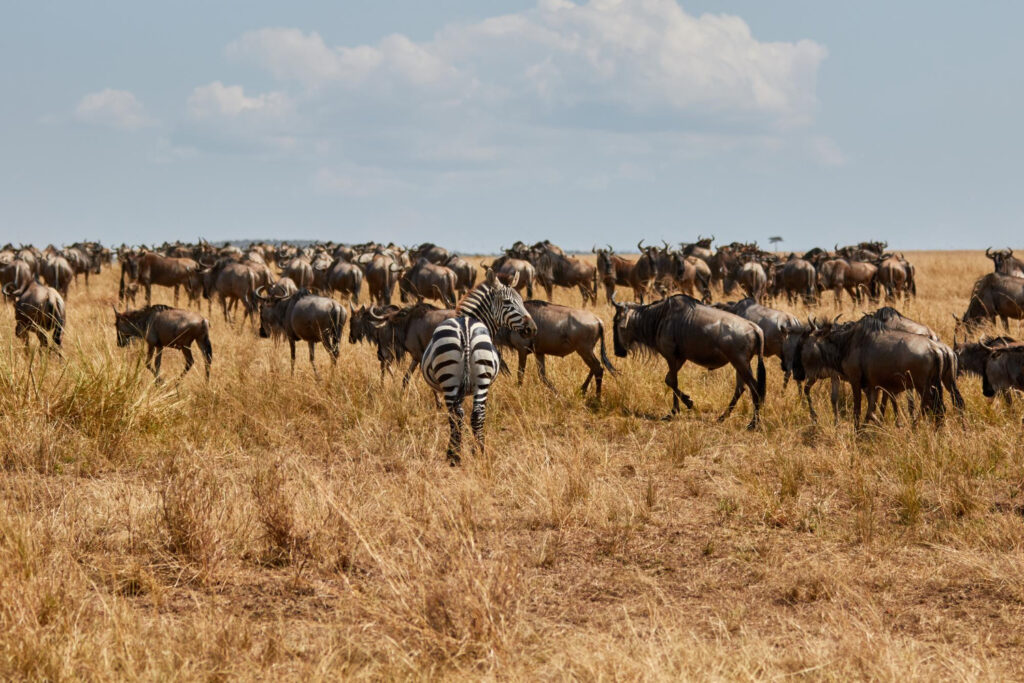
If you’re asking about the best time to visit Masai Mara for migration, here’s the honest answer: it depends on what you want to see, not just the calendar.
- July to September — Peak river-crossing season. This is when you’ll likely catch dramatic scenes at the Mara River, with predators waiting on the banks. Book early; camps fill up fast.
- October — Herds are still moving through the reserve, crowds start thinning, and prices often drop slightly. A great window if you want migration energy without peak-season chaos.
- Late June — The early arrivals start showing up. You get a preview of the action with fewer vehicles around.
- Mid-August to mid-September — This tight window sees the most reliable river-crossing activity of the entire year. It’s also the window that books out fastest, so if you’re set on this stretch, start planning now rather than in June.
No single week guarantees a crossing, wildlife doesn’t follow spreadsheets. But staying at a camp close to the migration routes (like ours) means when a crossing does happen, you’re minutes away, not hours. That single factor does more for your odds than any date on a calendar.
If your dates are flexible, ask your camp directly rather than relying on a generic calendar you found online. Herd movement shifts a little every year based on rainfall, and a camp with guides on the ground daily will always give you sharper timing than a static blog post, including this one. We recommend a minimum of three nights for any Masai Mara safari package built around migration season, since it gives your guide more chances to reposition around where the herds actually are, rather than where they were expected to be.
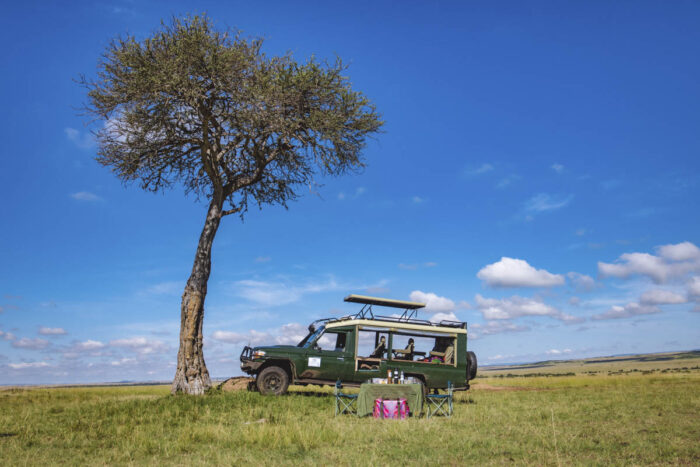
Masai Mara Safari Package Types Worth Paying For
Not every traveler needs the same trip, and a good Masai Mara safari package should flex around you, not the other way around. Here’s how we see it play out:
Couples and honeymooners
- Private sundowners with a view over the plains
- Secluded tents with their own deck
- Bush dinners set up away from the main dining area
If you’re comparing masai mara packages for couple trips, this is where the extra spend genuinely shows up in the experience, privacy is hard to fake.
Honeymooners specifically
- A tent set up with small, thoughtful touches on arrival
- A private bush dinner, not a shared dining hall booking
- A guide who paces the day around the two of you, not a fixed group schedule
Couples consistently tell us the same thing afterward: they didn’t expect it to feel this personal. That’s the gap between a package that lists “romantic add-ons” and one that’s actually built around two people, not twenty.
Solo travelers
- Standard tents sized appropriately, so you’re not paying a forced double-occupancy rate
- The option to join a small shared vehicle or request a private drive
- A camp small enough that you’re never lost in a crowd of strangers
Families
- Shorter, flexible game drives that work around kids’ energy levels
- Spacious tents so nobody’s tripping over each other
- Guides who know how to keep younger travelers engaged, not just informed
A masai mara family package built around comfort and pacing is worth more than one built purely around ticking off sightings.
Photographers and serious wildlife lovers
- Small group vehicles (four guests max, ideally)
- Guides trained to read predator and migration behavior, not just drive routes
- Flexibility to wait at a crossing point instead of rushing to the next stop
Groups and multi-generational trips
- Multiple vehicles so nobody’s squeezed in
- All-inclusive structuring so costs stay predictable across the group
Whatever category you fall into, this is exactly why we tailor our Masai Mara holiday package options instead of forcing everyone into one fixed itinerary. And if predictable budgeting matters to you, our masai mara all inclusive packages fold in meals, drives, and park fees upfront, so there’s nothing to calculate once you arrive.
What’s Not Worth Paying Extra For
Let’s talk about the upsells that sound impressive but rarely deliver:
- “Exclusive” migration guarantees — nobody, anywhere, can promise wildlife will perform on schedule. Be wary of any package that claims otherwise.
- Overly long itineraries with padding days — more nights don’t always mean more migration. Ask what each specific day includes before you pay for length alone.
- Vague “luxury” pricing without a location advantage — if the camp is far from the action, luxury tents don’t make up for hours lost in transit.
- Add-ons bundled without a breakdown — always ask for an itemized quote. If a provider won’t break down what’s inside your masai mara trip package, that’s a red flag, not a shortcut.
- Generic “big resort” pricing for a small-camp experience — if you’re paying premium rates but still get herded through group itineraries, you’re paying for a brand name, not for access.
- Rushed multi-park combos during peak migration week — squeezing Amboseli or Lake Nakuru into the same trip as your migration days can mean less time at the one event you actually came for. Save the multi-park combo for outside peak week, or extend your trip instead of compressing it.
The migration itself is free. What you’re really paying for is access, timing, and guiding, not extra frills that don’t move the needle on your actual sightings.
How to Choose Your Masai Mara Holiday Package
By now you’ve got a clearer picture of where your money should go. So how do you actually pick the right fit?
- Start with your dates. Peak migration months book out months in advance, so lock in your camp early.
- Confirm what’s included, using the checklist from earlier in this guide — accommodation, meals, guiding, and park fees, in writing.
- Ask about vehicle sharing. Private drives change everything during migration season.
- Match the package to your travel style — romantic, family, photography-focused, or group — instead of accepting a one-size-fits-all itinerary. A well-matched Masai Mara travel package should feel personal, not generic.
- Talk directly to the camp, not just a booking agent. You’ll get faster, more accurate answers about real-time conditions on the ground.
That last point matters more than people realize. At Mara Siligi Camp, when you reach out to us about our masai mara safari tours or any of our masai mara great migration itineraries, you’re talking to the people who will actually host you, guide you, and cook for you during your stay.
We’ve built our Masai Mara Great Migration safari experiences and masai mara wildebeest migration itineraries around one simple idea: put you close enough to the action that the trip pays for itself in memories, not in marketing.
Tell us your travel dates, your group size, and what matters most to you, and we’ll put together a personalized quote within 24 hours, no guesswork, no hidden line items, just an honest plan for your 2026 migration season.
Frequently Asked Questions
Three nights minimum. Four or five gives your guide more flexibility to reposition around where the herds actually are that week.
No operator can honestly guarantee it — crossings depend on the herd, the weather, and the day. Staying close to the crossing points gives you the best realistic odds.
Yes, if photography or flexibility matters to you. Shared vehicles mean shared schedules; private vehicles let your guide wait at a crossing point as long as it takes.
Yes — vegetarian, vegan, gluten-free, and allergy-specific meals should be a standard inclusion, not an upcharge, at any camp worth booking with.