5-Day Masai Mara Photography Tour Around the Great Migration
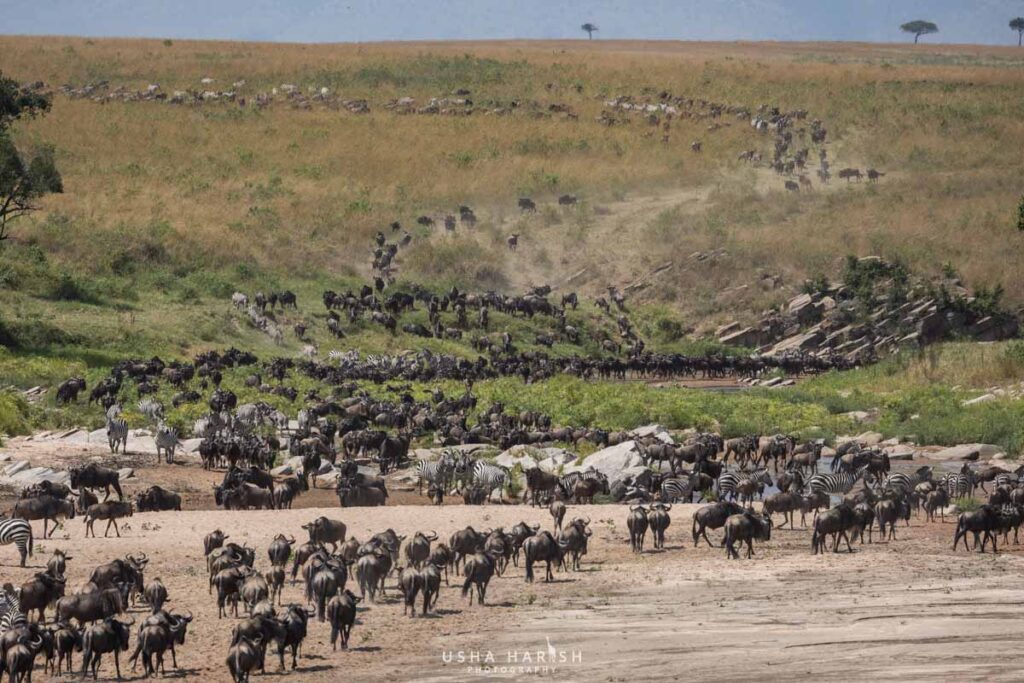
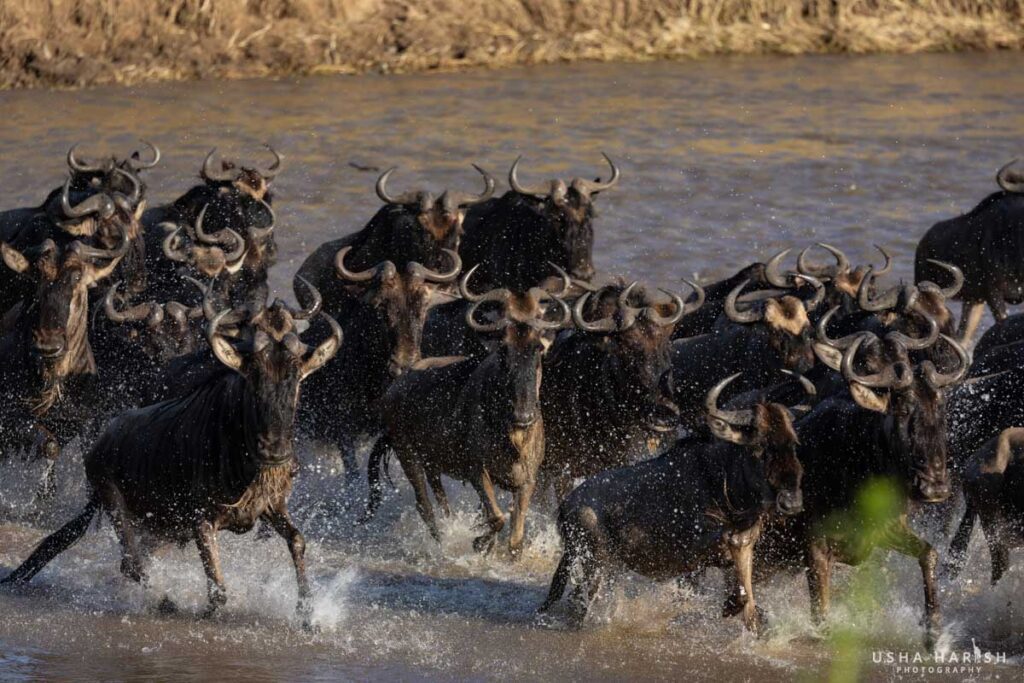
You’ve seen the photos, a wall of wildebeest thundering into the Mara River, dust hanging gold in the late light, a lioness watching it all from the grass. Now you want that shot to be yours.
A Masai Mara photography tour built around the Great Migration is one of the most rewarding trips you can take with a camera in hand. But five days go fast, and if you don’t plan them well, you’ll spend more time driving than shooting. That’s exactly why we’re breaking down how to plan yours, from timing your trip to packing the right gear to picking a base camp that actually understands photographers.
We’re Mara Siligi Camp, run by wildlife photographer Usha Harish, and we build every one of our safaris around light, timing, and the frame, not just the sighting. Here’s everything you need to plan your own 5-day trip.
Table of Contents
- Why a 5-Day Masai Mara Photography Tour Works for the Migration
- When to Go: Best Migration Weeks to Book Your Trip
- Your Day-by-Day 5-Day Photography Itinerary
- Camera Gear Checklist for the Mara
- Where You’ll Stay: Your Creative Base Camp
- How to Book Your Masai Mara Photography Tour
Why a 5-Day Masai Mara Photography Tour Works for the Migration
Five days is the sweet spot. It’s long enough to give you multiple shots at a river crossing (because the herds don’t run on your schedule), and short enough to keep the trip focused and affordable.
Here’s why we build most of our itineraries around this length:
- You get more than one chance at the “big” moment. Crossings can be unpredictable, herds gather at the riverbank for hours, sometimes days, before they commit. Five days gives you the buffer a two-day trip simply can’t.
- You have time to slow down. Great wildlife photography isn’t just about the chase. You need time to sit with a pride of lions, watch a cheetah scan the horizon, or wait out the light until it turns gold.
- You can rest and edit. A midday break means you’re not shooting flat, overhead light anyway, you’re back at camp, backing up cards, and reviewing your best frames from the morning drive.
- It fits real-world travel. Most of our guests are flying in from overseas. Five days on the ground is long enough to be worth the journey, without needing three weeks off work.
If you’re serious about coming home with a portfolio-worthy set of images, not just a memory-card full of average ones, five days gives your Masai Mara photography tour room to breathe.
Think about what actually happens on a rushed two-day safari: you land, you drive, you catch a handful of sightings from the wrong angle, and you fly out before the light ever really cooperates. A wildebeest migration photo tour stretched over five full days removes that pressure. You’re not desperate for every single drive to deliver, you know tomorrow morning brings another chance.
When to Go: Best Migration Weeks to Book Your Trip
Timing is everything here. The wildebeest and zebra migration isn’t a single event, it’s a months-long movement, and where the herds are on any given week changes your entire shot list.
A few things worth knowing before you pick your dates:
- July to October is peak migration season, when over a million wildebeest and zebra move through the Mara in search of fresh grazing, and it’s when the river crossings happen.
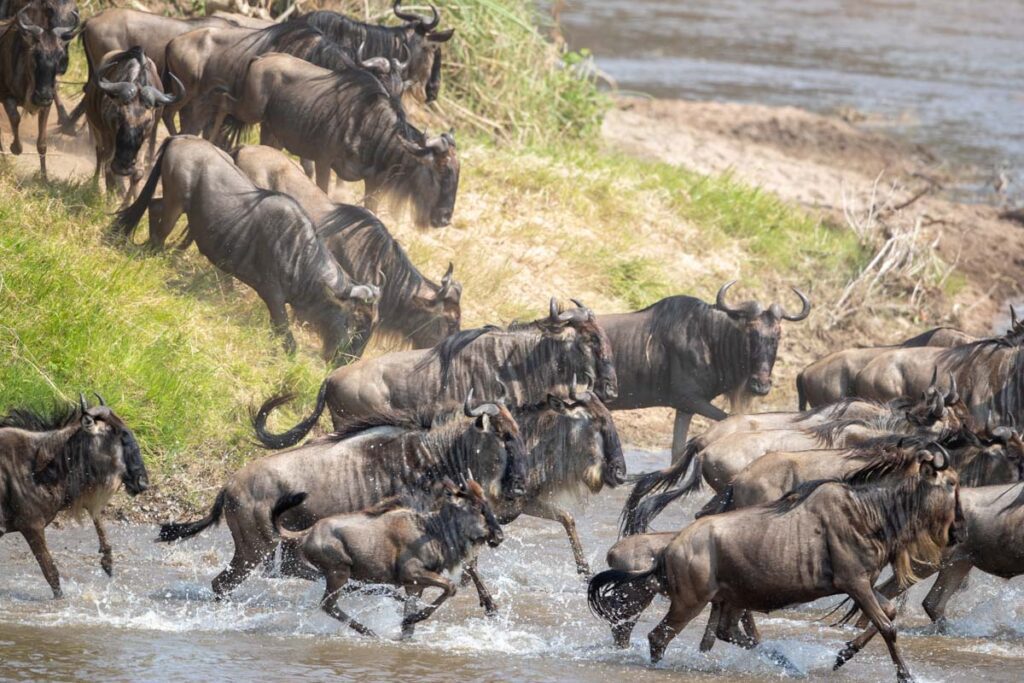
- Late July through September typically sees the most dramatic Mara River crossings, with crocodiles, tension at the riverbank, and dust-filled chaos as herds push across.
- Early morning and late afternoon are your best windows every single day, migration season or not, this is when the light is soft and the animals are most active.
- Shoulder months (June and November) can still deliver great sightings with smaller crowds at the river, if your priority is fewer vehicles in your frame.
We keep a close eye on herd movement throughout the season and adjust our game drives daily, so you’re always positioned where the action is likely to happen, not where it happened last week.
Guests often ask us about the best time for migration in Masai Mara, and honestly, there’s no single “perfect” week, the herds move based on rainfall and grazing, not a calendar. That’s why we recommend building in some flexibility around your target dates, and why we track conditions closely as your trip approaches so we can fine-tune your drives before you even land.
Your Day-by-Day 5-Day Photography Itinerary
Here’s a realistic breakdown of how a well-planned Masai Mara photography tour packages usually unfolds. Yours can flex depending on where the herds are, but this gives you a solid framework.
Day 1 — Arrival and First Golden Hour
- Fly into the Mara, settle into camp, and get your gear organized
- Head out for a late-afternoon orientation drive to find your bearings and catch your first golden-hour light
- End the day with a briefing on what the herds are doing that week
Day 2 — Big Cats and Behavior
- Early wake-up call for a sunrise drive, chasing the low, warm light photographers live for
- Spend the morning tracking lion prides, cheetahs, or leopards, positioning the vehicle for backlight and side light
- Midday break at camp to rest, download images, and review your shots
- Late-afternoon drive focused on predator activity as temperatures cool
Day 3 — The River and the Herds
- A full day dedicated to migration territory, watching herd movement near known crossing points
- Patience is part of the plan here, you might wait hours for a crossing, and that’s normal
- Pack a lunch and stay out through the heat of the day if the herds are building toward a crossing
Day 4 — Wide Shots and Wild Skies
- Focus on landscape and environmental portraits, acacia silhouettes, sweeping grasslands, storm light
- Optional add-on: a hot air balloon flight for a completely different perspective over the plains
- Evening bonfire session back at camp to review your best frames from the trip so far
Day 5 — Last Light and Departure
- One final sunrise drive to fill any gaps in your shot list
- Time to pack up, back up your files, and say goodbye before your transfer out
This structure has worked well across our Masai Mara photography tour packages, but we always stay flexible, if the herds move, so do we.
Camera Gear Checklist for the Mara
You don’t need to bring your entire studio, but a few essentials will make a real difference in the quality of what you bring home.
- Camera body — DSLR or mirrorless, ideally one you’re comfortable shooting in burst mode
- A telephoto lens, 300mm or longer — this is non-negotiable for wildlife, especially predators at a distance
- A wide-angle lens — for landscapes, camp shots, and environmental portraits of the herds
- Bean bag or monopod — vehicle stability matters more than a tripod out here
- Extra batteries and fast memory cards — cold mornings and long bursts drain power fast
- A backup drive — you’ll want to secure your images daily, not wait until you’re home
- A dust cover or rain sleeve — the Mara can be dusty and unpredictable, sometimes in the same afternoon
If you’re missing something on this list, don’t worry, we can usually help you problem-solve gear questions before you land.
One more tip: pack layers. Mornings in the Mara are cold enough for a jacket, and by midday you’ll want that same jacket off and tucked under your seat. Your gear bag should be just as
Where You’ll Stay: Your Creative Base Camp
Your accommodation matters more on a photography trip than a standard safari, because you’re not just sleeping there, you’re editing, charging gear, and planning your next drive.
At Mara Siligi Camp, we built our setup with photographers specifically in mind:
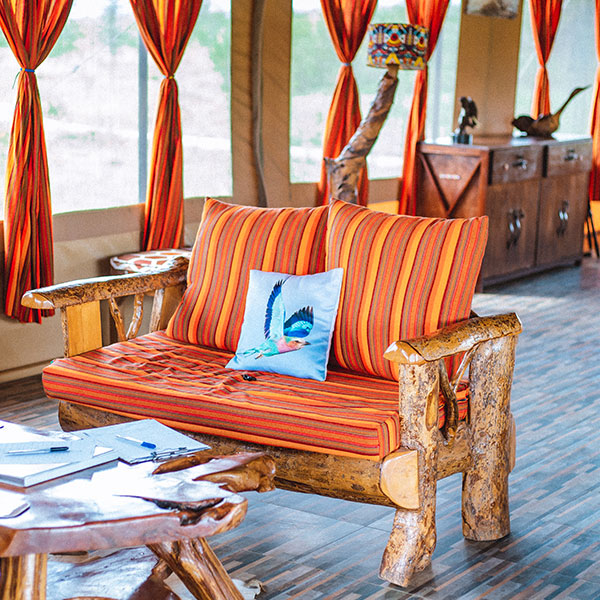
- Spacious tents with private bathrooms and workspace for laptops and gear
- Charging stations in tents and common areas, so you’re never scrambling for power
- Reliable Wi-Fi at the lounge for backing up files and sharing images
- Fresh, homemade meals with dietary options available
- Evening bonfire gatherings to swap stories and review the day’s best frames
- A quiet, eco-conscious setting at the foothills of Oldonyo Loip Hill, right in the heart of the reserve
Being based inside the Masai Mara National Reserve itself means less driving time and more shooting time, every minute counts when you’re chasing light.
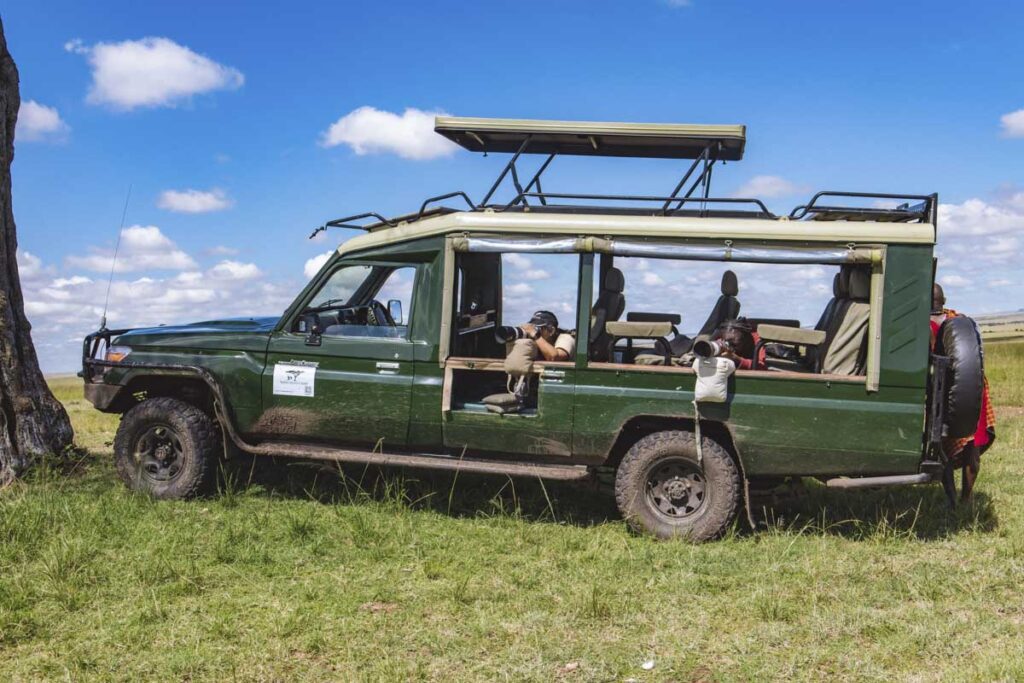
We also keep our vehicles purpose-built for shooting, not just sightseeing, think bean bags, elevated roof hatches for 360-degree angles, and in-vehicle power inverters so your batteries never run dry mid-drive. It’s a small detail, but it’s the difference between watching a moment happen and actually capturing it.
How to Book Your Masai Mara Photography Tour
A few practical things to sort out before you lock in your dates:
- Book early for migration season. July through October fills up fast, and vehicle space for photographers is limited by design, we keep groups small so everyone gets a clear angle.
- Ask about private vehicle options. If you’re traveling with a partner or small group, a private 4×4 gives you full control over positioning and timing.
- Confirm your flight logistics. Most guests fly into a nearby airstrip, so build a little buffer into your travel dates in case of weather delays.
- Bring an international adapter. Camp power is reliable, but you’ll want the right plug for your charger.
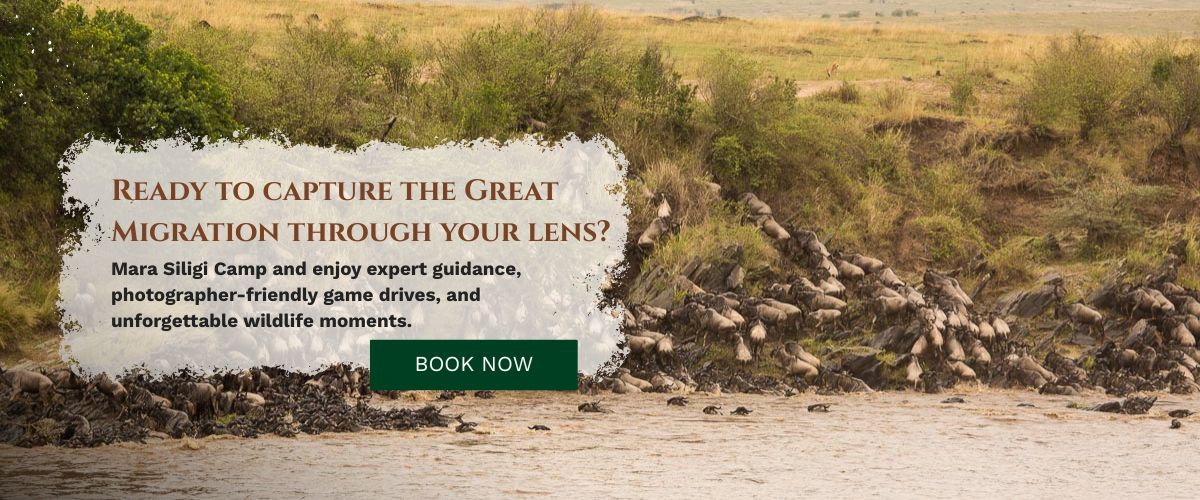
Ready to Plan Your Trip?
A well-timed, well-planned Masai Mara photography tour can hand you images you’ll be proud of for years, but the planning has to happen before you land, not after. Between the right dates, a realistic itinerary, and a base camp built for photographers, you’re setting yourself up for a trip that actually delivers.
If you’re ready to build your own 5-day itinerary around this season’s migration, get in touch with us at Mara Siligi Camp. We’ll help you plan the timing, the gear, and the vehicle setup, so all you have to focus on is the frame.
FAQs
Five days gives you a strong balance of coverage and rest, with enough flexibility to wait out a river crossing without wasting your whole trip on one location.
Not at all. We host everyone from beginners to working professionals, and the itinerary adapts to your comfort level and goals.
For most guests, yes, especially when the days are structured around light and patience rather than just covering ground.
Herd movement shifts week to week, so we track it closely and adjust your drives daily to put you in the strongest position for that specific week.
Yes. Many guests extend their trip with a few days in Amboseli for elephant portraits against Mt. Kilimanjaro, or Lake Naivasha for birding, before or after their Mara days.
A standard safari is built around sightseeing and covering ground. A great migration photo tour is built around light, timing, and positioning, slower pace, earlier starts, and drives planned around what will actually make a strong photograph, not just a checklist of animals seen.