Planning a safari in the Masai Mara but unsure when to visit? The dry and green seasons offer different experiences, from open grasslands and Great Migration sightings to lush scenery, seasonal birdlife and quieter game drives. The right time depends on what you want to experience during your trip. In this guide, we compare both seasons to help you choose the best time for your Masai Mara safari.
Table of Contents:
- Dry season vs green season: an overview
- When are the dry and green seasons?
- Wildlife viewing during the dry season
- What to expect during the green season
- Key differences for safari travellers
- Which season should you choose?
- Experience both seasons with Mara Siligi Camp
- FAQs
- Plan your Masai Mara safari with us
Dry season vs green season: an overview
Dry season vs green season: an overview
The Masai Mara is a year-round safari destination, and the best time to visit Masai Mara depends on what you want to see. The dry season gives you short grass, open views, and the Great Migration. The green season gives you lush landscapes, quieter tracks, newborn animals, and strong birdlife.
Both are worth your time. This guide explains how each one feels, so you can pick the right window for your Masai Mara safari package.
When are the dry and green seasons?
Here are the Masai Mara safari seasons in simple terms:
- Long dry season: June to October
- Short dry season: January to March
- Short rains: November
- Long rains: April to May
These are typical patterns. Rainfall changes from year to year, so a month can come in drier or wetter than expected. For the Masai Mara weather by season, check the Kenya Meteorological Department forecast close to your travel dates, and ask us what conditions look like on the ground.
Wildlife viewing during the dry season
A dry season safari in Kenya is the classic Mara experience. Grass is short, so you see animals from farther away. Wildlife also gathers near rivers and other water, which helps with Masai Mara game viewing.
What you can expect:
- Clear views: Short grass makes it easier to spot lions, cheetahs, and leopards.
- Firm tracks: Roads are generally easier to drive.
- Strong light: Early and late drives suit photography.
- Wildlife near water: Herds and predators often stay close to rivers.
Masai Mara migration season
The Masai Mara migration season falls inside the dry season. Herds start arriving from around mid-July, and Mara River crossings usually peak from early August to mid-September, with activity sometimes continuing into early October.
Crossings depend on the herds, not the calendar. We recommend at least 4 nights if the migration is your main reason for coming. This is also our busiest period, so book early.
What to expect during the green season
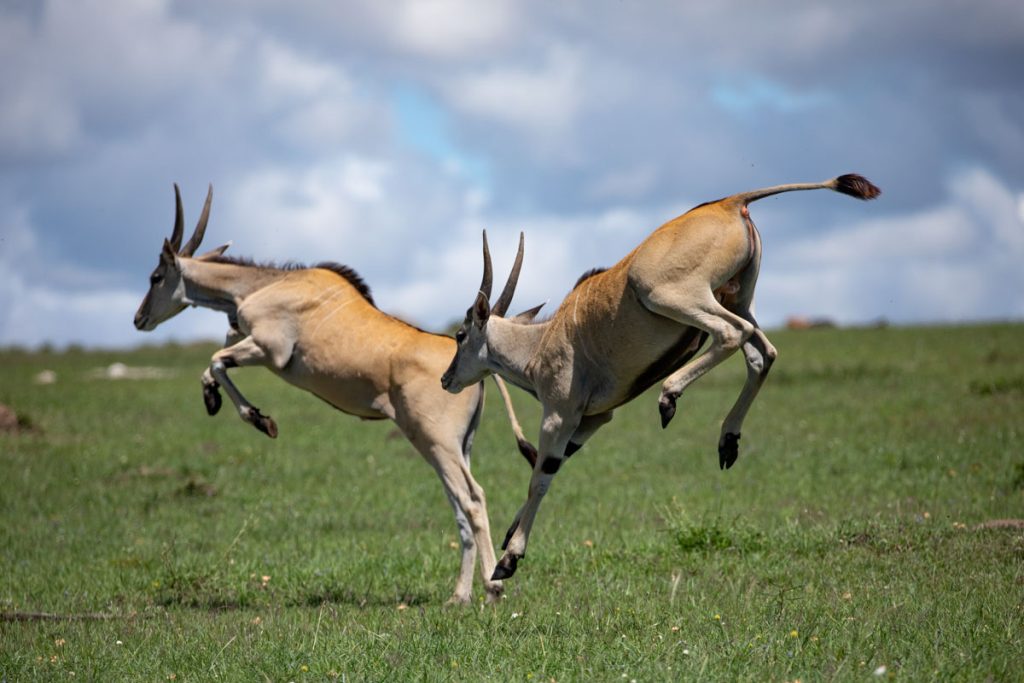
A green season safari in Kenya feels different. Rain turns the plains vivid green. Fewer vehicles are out, the light is dramatic, and the pace is slower. Wildlife can be more spread out, so sightings can take more patience and good guiding.
What you can enjoy:
- Lush scenery: Strong colour and stormy skies for photographers
- Quieter drives: Fewer vehicles on the tracks
- Newborn animals: Calving brings young wildlife and predator activity
- Rich birdlife: The Mara ecosystem has more than 400 recorded bird species
Masai Mara bird watching season
For the Masai Mara bird watching season, the green months are often the most rewarding. Migratory species are still around in April, and many birds are active after the rains. Bring binoculars and ask your guide to focus on birds.
Masai Mara safari in April
The Masai Mara rainy season peaks around April and May. A Masai Mara safari in April suits you if you want lush landscapes and a quiet reserve. Showers can make some tracks slower, so keep your daily plans flexible and pack a waterproof layer.
Masai Mara safari in November
A Masai Mara safari in November usually brings short rains, often as passing showers. Plenty of travellers find it a good time for green scenery and fewer vehicles. Conditions vary by year, so ask us about the latest weather before you book.
Key differences for safari travellers
Factor | Dry season | Green season |
Typical periods | June–October and January–February | April–May and November |
Landscape | Drier grasslands and more open views | Greener plains and fresh vegetation |
Wildlife viewing | Often easier to spot wildlife in shorter grass | Wildlife may be more spread out |
Migration | Main Mara migration period is generally July–October | Not the main migration period |
Birdwatching | Good year-round birdlife | Seasonal birdlife and migratory species |
Travel conditions | Tracks are often easier to navigate | Rain can affect some tracks |
Best suited to | Migration viewing and classic game drives | Green landscapes, photography and a quieter safari experience |

Which season should you choose?
Choose by what matters most to you.
Choose the dry season if you want to:
- Watch the Great Migration and Mara River crossings
- Make wildlife easier to spot on a first safari
- Get open landscapes and golden light
Choose the green season if you want to:
- Enjoy quieter game drives
- Photograph vivid landscapes and stormy skies
- Focus on birds and newborn wildlife
Choose January to March if you want:
- Clear skies and calving season, which brings strong predator activity
- Good photography light and fewer vehicles than the migration months
If you’re travelling with family or planning a honeymoon, tell us your dates. We’ll suggest what fits.
Experience both seasons with Mara Siligi Camp
We’re a family-run, mid-range, eco-boutique tented camp at the foothills of Oldonyo Loip Hill. We sit 10 minutes from Mpuaai Gate and 15 minutes from Talek Gate. Our local Masai guides lead your game drives, and our camp runs on solar power.
We design our Masai Mara tour packages around one idea: more time in the wild, less time getting to it. Our safari packages are based at Mara Siligi Camp and include accommodation, meals, guided game drives and the services of a local Masai guide. Park entry fees and other inclusions are detailed in your personalised package quote, so you know what is covered before booking.
Here’s how our Masai Mara travel packages match the seasons, based on our own guidance:
Time of year | What you’ll find | Package that suits it |
April–June | Lush green landscapes, fewer crowds, excellent predator sightings | |
July–October | The Great Migration | Any package, booked early |
November–March | Calving season (January–March), clear skies, fewer vehicles | Photography, Family, or Honeymoon |
Our Masai Mara holiday packages are available year-round, and we adjust each one to your dates.

Plan your Masai Mara safari with us
Not sure which season suits you? Send us your dates, group size, and what you’d like to see. We’ll reply with a personalized package, pricing, and availability.
Frequently Asked Questions
For the migration and easy wildlife spotting, choose July to October. For quieter drives and green landscapes, consider November or April to May. January to March sits in between.
We recommend at least 3 nights. If the migration is your goal, we recommend 4 or more
Yes. Our packages run year-round, and we tailor them to your travel dates.
Package inclusions stay the same. Peak migration months (August and September) carry higher park fees, so contact us for an itemised quote for your dates.