Masai Mara Holiday in September
September is one of the single best months to visit the Masai Mara. The Great Migration is active, river crossings are still happening, predators are at peak condition, and dry-season visibility makes for exceptional game viewing from the first light of the day. If you are comparing Masai Mara Tour Packages and September is in your travel window — you have picked the right month. This guide tells you exactly what to expect and how to structure your trip around it.
At Mara Siligi Camp, September is consistently one of our most requested months. Guests who have visited the Mara across multiple seasons tell us September delivered the most intense, sustained wildlife experience of any trip they made. Here is a comprehensive breakdown of what September gives you — wildlife, weather, crowd dynamics, and how to book smart.
Table of Contents:
- September Is One of the Mara’s Peak Wildlife Months
- What the Great Migration Looks Like in September
- Big Cats and Predators — Why September Is Peak Hunting Season
- September Weather — What to Actually Pack and Expect
- Crowd Levels in September — The Trade-Off You Should Know
- Why Where You Stay in September Changes Everything
- How to Plan Your September Masai Mara Safari Package — Practical Steps
September Is One of the Mara’s Peak Wildlife Months
If you are asking whether a Masai Mara holiday in September is worth it — yes. Directly and without qualification. September sits inside the core migration window (July to October), when the Mara ecosystem holds over a million wildebeest and the predator density that follows them. For many safari travellers, this is the month where the Mara feels closest to the wildlife documentaries people imagine before arriving — constant animal movement, active predators, and exceptional visibility across the plains.
Here is what September gives you:
- The bulk of the wildebeest herd established across the Mara ecosystem
- Mara River crossings — still active and still dramatic, with crocodile ambushes in full swing
- Lions, cheetah, and leopard at peak activity following the prey surge
- Dry-season conditions — short golden grass, clear sky, wildlife concentrated near water
- Long daylight hours — more usable game drive time than July
September also combines two things that do not always overlap in safari travel: high wildlife density and excellent viewing conditions. The grass is shorter after the dry season, roads are easier to navigate, and wildlife is easier to spot at distance. Predator sightings in particular become more consistent because animals are concentrated around predictable water and prey movement patterns.
A Masai Mara Travel Package built well for September positions you inside the migration corridor, near active predator territories, and close enough to the gates to capture the full dawn window every morning.
A Masai Mara Safari Package designed specifically around September does not just say “migration season.” It specifies your camp’s location relative to wildebeest routes, the gate drive time, and whether your drives are private or shared — because in September, all three of those details change your experience significantly.
What the Great Migration Looks Like in September
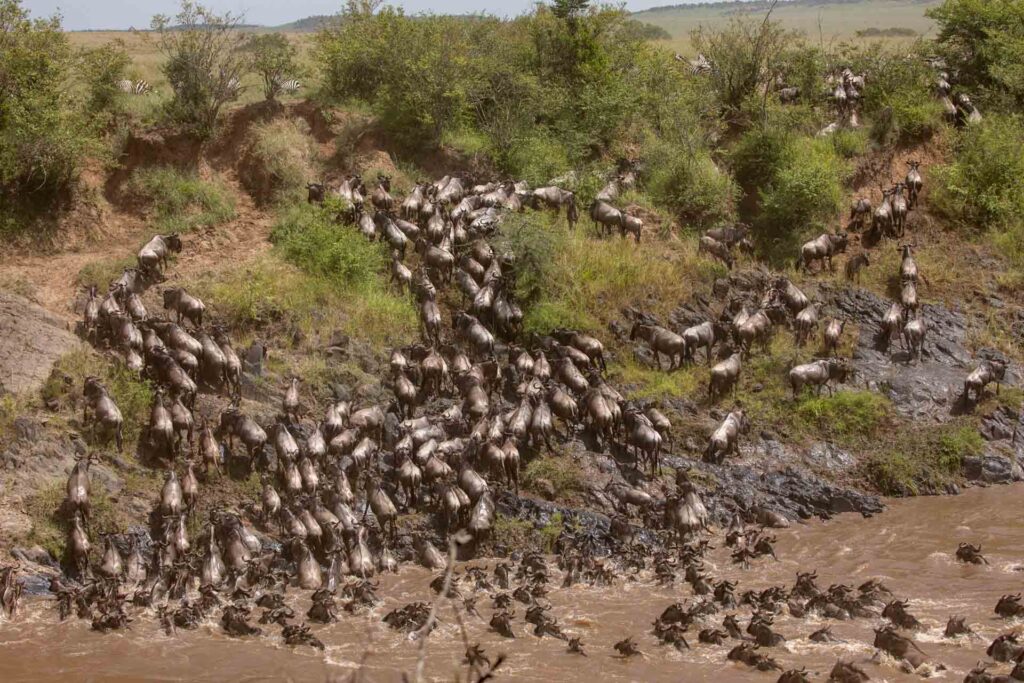
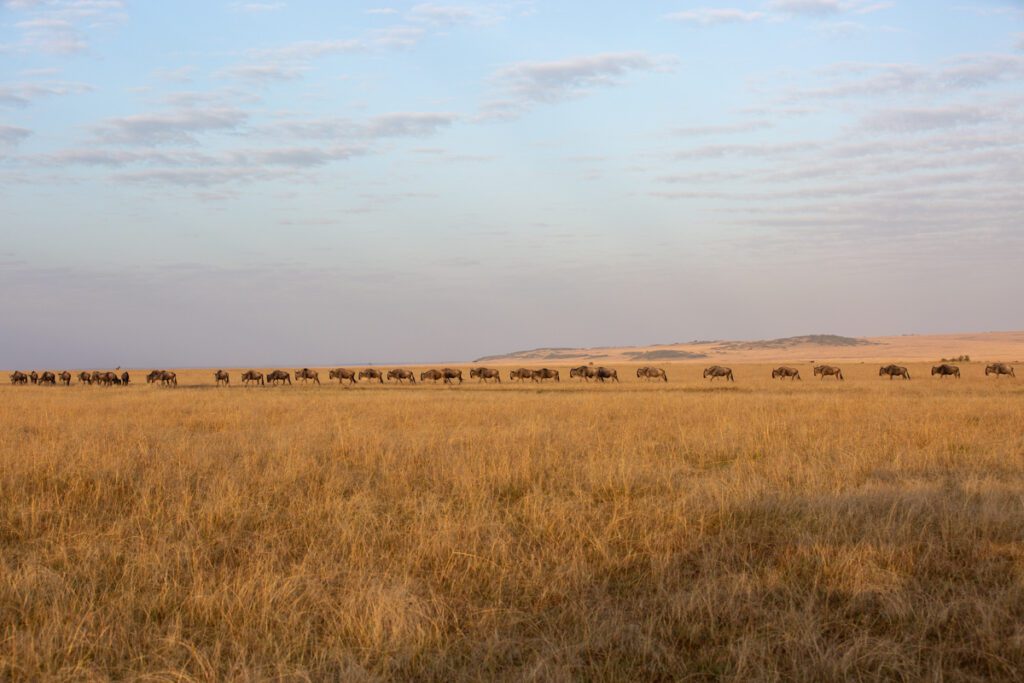
The Great Migration is not a single event or a brief window. It is a continuous movement of 1.5 million wildebeest — plus hundreds of thousands of zebra and gazelle — that follows rainfall and pasture through the Serengeti-Mara ecosystem all year. September sits in the middle of the Mara phase of that cycle, when the reserve is holding enormous concentrations of wildlife across its river systems, open plains, and predator territories. For many travellers comparing Masai Mara wildlife safari, this is the month where the scale of the migration finally feels almost impossible to comprehend in person.
What the migration looks like in September specifically:
- The main wildebeest body is established across the Mara — typically between 1.2 and 1.5 million animals
- Mara River crossings are still active; slightly less frequent than August but equally intense when they occur
- Some advance herds test movement south toward Tanzania, though the main body stays north
- Predator density follows the herd — by September, it is at its most concentrated
Your Masai Mara Travel Package for September should specify where your camp sits relative to the migration corridor. Camps inside or adjacent to the primary wildebeest routes encounter herds on every drive — sometimes before entering the reserve. Camps outside those corridors treat the migration as a special excursion rather than a daily constant.
Mara Siligi Camp is positioned within the Talek and Mpuaai corridor — one of the main routes wildebeest use as they spread east across the Mara ecosystem. September guests regularly encounter herds on the road to the gate before their drive officially begins.
When comparing Tour Packages with migration-specific itineraries, ask how many drives are dedicated to river crossing positions versus inland circuit driving. The best September trips combine both — crossing watches in the morning, predator circuits in the late afternoon when cats are most active.
Big Cats and Predators — Why September Is Peak Hunting Season
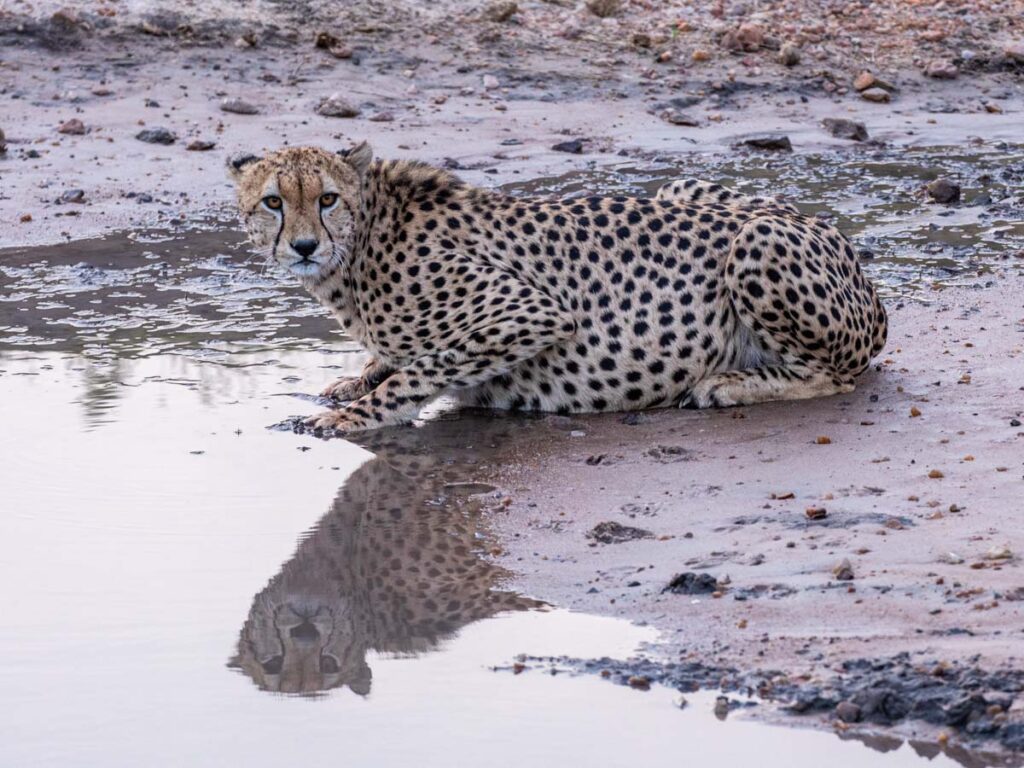
The migration is the headline. The big cats are the scene-stealer. September is the culmination of two months of excellent hunting conditions — and it shows in predator sightings. By this stage of the dry season, prey concentrations are extremely high, grass levels are shorter, and predator movement becomes easier to track across the open plains. For many guests booking Masai Mara Tour Packages specifically for wildlife intensity, September delivers the highest concentration of sustained predator activity they will see anywhere in Africa.
Why September is exceptional for big cat viewing:
- Lion prides have been feeding heavily since July and are in peak physical condition
- Cheetah cubs born earlier in the year are active alongside their mothers on morning hunts
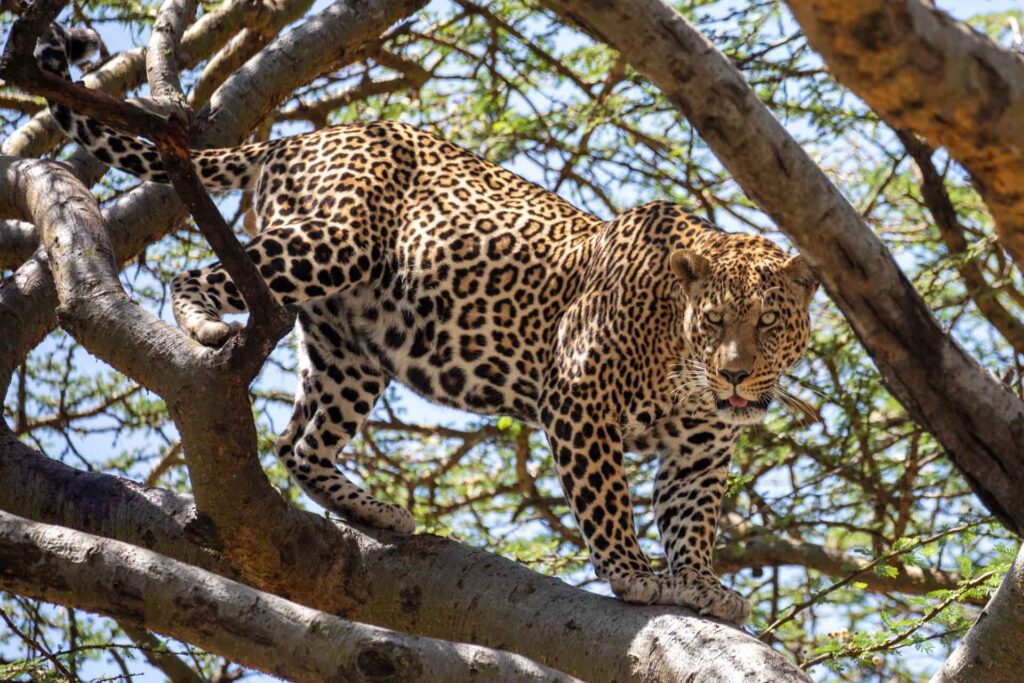
- Leopards follow dry-season routines along drainage lines — predictable and visible
- Wild dog packs use the open terrain and are easier to track in short dry-season grass
- Hyena clans are extremely active around migration herds, often providing secondary spectacle around kills
What makes September especially different is not just the number of predators, but the frequency and duration of sightings. Lions remain active later into the morning because temperatures stay cooler during early dry-season hours. Cheetah use the shorter grass for visibility during hunts, creating extraordinary viewing opportunities in open plains. Leopard sightings also improve because animals repeatedly use the same drainage systems, trees, and riverine cover while prey movement remains concentrated nearby.
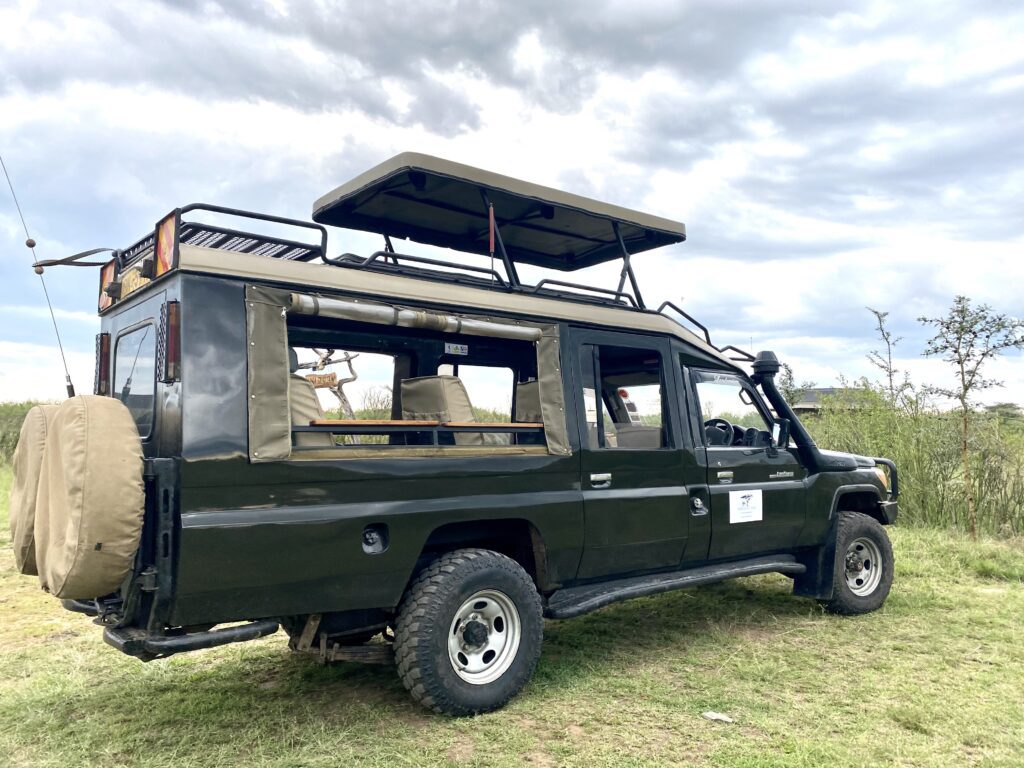
Mara Siligi Camp runs only private drives. In September, when a pride is active near the Mpuaai circuit, our guests are not competing for position with a row of shared-vehicle guests under pressure to leave at a fixed time. Your guide decides when you move — based on what the animals are doing, nothing else.
A Masai Mara Holidays Package designed for September should include private game drives as a non-negotiable. In peak season, the difference between a private and shared vehicle at a big cat sighting can completely change your experience, and many Masai Mara Safari Package options with shared vehicles do not reflect that difference clearly in their pricing.
September Weather — What to Actually Pack and Expect
September is part of the long dry season. Conditions are reliably good for game viewing. The one thing that consistently surprises first-time visitors is how cold the early mornings are.
September weather in the Masai Mara:
- Daytime high: 25–28°C — warm, clear, low humidity
- Morning game drive temperature: 10–13°C — pre-dawn departures are genuinely cold
- Rainfall: Minimal — September is one of the driest months in the Mara calendar
- Visibility: Outstanding — short grass and clear skies mean you spot wildlife at significant distance
- Landscape: Dry golden grassland, rivers running lower, animals concentrated near water sources
What to pack for a September Masai Mara trip:
- Warm base layer + mid-layer fleece + windproof outer jacket for 5:30am drives
- Sunscreen, hat, and sunglasses for afternoon drives when temperatures peak
- Neutral-coloured clothing — khaki, olive, and tan
- Quality binoculars — September’s exceptional visibility rewards them on every drive
A well-prepared Masai Mara wildlife safari operator provides a September-specific packing guide before departure — not a generic “bring layers” line, but specific callouts for the dawn drive temperature and what the afternoon light does to your photography.
The right Masai Mara Travel Package for September also builds early gate times into the daily schedule. The hour after sunrise is the most productive of the entire day in dry-season conditions. A camp that cannot get you through the gate by 6am is costing you the best wildlife window of your trip.
Crowd Levels in September — The Trade-Off You Should Know
September is peak season. You should know exactly what that means before you book — because the answer is manageable, not a reason to choose a different month.
The honest crowd picture in September:
- Active Mara River crossing points can draw 15–30 vehicles simultaneously
- Camp availability is tight — the best properties fill months in advance
- Peak-season daily rates are at their highest across the reserve
- Game circuits away from the main crossing points are far less congested
How you solve the crowd problem — without changing your month:
The crowd issue in September is a logistics problem, not a wildlife problem. The animals are extraordinary. Whether your experience is extraordinary or frustrating depends on how your trip is structured.
A good provider for September should tell you specifically how they manage vehicle congestion — which game circuits the camp routes into, whether drives avoid the highest-traffic crossing points in the morning rush, and how guides respond when a sighting becomes crowded.
A Masai Mara Holidays Package that positions you at a small conservancy-adjacent camp rather than inside the main reserve boundary gives you access to the same wildlife movement with dramatically fewer vehicles in your frame — often single-digit vehicle counts at the same sighting that draws twenty cars from the main reserve. Ask any Masai Mara Tour Packages provider whether their camp sits inside or adjacent to the conservancy buffer — the answer shapes your entire September experience.
Why Where You Stay in September Changes Everything
In September, the quality of your wildlife experience is determined almost entirely by where you stay and how your drives run. The wildlife conditions are exceptional across the reserve. The gap between a well-structured and a poorly-structured September safari is larger in this month than any other.
The three variables that matter most in September:
- Gate proximity — a camp 10 minutes from the gate versus 45 minutes gives you 35 extra minutes of the most productive wildlife period every single morning, across every drive
- Drive type — private versus shared is not a comfort distinction in September; it is the variable that determines whether you position for a hunt or queue behind eight other vehicles
- Migration corridor placement — camps within the primary wildebeest routes encounter herds continuously; camps outside them treat the migration as a targeted excursion
A Masai Mara Holidays Package that specifies all three of these variables upfront — gate distance in minutes, drive type, and camp location relative to migration routes — is a product worth comparing carefully against one that mentions only tent photographs and food quality.
A Masai Mara Travel Package that gives you a private vehicle at a 10-minute camp in September is categorically different from a shared-drive package at a 40-minute property — even at a lower price point. Across a three-night stay, the wildlife time difference can reach eight to nine hours. That is close to an entire extra game drive day, created or destroyed by logistics alone.
How to Plan Your September Masai Mara Safari Package — Practical Steps
Book early. September is the fastest-filling month across the Mara. The best Masai Mara Tour Packages for September — small camps, private drives, migration corridor positioning — are often fully booked by March. Start your conversations in January or February, not June.
Confirm what is included in full. Your package for September should include park fees, private game drives, all meals, and airport or airstrip transfers — with a written breakdown, not a verbal summary. Hidden costs appear most often in peak-season bookings.
Ask specifically about drives. Private or shared? How many per day? What time does the morning drive leave? What is the camp’s policy when animal activity justifies an extended drive?
Ask about gate distance — in minutes. Not kilometres. Not “close to the reserve.” In driving minutes, from tent to gate. This single number tells you more about your daily game drive quality than anything else in the comparison.
Ask about September availability early. If a camp has wide open September availability in April, be genuinely curious about why.
At Mara Siligi Camp, September typically fills between February and April for peak dates. Every guest gets a private drive. We are 10 minutes from Mpuaai Gate and 15 minutes from Talek — two-gate access means our guides choose entry each morning based on where the animals are, not where the road happens to go.
A strong package for September is not the cheapest option or the most luxurious one — it is the one that gets you the most wildlife time, with the best guide, in the right location. That is what makes September as exceptional as its reputation suggests.
Frequently Asked Questions
Yes. September is one of the best months for a Masai Mara safari package because the Great Migration is active, river crossings are still happening, and predator sightings are at their peak.
The best Masai Mara tour packages for September usually sell out by March or April. Booking 6–8 months early gives you better camp options, private drives, and migration corridor locations.
A strong Masai Mara holidays package should include private game drives, park fees, meals, airstrip transfers, and a camp close to migration routes and reserve gates for maximum wildlife time.