Private Masai Mara Photography Tour
Here is what your day looks like when photography is the entire point of the trip.
At Mara Siligi Camp, we run a private Masai Mara photography tour led by Usha — a guide, naturalist, and photographer who has been shooting this ecosystem for over a decade and teaching guests to do the same. If you are researching Masai Mara photography tour packages and wondering what separates a genuine photography experience from a standard game drive with a camera, this guide answers that — hour by hour, from before the sun rises to after dinner.
Table of Contents
- 5:30am — Before You Leave Camp
- First Light: How Usha Reads the Landscape and Decides Where to Go
- At a Sighting — What Usha Does That a Regular Guide Doesn’t
- The Editing Session Between Drives — What Happens, What You Learn
- Afternoon Drive — How the Day’s Images Shape the Second Drive
- After Dinner — Reviewing the Day’s Work with Usha
- What You Leave With After 6 Days on a Masai Mara Photography Tour
- How a Private Tour Differs from Our Group Format
5:30am — Before You Leave Camp
The day starts in darkness — not because it has to, but because Mara Siligi Camp is 10 minutes from Mpuaai Gate and we want you inside the reserve before the light shifts. On a serious Masai Mara photography tour, the first thirty minutes of the morning often determine whether you come back with a usable frame or a missed opportunity. By the time most standard safari vehicles are leaving camp, your positioning for the sunrise sequence is already underway.
You wake to a flask of coffee and a brief. Not a general wildlife update — a photography brief. Usha has already been up, checking:
- Wind direction and what it means for animal behaviour and approach angle
- Cloud cover and how it will affect contrast and shadow at sunrise
- Guide network reports from the previous evening — where predators were sighted, which direction the herds moved overnight
- Your camera settings from the previous day, which he reviewed while you slept
The atmosphere before departure is quiet and deliberate. Batteries are checked. Lens cloths come out. Bean bags are positioned before the vehicle even moves. The pre-dawn window is not wasted with unnecessary conversation because the drive itself is already part of the photography process. During many masai mara photo safari packages, the transit to the reserve is treated as dead time. Here, it is part of the field strategy.
By 5:45am you are in the vehicle. The plan for the morning is explained in three sentences. Then you drive.
As you move toward the gate, the Mara is still almost entirely dark except for the faint outline of the plains and occasional movement picked up in the headlights — zebra crossing the track, distant hyena calls, silhouettes beginning to form against the horizon. Every detail is being read constantly. The drive to the reserve is not passive observation; it is reconnaissance for the first light sequence ahead.
What surprises most guests on their first game drives in masai mara is how intentional everything feels before sunrise even arrives. The route, the timing, the silence, the positioning — every decision is being made around where the light will land twenty minutes from now, not what happens to be visible in front of the vehicle at that moment.
First Light: How Usha Reads the Landscape and Decides Where to Go
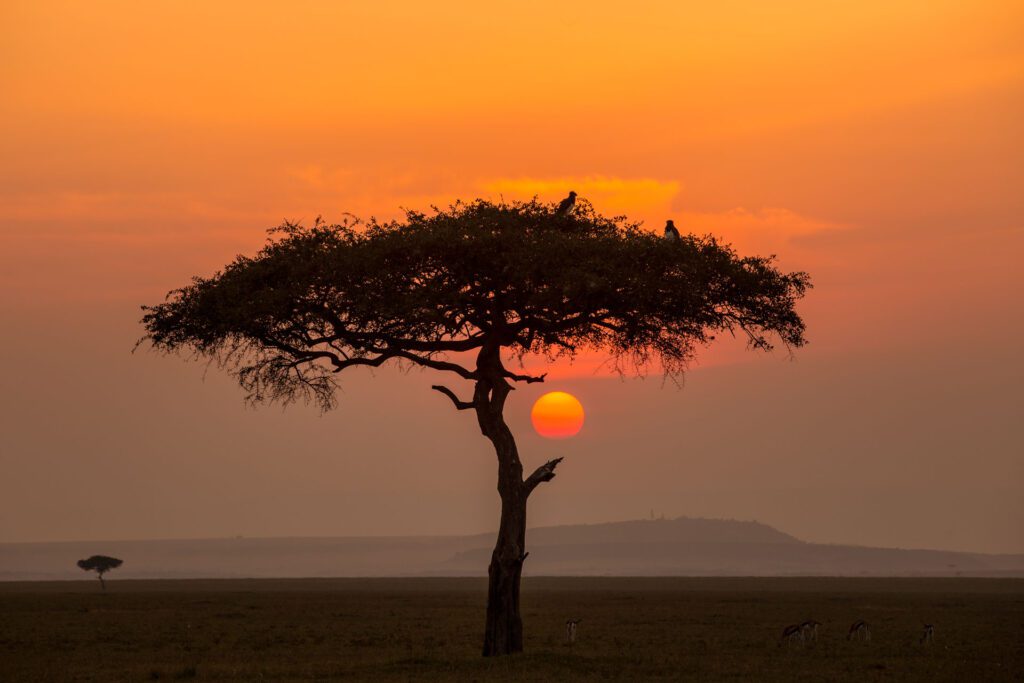
The golden window — the twenty to thirty minutes after the sun clears the horizon — is the single most valuable photography time of the day. Usha builds your entire morning drive around arriving at the right position before it opens, not during it. On a serious Masai Mara photography safari, this window is treated almost like a deadline. Once the light changes, the shot is gone.
What Usha reads as you drive toward the gate:
- Silhouettes on the horizon — bird behaviour, herd movement, the posture of distant animals
- Ground cover — where the light will fall flat and where it will side-light a subject correctly
- Wind direction — which approach angle puts you downwind without casting a vehicle shadow across the frame
- Behaviour cues — whether predators are finishing nocturnal activity, whether prey animals are alert or relaxed
The vehicle moves slowly during this period, often with long stretches of silence. The landscape is being read constantly — not just for animals, but for how the plains themselves are about to behave once the light arrives. In many Masai Mara photography tour packages, guests chase sightings after they happen. Here, positioning happens in anticipation of behaviour.
You will not be repositioning during the golden hour. You will be positioned before it begins.
At a predator sighting, the vehicle does not drive to the nearest point. The animal’s direction of travel is read first, and positioning happens where it is likely to move — not where it is currently standing — so the light falls correctly when the subject arrives. Most guests see this happen on day one and understand immediately why location in wildlife photography is decided before the animal cooperates.
What surprises many photographers is how small adjustments completely change a frame. A shift of ten metres can clean the background, remove harsh shadows, or place dust and sunrise light perfectly behind a moving animal. That level of precision is what separates a dedicated masai mara wildlife photography tour from a standard safari drive with long lenses in the vehicle.
At a Sighting — What Usha Does That a Regular Guide Doesn’t
At a standard game drive, the guide stops the vehicle and points. On a Masai Mara photography tour sighting with Usha, the sequence is different from the first second. The objective is not only to find the animal, but to place you in the strongest possible position before the moment unfolds.
What happens in the first 90 seconds at a sighting:
- Usha assesses light angle before she assesses the animal
- She positions the vehicle so the subject is lit from the front or side — never backlit unless backlight is intentional
- She quietly explains the animal’s current behaviour and what she expects it to do in the next sixty seconds
- She tells you which focal length to use and why, based on the background compression you want and the subject distance
- She reads the animal’s body language and gives you a subtle signal — a word, a gesture — before significant behaviour happens, so your shutter is open before the moment, not after it
The environment around the subject is being read continuously — the background, the direction of movement, the quality of the grass, the angle of the rising sun. A leopard walking toward clean open ground photographs very differently from one moving into dense brush, and the vehicle is positioned accordingly before the scene develops.
Most guests say the quiet is the first thing that surprises them. There is no constant narration or unnecessary conversation during a sighting. Direction is given when it matters, then the space is left quiet so you can concentrate on composition, timing, and the rhythm of the scene itself.
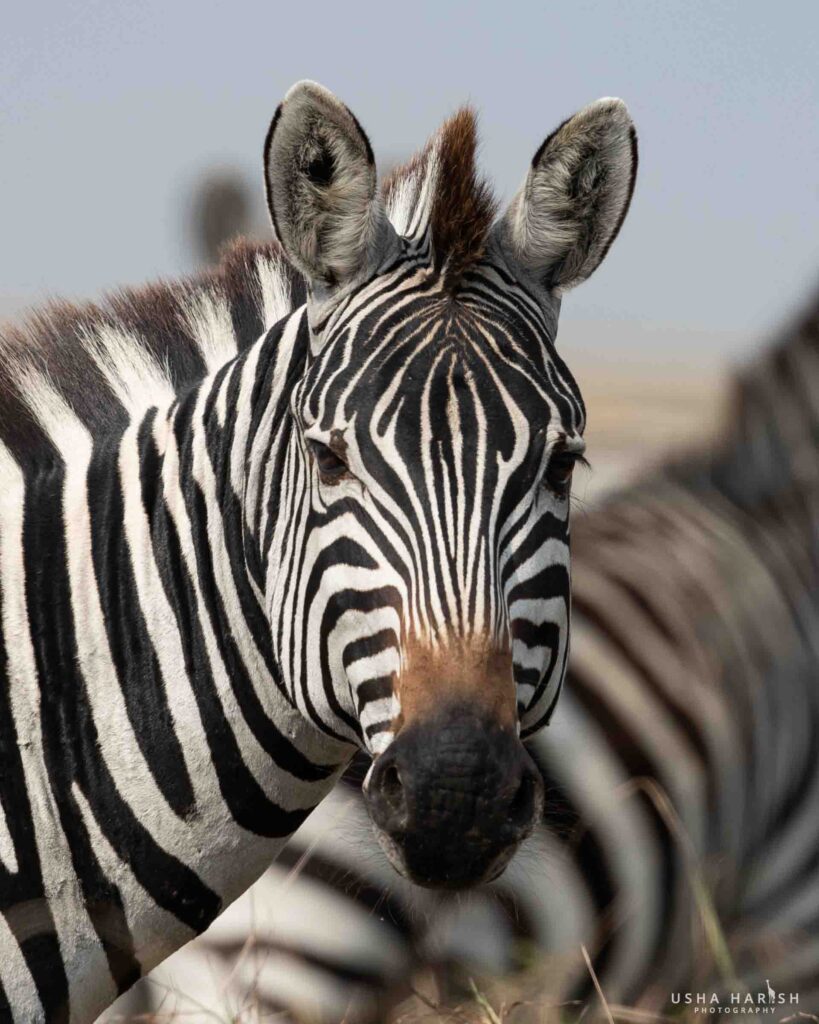
The Editing Session Between Drives — What Happens, What You Learn
You return to Mara Siligi Camp between drives — typically from 10am to 3pm. During this window, Usha runs a structured editing session. Not a casual scroll through your images. A focused review designed to improve how you shoot, edit, and think about wildlife photography in the field.
How the session runs:
- You download your morning’s images while coffee is prepared
- 15 to 20 frames are selected to work through — not always your favourites, but the images with the strongest teaching value
- For each frame, the discussion focuses on what works technically and compositionally, and what weakens the image
- You edit three to five images using Lightroom or Capture One, with guidance on exposure, colour temperature, shadow recovery, crop, and sequencing
- The session closes with a short brief on the afternoon — expected light conditions, likely wildlife activity, and one specific adjustment to make to your shooting approach
The atmosphere is calm and highly practical. Some sessions focus on technical corrections — exposure balance, focus consistency, shutter timing. Others focus entirely on composition and patience: when to wait, when not to shoot, and how small changes in angle completely alter the strength of a frame. Guests often realise that the difference between a good wildlife image and a memorable one is usually timing and restraint, not equipment.
What you actually learn from this:
- Why certain exposures look flat even when the histogram looks correct
- How to read light before you raise the camera, not after you press the shutter
- Which in-camera settings to carry into the afternoon, adjusted for the conditions ahead
- How to cull — the discipline of choosing the best frame, not the one you worked hardest for
Most Masai Mara photography tour packages include drives. Usha’s sessions include instruction, critique, and a repeatable workflow you can continue using long after the safari ends. That is the difference.
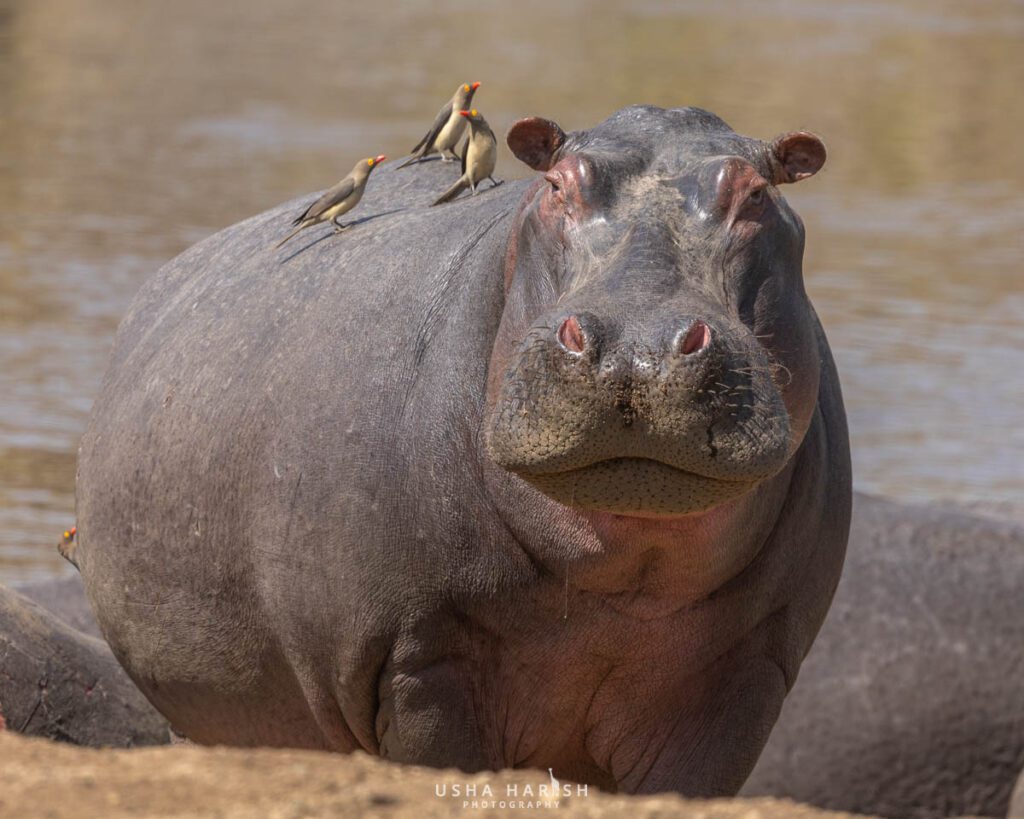
Afternoon Drive — How the Day’s Images Shape the Second Drive
The afternoon drive at 3pm is not a repeat of the morning. The second session is planned around what the morning produced — and specifically what it did not.
If you captured strong predator frames in the morning, the afternoon may pivot toward bird behaviour, intimate mammal portraits, environmental compositions, or wide landscape work that requires a different focal length and a different frame of mind.
If you missed a critical moment because your shutter speed was too low or your focus point drifted, that muscle memory is rebuilt during the first part of the afternoon drive — often on stationary or slower-moving subjects in real field conditions — before you are back in a situation where timing matters again. The idea is not just to correct mistakes afterwards, but to adjust technique immediately while the experience is still fresh.
What the afternoon light gives you:
The Mara in the two hours before sunset is different from any other time of day. The light is warmer and more directional, the shadows are longer, and animals begin moving again after the stillness of midday heat. Dust hanging in the air catches the low sun, creating conditions that can completely transform an ordinary frame into something cinematic.
Positioning for the final golden window happens with the same precision as the first. The goal is always to arrive before the light becomes perfect, not after it already has.
After Dinner — Reviewing the Day’s Work with Usha
After dinner at Mara Siligi Camp, Usha sits with you for thirty to forty-five minutes. This is not optional — it is built into the structure of every day, and it is one of the features that separates our Masai Mara photography tour packages from itineraries that offer only drives.
What the evening review covers:
- The three strongest frames of the day — why they work, what made them possible
- The missed shot — every day has one; Usha names it without softening it, explains exactly what happened, and tells you what to change tomorrow
- Camera settings to carry into the next morning, calibrated for the conditions he expects
- A short conversation about what you want to prioritise on day two — or day five, if you are deep into the six-day programme
This is where most guests say the real learning happens. Not in the field, where there is too much to process at once. In the quiet after dinner, when you can actually think about what you saw and what you made from it.
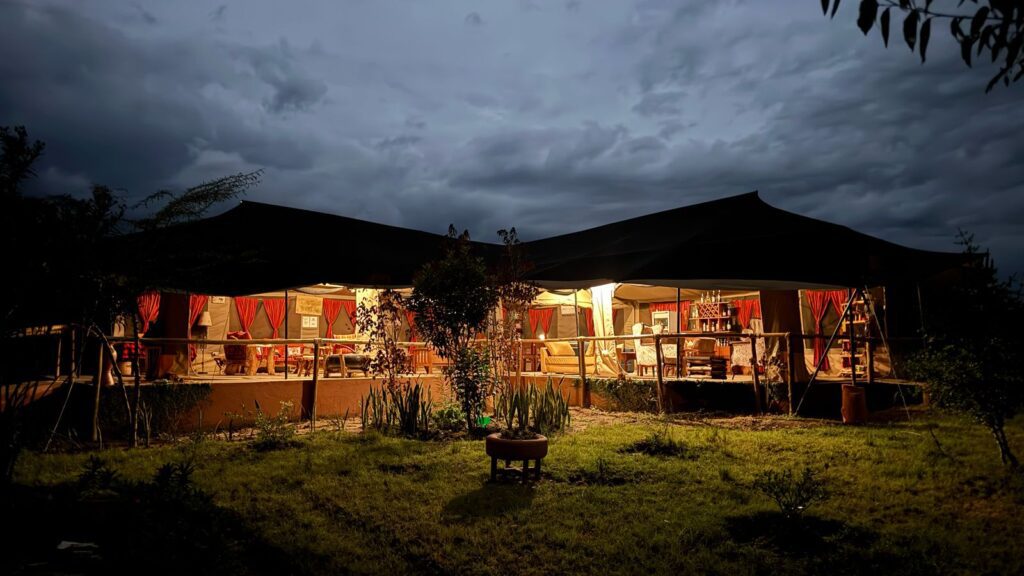
What You Leave With After 6 Days on a Masai Mara Photography Tour
Six days with Usha is not a holiday with a camera. It is a structured photography programme set inside one of the best wildlife locations on the planet. Well-designed private safari for wildlife photography at this level are built around outcomes — images you can use, skills you can keep — not just days in a vehicle.
By the end of day six, you will have:
- 500 to 800 edited, portfolio-quality images from the Mara ecosystem
- A working understanding of wildlife photography light — not theory, but applied field knowledge you earned at specific sightings
- A culling and editing workflow you can repeat at home, in Lightroom or Capture One
- Direct, day-by-day feedback on your shooting from a guide who has spent a decade reading this specific terrain and teaching photographers of every level to read it too
- At least one image you will print large
What most guests describe is something simpler: they stopped shooting frantically and started shooting deliberately. That shift — from volume to intention — typically happens on day three.
How a Private Tour Differs from Our Group Format
Mara Siligi Camp runs both a private format and a small-group format with a maximum of four photographers per vehicle. Here is the honest comparison.
Private | Group (max 4) | |
Vehicle positioning | Your call, Usha’s recommendation | Consensus-based |
Shooting pace | Entirely yours | Shared across the group |
Editing sessions | One-on-one, your images only | Collective review |
Drive routing | Built around your specific goals | Built around group priorities |
Evening review | Personal and tailored | Group discussion |
The private format suits you if:
- You are building a specific portfolio or working on a personal project
- You shoot in a way that needs silence and stillness in the vehicle
- You want instruction matched to your exact gear and skill level
- You are travelling solo and do not want to pace yourself around others
The group format suits you if:
- You enjoy shooting alongside other photographers and learning from how they approach a scene
- You are newer to wildlife photography and benefit from watching different shooters work
- You want to share the cost without sacrificing guide quality or drive structure
Both formats are available through the same great migration photo safari enquiry process. When you contact us, tell us which format fits your goals — or tell us you are unsure, and we will help you decide based on your experience level and what you are shooting for.
FAQs
We offer private Masai Mara photography tour packages, as private tours give you full control over vehicle positioning, shooting pace, and editing sessions.
Yes. Every day includes guided editing and image review sessions with Usha, covering Lightroom workflow, composition, exposure, and wildlife photography techniques.
This tour is built entirely around photography — early gate entry, private positioning at sightings, photography-focused guidance, and one-on-one feedback throughout the trip.