Masai Mara Photography Tour Packages from Nairobi
You’ve dreamed about it. That perfect frame — a lioness lit gold at sunrise, wildebeest mid-leap through the Mara River, a leopard draped over an acacia branch as the sky turns violet behind it. The Masai Mara is where those images actually happen. And if you’re reading this, you’re probably trying to figure out the best way to make your photography trip a reality — from Nairobi, on a budget that makes sense, without wasting a single hour of good light.
We get it. At Mara Siligi Camp, we’ve hosted photographers at every level — from first-time safari guests with a brand-new zoom lens to seasoned wildlife photographers who’ve shot across three continents. And the question we hear most from guests planning a Masai Mara photography tour is always the same: should I do a day trip, or should I stay?
This guide answers that honestly. We’ll walk you through the real logistics, the light, the wildlife timing, the gear, and why where you base yourself makes all the difference between coming home with good photos and coming home with the shots of your life.
Table of Contents
- Why the Masai Mara is Every Wildlife Photographer’s Dream
- Can You Really Do a Photography Day Trip from Nairobi?
- Why a Multi-Day Masai Mara Photography Tour Changes Everything
- The Golden Hours — When You Must Be Out There
- Planning Around the Great Migration & Big Cat Season
- What to Bring: Gear, Lenses & What We Provide
- Why Photographers Choose Mara Siligi Camp
- Frequently Asked Questions
Why the Masai Mara is Every Wildlife Photographer’s Dream
You’ve seen the images. A lioness crouched in golden grass at dawn. Thousands of wildebeest thundering through the Mara River. A cheetah perched on a termite mound, scanning the plains as the last light hits the horizon. The Masai Mara doesn’t just offer good wildlife photography — it offers the kind of once-in-a-lifetime frames that define a photographer’s portfolio.
But here’s what those images won’t tell you: getting that shot requires timing, positioning, and patience that most day trips simply can’t deliver. The Mara rewards those who spend time. And we’ve seen it again and again at our camp — the guests who stay three nights come home with transformative work. The guests who rush in and out come home with decent photographs and a long list of “I wish I had…”
Whether you’re a professional wildlife photographer, a serious enthusiast, or someone who just upgraded to their first mirrorless camera and wants to do it right — this guide is for you. We’re going to walk you through every option honestly, because we want you to plan the trip that actually delivers the images you’re imagining.
Can You Really Do a Photography Day Trip from Nairobi?
The short answer? Yes — technically. The honest answer? You’ll spend more time in a vehicle than behind a camera.
Here’s the reality of a standard Nairobi–Masai Mara day trip by road:
- Depart Nairobi at 6:00 AM — and that means 6:00 AM, not 6:30. The morning golden hour in the Mara begins just after sunrise and lasts barely 90 minutes.
- Arrive at the Mara around 10:30–11:00 AM — by road it’s roughly 5–6 hours depending on your route and traffic leaving Nairobi. You’ve already missed the most photographically active time of day.
- A few hours of midday game driving — midday light is harsh, animals are resting under shade, and the landscape loses the drama that makes Mara images so spectacular.
- Leave by 2:30–3:00 PM — to make it back before dark. You’ll miss the afternoon golden hour entirely.
If you’re flying from Wilson Airport in Nairobi, a day trip becomes more viable — the flight takes around 45 minutes and you can land just after sunrise. But even then, you’re working with a compressed window and no real flexibility if something extraordinary happens. And in the Mara, it often does — just not always on your schedule.
“The Mara gives you what you need — just not always when you expect it. A pride of lions might cross at 4:45 PM, or a leopard might emerge at dusk. You need to be there to catch it.”
That said, if budget or time are genuine constraints and a day trip is your only option — go. Seeing the Masai Mara is always better than not seeing it. But if there’s any way to stay even one or two nights, the difference in your photography will be remarkable.
Why a Multi-Day Masai Mara Photography Tour Changes Everything
When you stay in the Mara, you stop being a visitor rushing through and start becoming part of the rhythm of the place. That shift is everything for Masai Mara Photography Tour.
Here’s what changes when you’re based at a camp inside or near the reserve:
- You’re out at first light, every day. No long drive before your morning game drive. Your vehicle leaves camp before sunrise and you’re positioned in the right spot as the sky turns amber and rose behind the Mara escarpment.
- You can follow a sighting. When your guide gets a radio call about a cheetah hunt in progress, you have time to get there. Day-trippers often can’t make these detours without missing their return window.
- You learn the landscape. By day two, you know which kopjes lions rest on at midday, which crossing points the wildebeest favour, which tree the leopard has been using. Your images become intentional, not just lucky.
- Evening light is yours. The hour before sunset in the Mara is arguably the single most photogenic time of any safari day. Warm side-light, animals moving to water, long shadows across the grass. You only get this if you’re staying.
- You rest and shoot more effectively. Exhausted photographers make rushed framing decisions. A proper base — good food, comfortable accommodation, time to review your shots and plan tomorrow — means your eye is sharper on every game drive.
Most photographers who stay with us tell us their best images come on day two or three — once they’ve found their rhythm, spotted the repeat sightings, and stopped trying to capture everything in a panic.
Day Trip vs. Multi-Day Stay — At a Glance
Factor | Day Trip (by road) | Day Trip (by flight) | 2–3 Night Stay |
Morning golden hour | Missed | Partial | Every day |
Evening golden hour | Missed | Missed | Every day |
Active game drive hours | 3–4 hrs | 5–6 hrs | 8–10 hrs/day |
Flexibility to follow sightings | Very limited | Limited | Full flexibility |
Familiarity with landscape | None | None | Builds over stay |
Wildlife photography quality | Decent | Good | Exceptional |
Cost | Lower | Moderate | Higher — worth it |
The Golden Hours — When You Must Be Out There
If there’s one thing every wildlife photographer will tell you, it’s this: the quality of your images is directly tied to when you’re shooting, not just where. In the Masai Mara, the difference between midday light and golden hour light is the difference between a record shot and a wall print.
6:00–8:00 AM — Morning Gold Warm, directional light. Predators still active. Mist over the Mara River. Your best chance for action sequences and dramatic big cat portraits.
10:00–15:00 — Midday Harsh overhead light, high contrast shadows. Animals resting. Best for landscape wide shots and documenting behaviour in detail rather than hero shots.
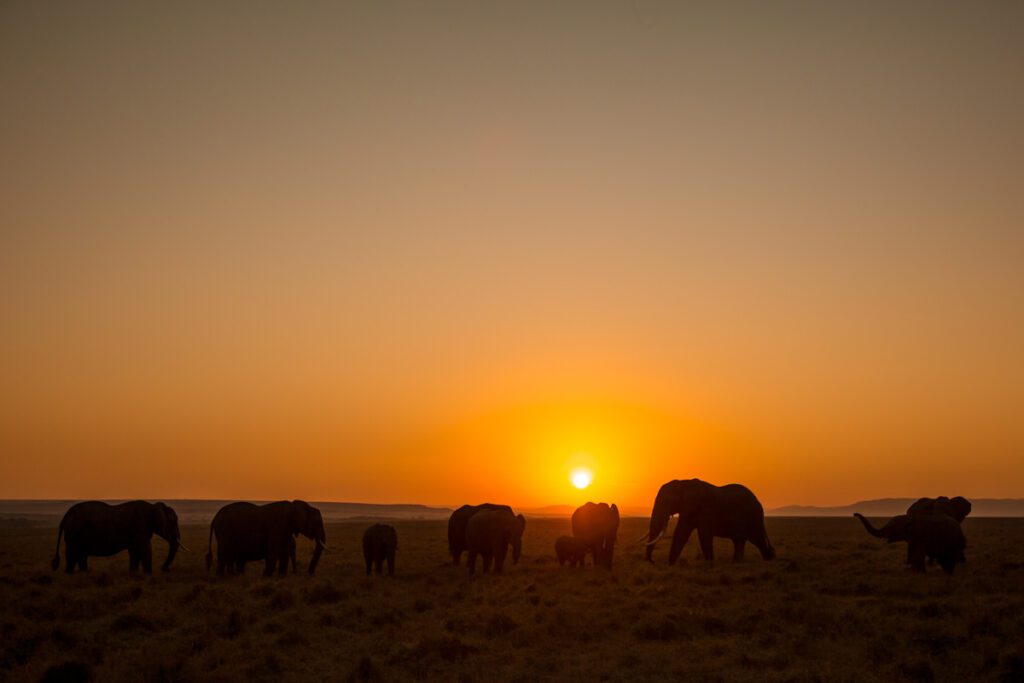
15:30–18:00 — Afternoon Gold Side-light turns everything copper. Animals move to water. Elephant family silhouettes, herbivore grazing scenes, lions heading out to hunt. Pure magic.
18:00–18:30 — Blue Hour Brief but extraordinary. Silhouettes against deep purple skies. Acacia trees backlit. If you’re still in the park at gate closing, this is your reward.
When you stay at a camp inside or close to the reserve as we are at Mara Siligi Camp your mornings start in the Mara, not on the way to it. The sunrise shots, the dew on the grass, the lions returning from a night hunt those are all yours, every single morning.
Planning Around the Great Migration & Big Cat Season
If your goal is wildlife photography — specifically migration photography or big cat work — timing your visit makes an enormous difference. The Masai Mara has remarkable wildlife year-round, but certain months offer genuinely rare photographic opportunities.
The Great Wildebeest Migration
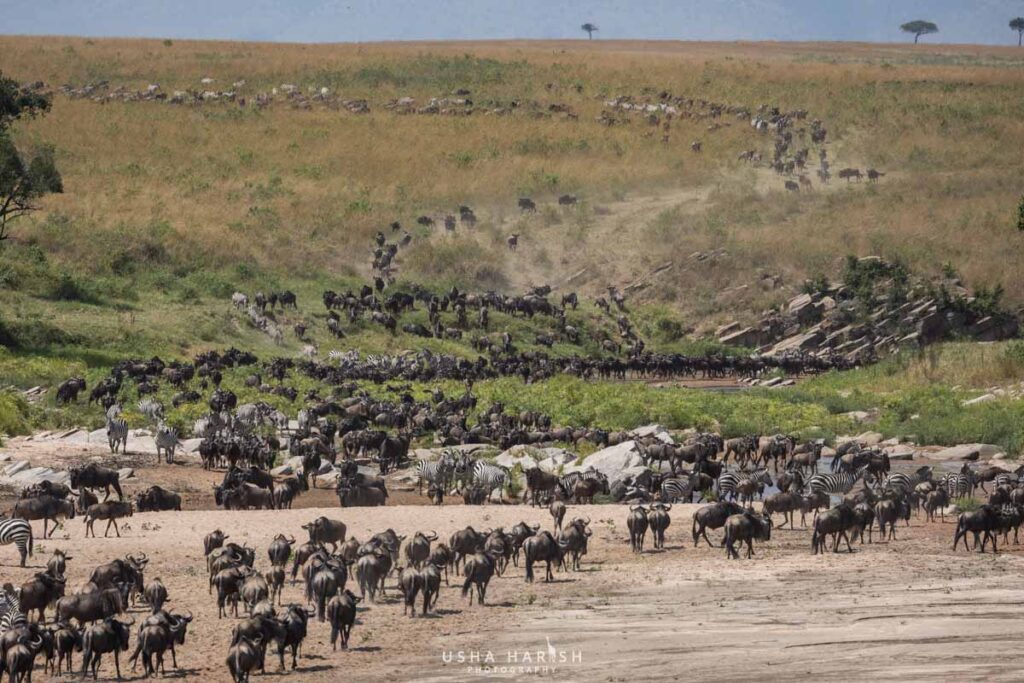
The wildebeest migration runs year-round across the broader Serengeti-Mara ecosystem, but the Mara crossing — where vast herds thunder through the crocodile-filled Mara River — typically peaks between July and October. These are among the most dramatic wildlife scenes on the planet, and for a wildlife photographer, witnessing a crossing is an experience that changes how you think about your work.
- July–August: Early migration crossings begin. Herds start to build on the Mara’s northern banks. Fantastic predator action as lions and crocodiles capitalise on the chaos.
- September–October: Peak crossing season. The largest herds. Multiple crossings possible in a single day if you’re positioned well. Requires staying to maximise your chances — no day trip guarantees a crossing.
- November–June: The resident wildlife — cheetah, leopard, elephant, giraffe, buffalo, hippo — is superb year-round. Big cat density in the Mara is extraordinary, and the landscape is lush and varied after the rains.
Big Cat Photography
The Mara has one of Africa’s highest concentrations of cheetah, lion, and leopard. Our guides have years of relationship with specific individuals and families — the Tano Bora coalition, the resident leopard territories, the dispersal prides around the Talek area. This local knowledge is something you simply don’t get from a day trip with an operator who visits occasionally.
A note on small-group photo safaris
We deliberately keep our game drives small. A maximum of 6 guests per vehicle means you have window space, you can position yourself for the shot, and your guide isn’t splitting attention between a group of ten. This matters enormously when you’ve found a great sighting and you need 30 seconds to adjust your settings and compose properly. We also work with guests who want to stay at a particular sighting longer — something larger operations rarely accommodate.
What to Bring: Gear, Lenses & What We Provide
You don’t need the most expensive gear to come back with extraordinary images from the Mara. But you do need the right gear — and we’ve seen enough guests arrive underprepared that we want to help you avoid the most common mistakes.
Lenses — the most important decision you’ll make
- Telephoto (400mm–600mm equivalent): Your primary wildlife lens. A 100–400mm zoom on a crop sensor body gives you excellent reach without the weight. Big cat portraits, bird photography, and river crossing detail shots all need this.
- Mid-range zoom (24–105mm or 70–200mm): For environmental shots, elephant herds in wide landscape context, and the golden-hour scenes where you want the whole Mara in frame.
- Wide angle (optional): If you’re interested in camp life, Maasai cultural photography, or dramatic sky compositions, a wide prime or zoom is worth packing.
Settings and technique in the Mara
- Shoot in RAW. Morning and evening light shifts fast — RAW gives you the latitude to recover highlights and lift shadows in post without quality loss.
- Learn to shoot from a vehicle. Most Mara photography happens from inside a Land Cruiser. A beanbag draped over the window frame is far more effective than a tripod in this context.
- High ISO is your friend. Early mornings in the Mara are darker than you expect. Modern mirrorless cameras handle ISO 3200–6400 well. Don’t be afraid to push it to freeze motion.
- Memory cards and batteries: Bring more than you think you’ll need. We have charging facilities at camp, but a long game drive with exciting action can drain a battery faster than expected.
Our guides are not professional photography instructors, but they are deeply skilled at reading animal behaviour, predicting movement, and positioning the vehicle to give you the best possible angle. Many of our guests have commented that their guide’s intuition was the single biggest factor in getting the shot.
Why Photographers Choose Mara Siligi Camp
We built Mara Siligi Camp for guests who want to be in the Mara — not adjacent to it. Our location inside the Mara ecosystem means your mornings begin with the sound of lions, not the sound of an engine starting for a two-hour drive.
Here’s what that means for your photography:
- Early departure, every morning. We’re on the plains before sunrise. By the time day-trippers from Nairobi are arriving, you’ve already had two hours of prime light and potentially witnessed the first lion sighting of the day.
- Flexible game drive scheduling. If a sighting is exceptional, we stay. There’s no rush to make it back for a long return drive.
- Expert local guides. Our guides have spent years in the Mara. They know the individual animals, the seasonal movements, and where to be at what time of day.
- Comfortable recovery between drives. Good food, quiet surroundings, and the chance to review your shots and discuss compositions for the next drive. Photography is a marathon, not a sprint.
- Small-group atmosphere. You’re not at a large lodge with 80 guests. You’re at a smaller, more intimate camp where your interests actually shape the day.
We’ve had photographers return to Mara Siligi Camp year after year — not because they didn’t get the shot last time, but because the Mara keeps giving, and they keep learning. That’s the mark of a place that genuinely connects people with wildlife.
“Our guests don’t just visit the Mara. They come to know it. And that relationship — with the landscape, the animals, and the light — is what produces extraordinary photography.”
FAQs
A telephoto zoom — ideally 400mm equivalent or longer — is your most important piece of kit. Pair it with a mid-range zoom for landscapes and wider wildlife scenes. Bring more memory cards and batteries than you think you need, a beanbag for vehicle-based shooting, and a rain cover for your camera. RAW format will give you far more flexibility in post-processing the dramatic lighting conditions you’ll encounter.
Our guides are highly experienced in the Mara ecosystem and are accustomed to working with photographers — adjusting vehicle positioning, staying at sightings longer, and anticipating animal movement for better composition opportunities. Please get in touch with us to discuss your specific photography goals so we can plan your stay accordingly.
A day trip offers a taste of the Mara but a limited photographic opportunity. By road from Nairobi you’ll miss both golden hours entirely. By flight you gain more time, but you’re still working against the clock. For anyone serious about wildlife photography, we strongly recommend at least two nights — ideally three. The difference in the quality, variety, and emotional depth of your images is genuinely transformative.