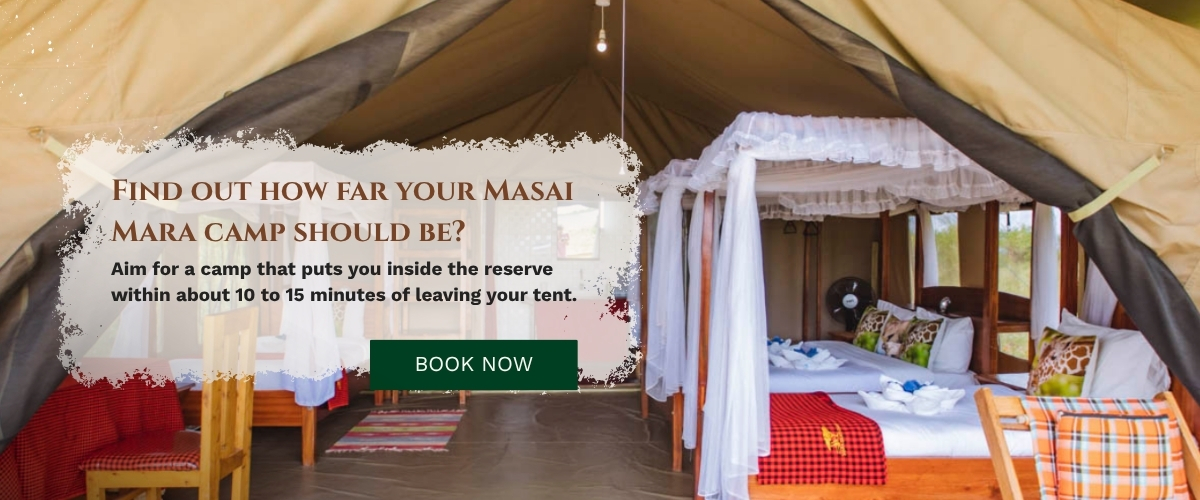
Aim for a camp that puts you inside the reserve within about 10 to 15 minutes of leaving your tent. That’s the drive time from our own camp: 10 minutes to Mpuaai Gate and 15 minutes to Talek Gate. Beyond that range, more of your safari goes on the road and less on watching wildlife. This matters most from July to October, when migration river crossings can start suddenly and finish quickly.
Distance isn’t everything, though. The right Masai Mara camp also depends on your guides, your comfort, your itinerary and the season you travel. Below, we explain how far camps sit from the gates, what proximity really changes, and how to choose with confidence.
Table of Contents:
- Why Your Camp’s Distance From the Gate Matters
- How Far Are Masai Mara Camps From the Main Gates?
- Does Staying Close to a Gate Mean Better Game Drives?
- What Else Should You Consider When Choosing a Masai Mara Camp?
- How to Choose the Right Location for Your Masai Mara Stay
- Staying at Mara Siligi Camp Near Talek
Why Your Camp’s Distance From the Gate Matters
Distance decides how much of your day goes on travelling and how much on watching wildlife. A shorter drive means more time on the game circuits and a better chance of reaching a sighting before the animals move on.
How location can affect your safari routine
Every game drive starts with getting from your tent to the gate. Your camp’s position sets how long that takes, and that shapes your whole day.
Distance changes three things:
- Time on the circuits. Less time driving to the gate means more time in the reserve.
- Flexibility. If a predator sighting is reported at dawn, a nearby camp lets you leave at dawn. On our drives, the plan follows what’s happening in the bush, not a fixed timetable.
- Your energy. After an evening drive, a short ride back means more time on your deck, at dinner or at the campfire.
Distance matters most during the migration. River crossings can happen suddenly and are over quickly once they start. Camps on the far side of the reserve face long drives to reach the main crossing points, and those minutes decide whether you see the crossing or only the aftermath.
Gate access vs the overall safari experience
Gate access is only one part of a good safari. A camp right beside a gate won’t improve your trip if you’re tired, rushed or poorly fed once you’re there.
When you compare Masai Mara safari accommodations, treat gate distance as one line on a longer checklist. Also look at how well you’ll sleep, who guides you, how the day is planned and what’s included. We cover each of these below.
How Far Are Masai Mara Camps From the Main Gates?
It varies widely by camp and by which gate you use. Ask each camp for its drive time in minutes to the specific gate you’ll use. We can only speak for ourselves: 10 minutes to Mpuaai Gate and 15 minutes to Talek Gate.
Understanding distances around the reserve
Camps are spread across the wider Mara ecosystem, and the main gates sit in different areas. A camp can be close to one gate and a long drive from another. That’s why a vague “near the gate” label tells you very little.
Across Masai Mara camps and lodge properties, the transfer to a gate can be short or long. We can’t verify the numbers for other properties, so we won’t quote them here. Instead, ask every camp you shortlist these questions:
- Which gate do you use for game drives?
- How many minutes does it take to drive there?
- How long does it take to reach the main game circuits after that?
Ask for minutes, not kilometres. Drive time is what you’ll actually feel at 6 a.m.
Talek and other common access points
Talek is one of the most useful bases for getting into the northern part of the reserve. Here’s how our location compares with the access points around it:
Access point | Drive time from our camp | Good to know |
Mpuaai Gate | 10 minutes | Formerly called Ol Kiombo Gate, so you may see either name |
Talek Gate | 15 minutes | Main entry for the Talek area |
Ol Kiombo Airstrip | 15 minutes | Fly in from Nairobi or arrive by road |
Our camp is at the foothills of Oldonyo Loip Hill, on the C14 near Talek, Kenya.
Many travellers search for a safari resort near Talek. We’re a family-run tented camp rather than a resort, but we sit in the same part of the ecosystem. It’s central, quiet enough to sleep well, and small enough to get you out early.
If you’re weighing Talek against other parts of the reserve, we’ve shared our view in Mara Triangle vs Talek. In short, Talek suits most first-timers and families who want easy access without long transfers.
Does Staying Close to a Gate Mean Better Game Drives?
Not by itself. A nearby gate gets you to the game circuits sooner, but it doesn’t create sightings. Your guides, your flexibility and the season shape the quality of the drive.
What proximity can and cannot change
Proximity can… | Proximity cannot… |
Shorten your drive into the reserve | Guarantee any particular sighting |
Get you to the northern circuits before large lodge convoys have left | Replace a guide’s knowledge of the land |
Let you react quickly to a dawn predator sighting | Change when the migration arrives |
Leave more of your day for rest, meals and walks | Make a river crossing happen |
Guides do much of the work here. Ours are local Masai guides who grew up near Oldonyo Loip Hill, and their knowledge of this land isn’t something you learn in a classroom. They also stay in radio contact with other guides across the ecosystem. When a crossing is building, we start moving toward it right away.
That’s where short distance and strong guiding work together. Closeness gets you out early, and local knowledge tells you where to go.
Balancing gate access with your safari plans
A safari camp in Masai Mara works best when its gate access matches what you actually want to see. Here’s how that plays out through the year:
- July to October: The Great Wildebeest Migration passes through the northern game circuits closest to us. Herds arrive from mid-July, and Mara River crossings peak between early August and mid-September.
- Dry season: Predators are most active.
- January to March: This is an excellent time for newborn wildlife and birds.
- Year-round: The ecosystem supports more than 400 recorded bird species.
If you’re coming for the migration, put gate distance near the top of your list. If you’re coming for general wildlife, birds or photography, it still helps, but it matters less than the quality of your guide and the pace of your day.
What Else Should You Consider When Choosing a Masai Mara Camp?
Beyond distance, weigh your comfort, how the camp feels, who guides you, what’s included, and how many nights you’ll stay. Together these shape your trip more than a few minutes on the road.
Location, comfort and camp experience
After a long game drive, a few basics matter more than anything else: a proper bed, a hot shower and somewhere quiet to sit. Check these before you book:
- Sleeping and bathroom: Is the bathroom ensuite, with hot water?
- Outdoor space: Is there a private deck with a view?
- Power: How is the camp powered, and is lighting reliable?
- Connectivity: Is there Wi-Fi, and where?
- Food: What are the dining options, and are bush meals included?
- Size: How many guests does the camp host at once?
If you’re comparing mid range tented camps in Masai Mara, look past the headline distance. A well-run tented camp should give you comfort, good food and warm service without removing you from the bush.
Camp size matters too. Smaller camps keep the Mara feeling wild, with fewer vehicles at a sighting and more personal attention from your hosts.
Your planned activities and length of stay
Game drives are the core of any stay, but many camps offer more. Think about what you want to fit in:
- Morning and evening game drives
- Guided nature walks
- Birdwatching
- Maasai cultural village visits
- Hot air balloon safaris
- Photography sessions
- Sunset drinks in the bush and stargazing
Your length of stay changes how much of this you can enjoy. Our guests’ reviews often mention three- and four-night stays, which leave room for drives, walks and slow mornings. A very short stay can feel like a rush from gate to gate, and a longer one lets the Mara settle in.
Also think about travel time on arrival day. If you fly in, check how far the airstrip is from your camp. If you drive from Nairobi, ask the camp to arrange your transfer.
How to Choose the Right Location for Your Masai Mara Stay
Decide your top priority first, whether that’s the migration, family comfort, photography or a combined trip. Then ask each camp for its drive time to your gate, what’s included, and how its guides plan the day.
Questions to ask before booking
Use this list when you contact any camp:
- Which gate do you use, and how many minutes is the drive?
- How are game drives scheduled? Is the plan fixed, or does it follow the wildlife?
- Who will guide me, and how well do they know this area?
- What exactly is included? Are meals, drives, walks and activities covered, and is it confirmed in writing?
- How do I get there, by airstrip or by road, and how far is each from the camp?
- Which tent type suits my group, especially if I’m travelling with children?
- How early do peak dates fill? Camps close to the river typically book out 6 to 12 months ahead for August.
Matching your camp location to your itinerary
The best Masai Mara safari stays match location to purpose. Use this table as a guide:
If your trip is… | Prioritise… |
A migration trip (July to October) | A short drive to the northern circuits, early booking, and guides in radio contact with the wider ecosystem |
A first safari or a family trip | Easy access without long transfers, family tents with separate sleeping areas, and guides used to hosting children |
A photography trip | Early-morning drives timed for good light, plus a place to review and edit shots |
A combined Kenya or Tanzania trip | An easy airstrip transfer and the option to link with Amboseli, Nairobi National Park or the Serengeti |
If you’re unsure, tell the camp your dates, group size and goals, and ask what they’d recommend. A good host will give you an honest answer, even if it means suggesting a different season.
Staying at Mara Siligi Camp Near Talek
We’re a family-run tented camp 10 minutes from Mpuaai Gate and 15 minutes from Talek Gate. We have 10 private tented suites, and every stay is all-inclusive, with meals, game drives and nature walks covered.
Mara Siligi Camp’s location near Talek
Mara Siligi Camp sits at the foothills of Oldonyo Loip Hill. From here, you’re in the main game loops within minutes of leaving camp, with no long morning transfer before the wildlife starts.
That shows most during the migration. Guests staying with us in peak weeks reach the northern game circuits before the larger lodge convoys have left for the day. We don’t have the wrong-gate problem either. Camps on the far side of the reserve face long drives to reach the main crossing points, and we don’t.
If you fly in, Ol Kiombo Airstrip is just 15 minutes away. You can also take the scenic road from Nairobi, and we can arrange your transfer either way.
What to expect from your stay and safari experience
If you want a small, eco-conscious budget friendly camp near Talek, this is what you can expect. We run fully on solar energy and keep our group sizes small, which is rare in this price range.
Your tent. We have 10 tented suites in two types:
- 5 Standard Tents for solo travellers and couples, with double or twin beds, an ensuite bathroom with hot water, a private wooden deck, solar lighting, a writing desk and full toiletries.
- 5 Family Tents with a wider layout, separate sleeping areas and a larger deck. Guides experienced with families are available on request.
What’s included. Every package covers accommodation, all meals, morning and evening game drives, nature walks and cultural activities. We confirm everything in writing before you arrive, and there are no hidden charges.
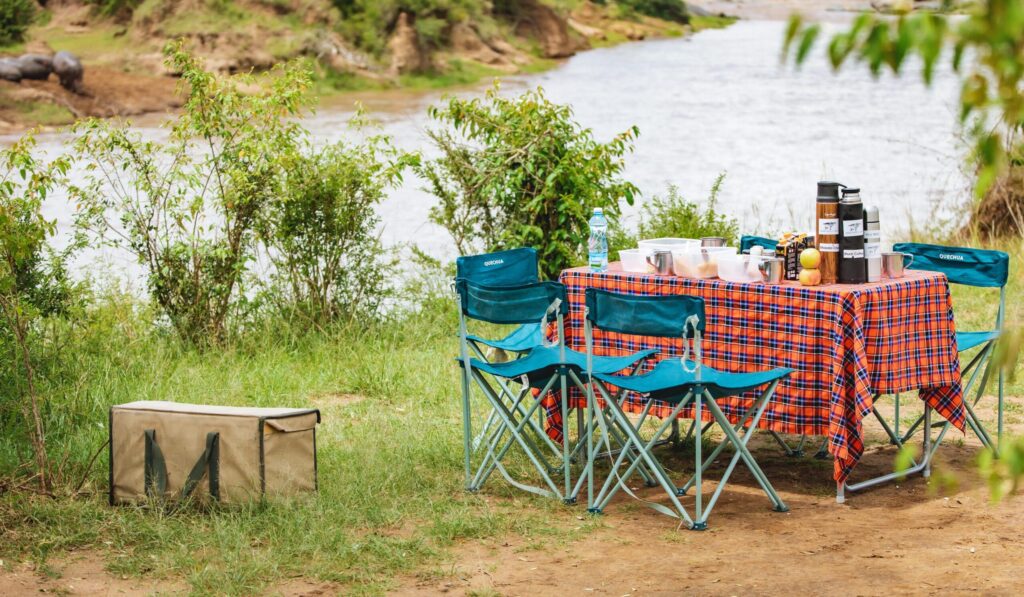
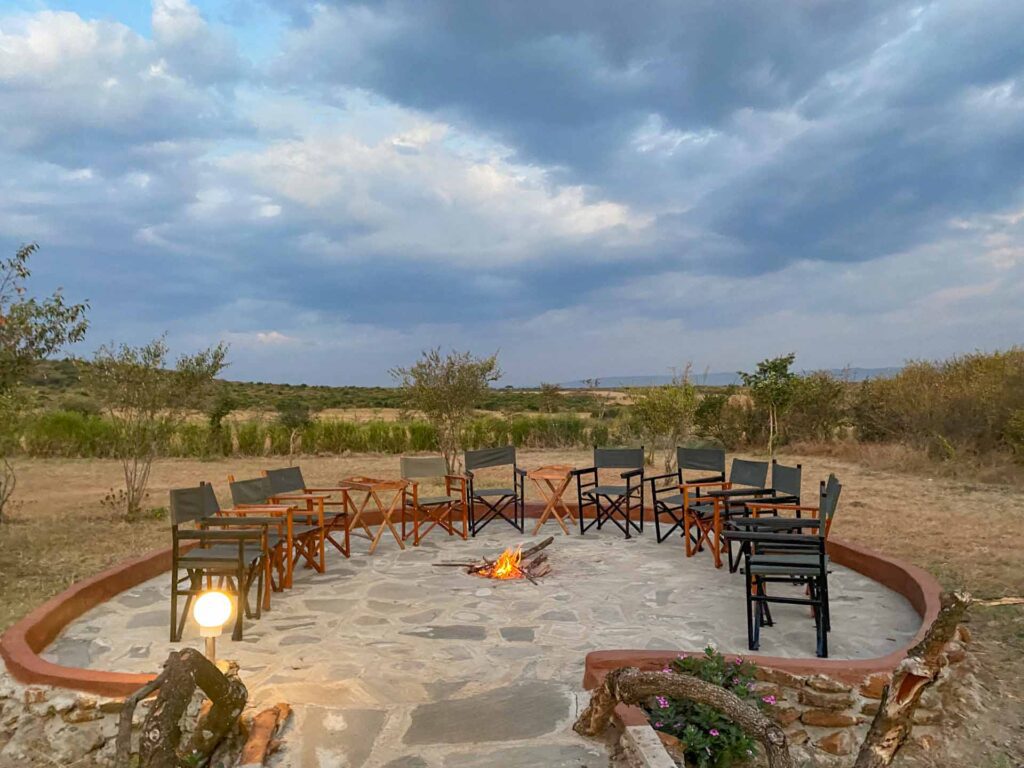
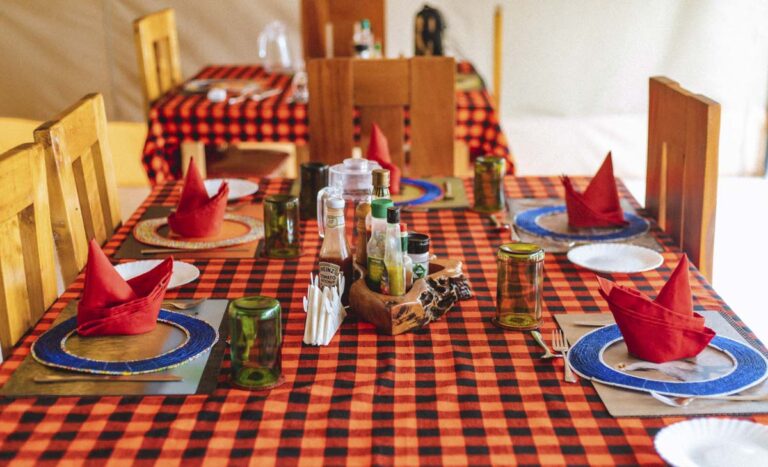
Your meals. We serve fresh, locally sourced breakfasts overlooking the savannah. Depending on the weather and your mood, you can eat indoors or in the bush. Bush meals carry no surcharge, and evenings end around the campfire or in the tented lounge.
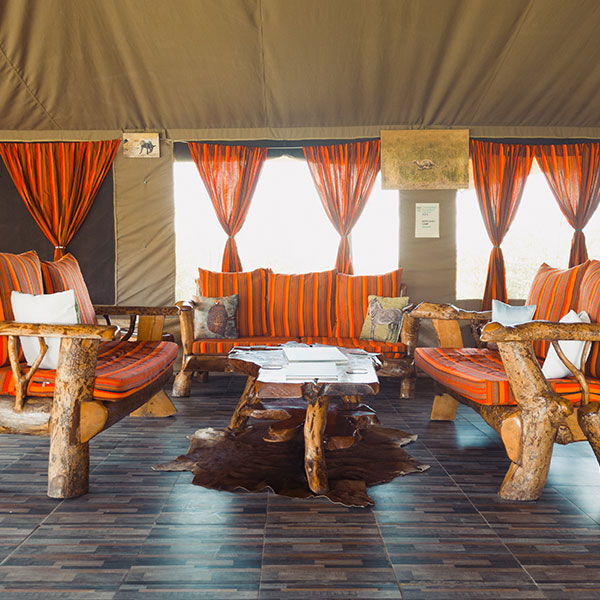
At camp. You’ll find Wi-Fi in the guest lounge, a photography lounge for reviewing and editing your shots, and a massage area for tired legs after back-to-back drives.
Your days. Our Masai guides adjust the plan in real time. If there’s a predator sighting at dawn, you leave at dawn. You can add Maasai cultural village visits, beadwork workshops, hot air balloon safaris, sunset drinks and stargazing.
Our guests rate us 5.0 from 450 reviews on Google and TripAdvisor. One guest who stayed four nights in October 2025 recommended not skipping the morning walk, where you learn about the wildlife and plants. We’d say the same.
FAQs
July to October is best for the Great Wildebeest Migration, with Mara River crossings peaking between early August and mid-September. The Mara rewards visits year-round, though. Predators are most active in the dry season, and January to March is excellent for newborn wildlife and birds.
You can fly directly to Ol Kiombo Airstrip, which is 15 minutes from our camp, or take a scenic road trip from Nairobi. We can arrange your transfer whichever you choose.
Our packages include accommodation, all meals, morning and evening game drives, nature walks and cultural activities. We confirm everything in writing before you arrive, and there are no hidden charges.