Best Masai Mara Photography Tour Locations During the Great Migration
You’ve watched the documentaries. You’ve scrolled through hundreds of wildebeest-crossing photos on Instagram. And now you’re ready to stand behind your own camera and capture that chaos for yourself.
But here’s the thing, not every corner of the Mara gives you the same shot. If you want images that actually stop people mid-scroll, you need to know exactly where to be, when to be there, and who’s guiding you while you’re there.
That’s what we’re breaking down for you today: the best locations for a Masai Mara photography tour during the Great Migration, and how our home base, Mara Siligi Camp — puts you closer to all of them than almost anywhere else in the reserve.
Table of Contents
- Why the Great Migration Is Every Photographer’s Bucket-List Shoot
- Mara River: Your Best Bet for Iconic Crossing Shots
- Talek River: Fewer Crowds, Closer Access from Camp
- Ol Kiombo and Paradise Plains: Where the Predators Wait
- Mara Triangle and Rhino Ridge: Landscape and Golden-Light Photography
- Why Mara Siligi Camp Is Built Around Your Shoot, Not Just Your Stay
Why the Great Migration Is Every Photographer’s Bucket-List Shoot
Between July and October, over two million wildebeest, zebra, and gazelle move through the Mara ecosystem in search of fresh grazing. It’s loud, it’s dusty, and it’s unpredictable, which is exactly why it makes for such powerful photography.
You get:
- Dramatic river crossings with wildebeest leaping into crocodile-infested water
- Predators stalking the herds in golden morning light
- Massive herds stretched across open plains, perfect for wide-angle drama
- Dust, motion, and raw emotion in every frame
If you’re planning a Masai Mara photography tour, timing your trip within this window gives you access to scenes you simply can’t recreate any other time of year. But knowing the season isn’t enough. You also need a base camp positioned close enough to these locations that you’re not burning hours in transit while the light changes. That’s precisely the role our camp plays in your trip, and it’s why so many photographers plan their whole itinerary around staying with us.
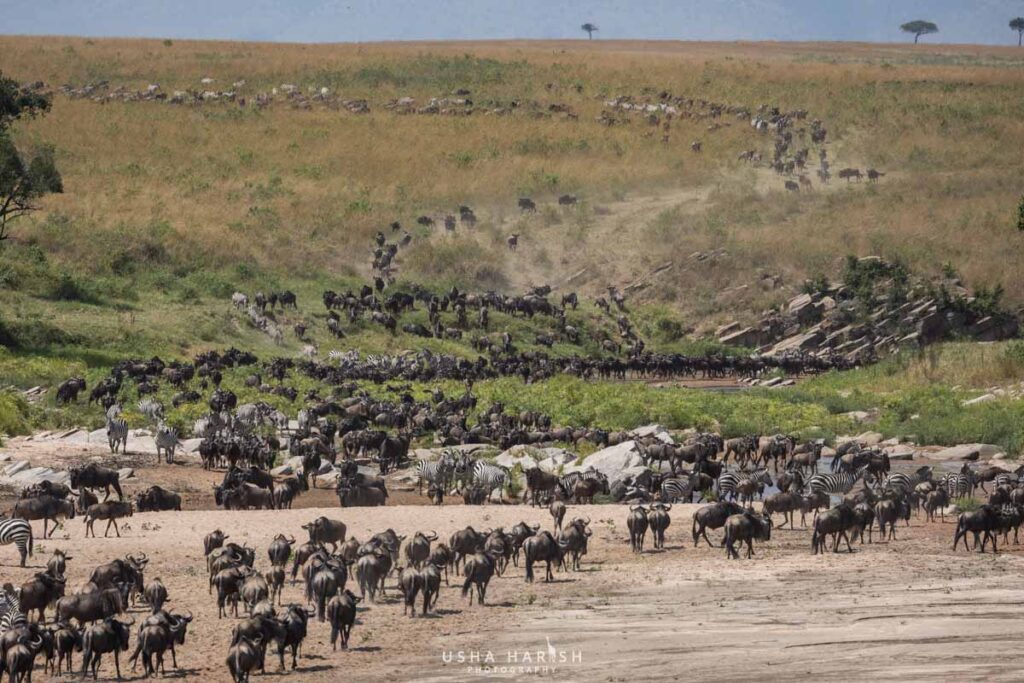
Mara River: Your Best Bet for Iconic Crossing Shots
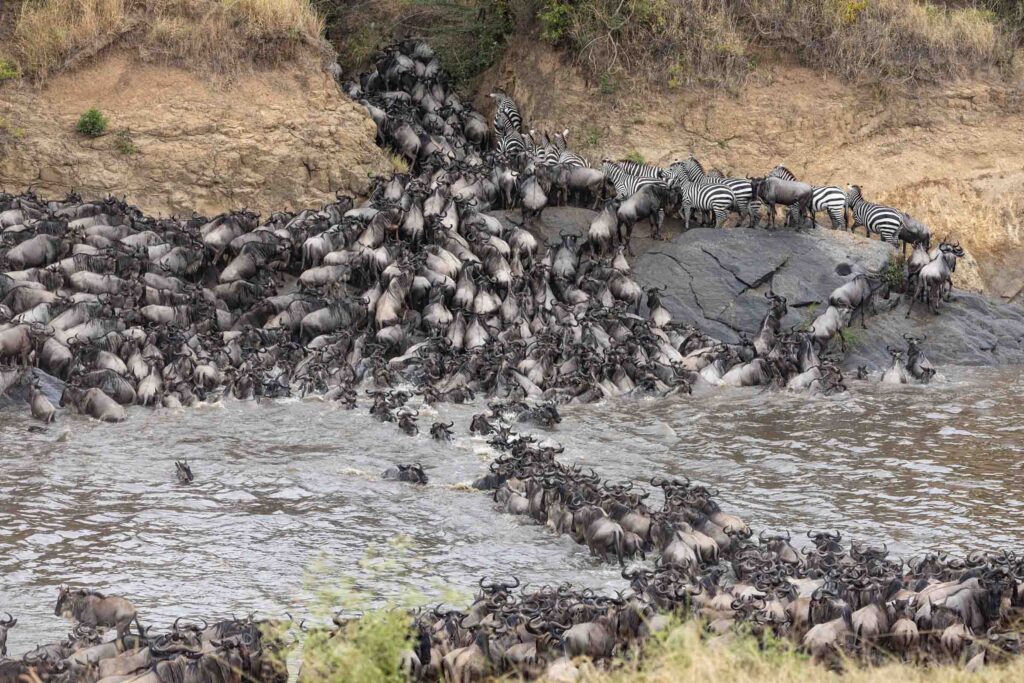
When people picture the Great Migration, they’re usually picturing the Mara River. This is where the herds face their biggest obstacle, and where you’ll find the most dramatic action of the entire season.
Here’s why photographers love it:
- Steep banks give you elevated, unobstructed angles over the water
- Crocodiles waiting in the shallows add tension to your composition
- Multiple crossing points along the river mean you can reposition quickly
- Early morning light bounces off the water, creating natural rim-lighting on the animals
The catch? Crossings don’t run on a schedule. Herds can gather at the water’s edge for hours before committing, and when they do move, it happens fast. This is where local knowledge really matters, knowing which bank the animals are massing on, and reading the herd’s body language before the jump begins.
Our guides track herd movement toward the Mara River daily during migration season, so when a crossing looks imminent, you’re already in position instead of racing to catch up.
Talek River: Fewer Crowds, Closer Access from Camp
If the Mara River feels like the headline act, the Talek River is the quieter alternative that still delivers strong results. It sits close to Mara Siligi Camp, which means less time driving and more time actually shooting.
What makes Talek worth adding to your list:
- Shorter drive times mean you spend more hours with your camera up, not in transit
- Crossings here tend to draw smaller crowds of vehicles, giving you cleaner compositions
- The narrower channel puts you physically closer to the action
- It’s a great spot for photographers who want intimacy over scale
This proximity is one of the biggest reasons guests choose our camp over properties further from the reserve’s core. You wake up, and within minutes you’re already scanning the riverbank for movement, no long transfer eating into your golden hour.
Ol Kiombo and Paradise Plains: Where the Predators Wait
Migration season isn’t only about the herds, it’s also peak season for predators. Lions, cheetahs, and leopards know exactly where the wildebeest gather, and they position themselves accordingly.
Ol Kiombo and Paradise Plains are known for:
- High lion pride density, especially near riverine woodland
- Open grassland that’s ideal for tracking cheetah hunts in full daylight
- Excellent visibility for long-lens shooting without dense brush blocking your frame
- Consistent sightings even outside peak crossing hours
If you’re chasing hunting behavior rather than crossing chaos, this is where you’ll want your guide to prioritize. A good photography tour doesn’t just chase the migration, it balances your time between herd movement and predator action so you come home with a varied, compelling portfolio. Our team plans each day around exactly this balance, alternating between river vigils and predator tracking so neither opportunity gets missed.
Mara Triangle and Rhino Ridge: Landscape and Golden-Light Photography
Not every great photo needs a stampede in it. Some of the most striking migration-season images are wide, quiet, and all about light. This is where Mara Triangle and Rhino Ridge come in.
Why photographers head here:
- Elevated terrain at Rhino Ridge gives you sweeping views over the plains
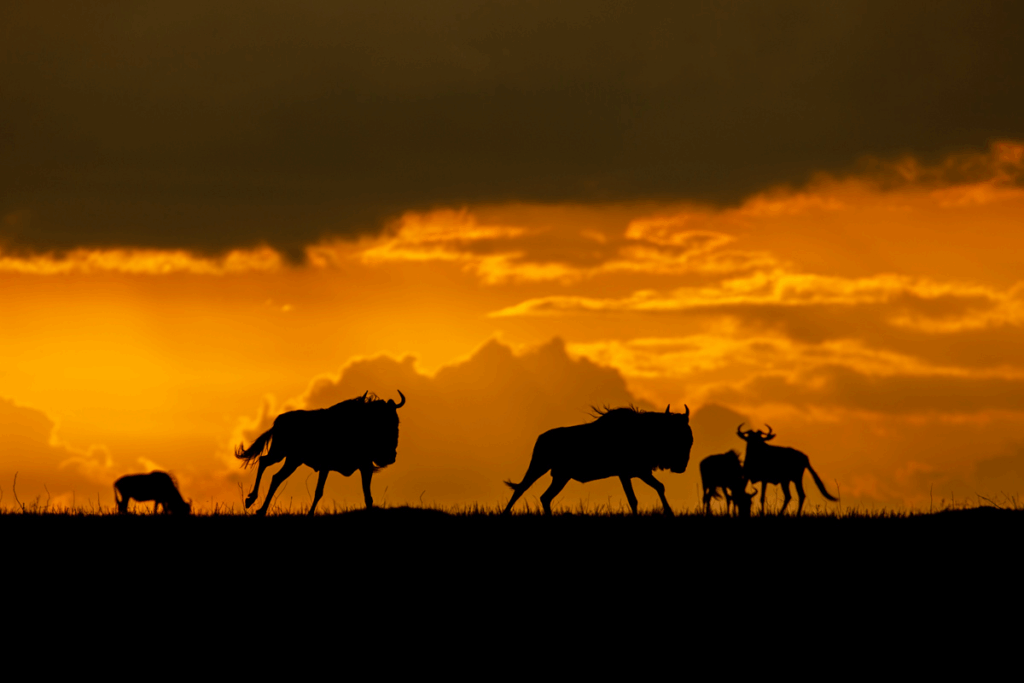
- Acacia trees silhouetted against sunrise and sunset skies create classic African imagery
- The Mara Triangle offers greener, less-trafficked landscape compared to the eastern reserve
- Fewer vehicles mean you can slow down and actually compose your shots instead of rushing
These locations are perfect for the golden hour, that narrow window right after sunrise or before sunset when the light turns warm and soft. If your goal is a mix of wildlife portraits and sweeping landscape shots, we’ll build time here into your itinerary so you’re not choosing between action and atmosphere.
Why Mara Siligi Camp Is Built Around Your Shoot, Not Just Your Stay
This is where we like to think we’re a little different. Mara Siligi Camp wasn’t designed as a place to sleep between game drives, it was built by a photographer, for photographers, and every part of the experience reflects that.
Founded by someone who shoots alongside you
Our camp is co-founded by Usha Harish, a wildlife photographer who has spent years learning the light, the movement, and the moods of this landscape. When you book a Masai Mara photography tour with us, you’re not just getting a driver who knows the roads, you’re getting a team that understands framing, timing, and the patience it takes to get the shot right.
Location that puts you first at every hotspot
Sitting at the foothills of Oldonyo Loip Hill inside the Masai Mara National Reserve, our camp gives you direct, fast access to the Talek River, the wider reserve, and the migration routes without long transfer days eating into your shooting time. That positioning is a core part of why our Masai Mara photography tour packages consistently get photographers into position before the light, and before the crowds.
Vehicles built for photography, not sightseeing
- Open-sided 4×4 Land Cruisers with elevated roof hatches for 360-degree shooting
- Bean bags and camera mounts so you’re not hand-holding a heavy lens for hours
- Power inverters for charging batteries directly in the field
- Cooler boxes, because long hours chasing light still need coffee
A schedule that follows light, not the clock
Instead of fixed departure times, our days move around the best shooting windows:
- Early golden-hour departures instead of a rigid 7 a.m. start
- Midday breaks for editing and resting at camp, rather than shooting in flat afternoon light
- Late-afternoon repositioning ahead of predator activity or river crossings
Comfort that supports long shooting days
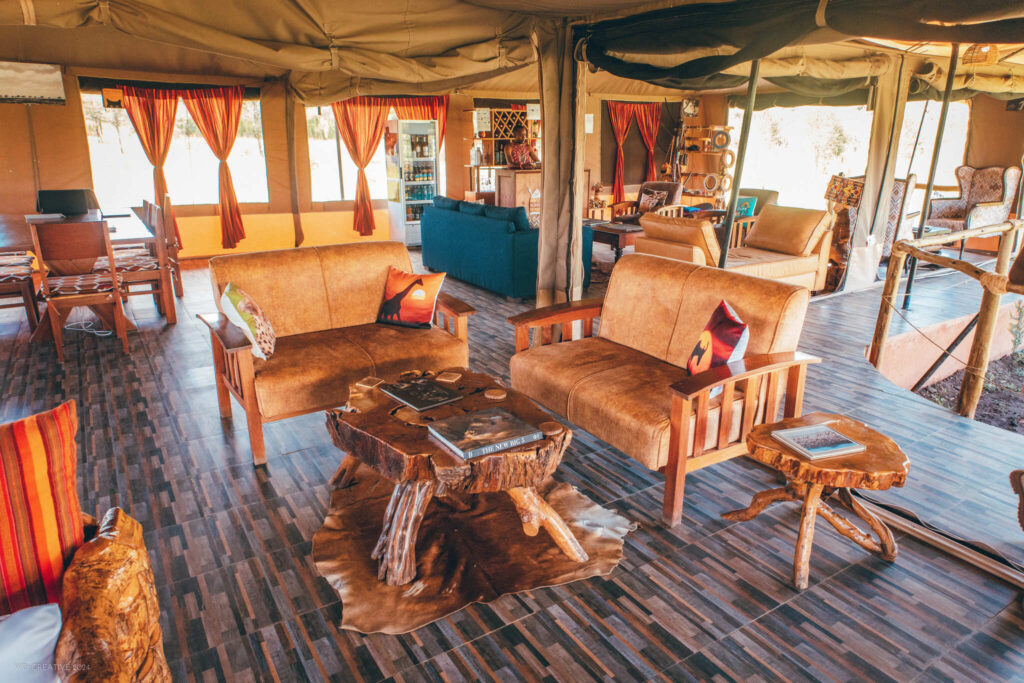
- Spacious tents with charging stations for your gear
- Reliable Wi-Fi at the lounge for backing up your files each night
- Homemade meals, including vegetarian and dietary-specific options
- A post-processing workshop between drives, so you’re editing while the memory is fresh
- Evening bonfire sessions to review shots and plan the next day’s positioning
Small groups for better angles
Large group vehicles mean compromised angles and shared window space. We keep our vehicles to three or four photographers at most, or you can book privately for complete creative control over positioning. Either way, our Masai Mara photography tour packages are designed so every guest gets a clean, unobstructed shot, not a scramble for window space.
Guides who think like photographers
This is where most safari operators fall short. A driver who knows where the animals are is useful. A guide who understands light direction, predator behavior, and how to angle a vehicle for your composition is a completely different level of value, and it’s the standard our whole team is trained to.
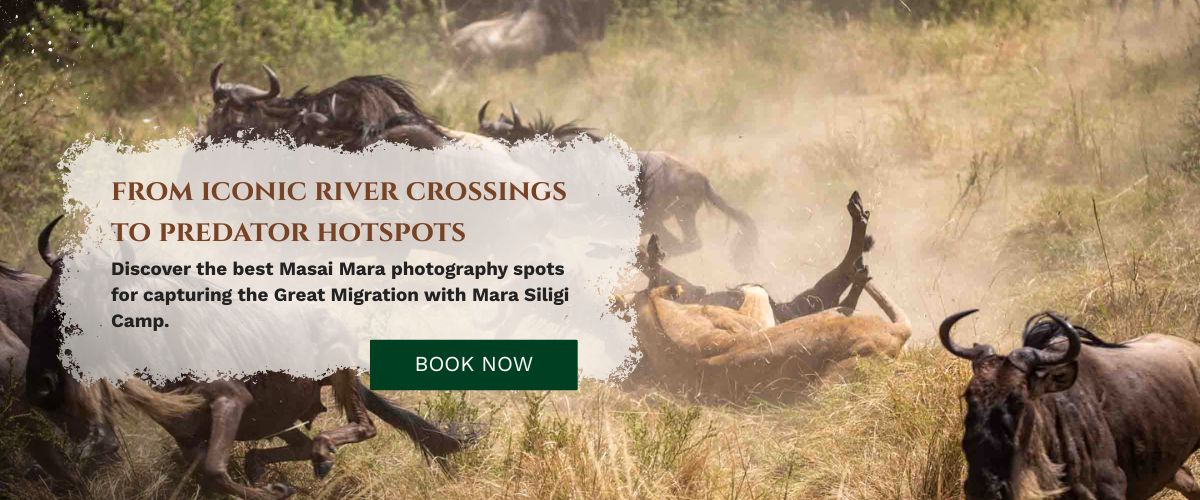
Ready to Plan Your Shoot?
The Great Migration doesn’t wait, and neither should you. Whether you’re chasing your first river crossing or refining a wildlife portfolio you’ve been building for years, choosing the right locations, and the right camp behind you, makes all the difference between snapshots and images you’re genuinely proud of.
If you’re ready to turn this season’s migration into your next great body of work, we’d love to help you plan it. Reach out to us at Mara Siligi Camp, and let’s get you into position for the shot you’ve been chasing.
FAQs
The best time is between July and October, when the Great Migration passes through the Masai Mara. This period offers the highest chance of photographing dramatic river crossings, predator interactions, and large herds in stunning golden-hour light.
Some of the top photography locations include the Mara River for iconic wildebeest crossings, Talek River for quieter and closer shooting opportunities, Ol Kiombo and Paradise Plains for predator sightings, and Mara Triangle and Rhino Ridge for breathtaking landscapes and sunrise or sunset photography.
Mara Siligi Camp is strategically located near key wildlife hotspots, reducing travel time to prime photography locations. The camp offers photography-friendly safari vehicles, small group sizes, experienced guides who understand wildlife behavior and lighting, and flexible game drive schedules designed around the best shooting conditions.