
Masai Mara Birdwatching Photography
The Masai Mara has over 570 recorded bird species. Most photography guides mention three. If every resource you have found leads with the lilac-breasted roller and stops there, this is the guide you have been looking for — specific, technical, and built around what actually produces extraordinary bird photographs in this ecosystem, not what looks good in a brochure.
At Mara Siligi Camp, birding photography is a dedicated part of how we structure drives — not an afterthought slotted between mammal sightings. If you are planning a Masai Mara photography tour and birds are any part of your goal, this guide tells you exactly what to target, how to shoot it, and what everyone else misses.
Table of Contents
- Why We Rate the Mara as Africa’s Most Underrated Bird Photography Destination
- The Birds Most Photographers Target — and the Ones Worth Targeting Instead
- Light, Perch, Background — Three Decisions Made Before the Vehicle Stops
- Camera Settings for Mara Bird Photography — What Every Guest Carries Into the Field
- Habitat by Habitat — Where the Best Bird Frames Come From and When
- The Species That Reward Patience Over Speed
- What Your Masai Mara Photography Tour Packages Must Include for Birding
- How We Build a Birding Drive — and Why It Looks Nothing Like a Standard Game Drive
Why We Rate the Mara as Africa’s Most Underrated Bird Photography Destination
Most people go to the Masai Mara for the Big Five. They leave having photographed 40 bird species without realising it. That gap — between what visitors notice and what the ecosystem actually holds — is why the Mara remains underrated as a bird photography destination.
What makes the Mara exceptional for birds:
- 570+ recorded species across grassland, riverine forest, wetland, and acacia habitats — all within driving distance of a single well-located camp
- A year-round resident population of raptors, ground birds, and waterbirds that do not require seasonal timing
- Migratory influx from November to April adding Eurasian raptors, waders, and shorebirds in significant numbers
- The migration itself — 1.5 million wildebeest — creates one of the most concentrated scavenger photography opportunities anywhere on the planet
- Open terrain that gives you clean backgrounds mammal-dense bush ecosystems simply cannot offer
The problem is not that the Mara lacks extraordinary bird photography. The problem is that most Masai Mara photography tour itineraries are built entirely around mammals. You have to specifically ask for birds to get them structured into your drives. The team at Mara Siligi Camp builds dedicated birding windows into every photography stay — specifically because we hear this complaint from returning guests who tried elsewhere first.
The Birds Most Photographers Target — and the Ones Worth Targeting Instead
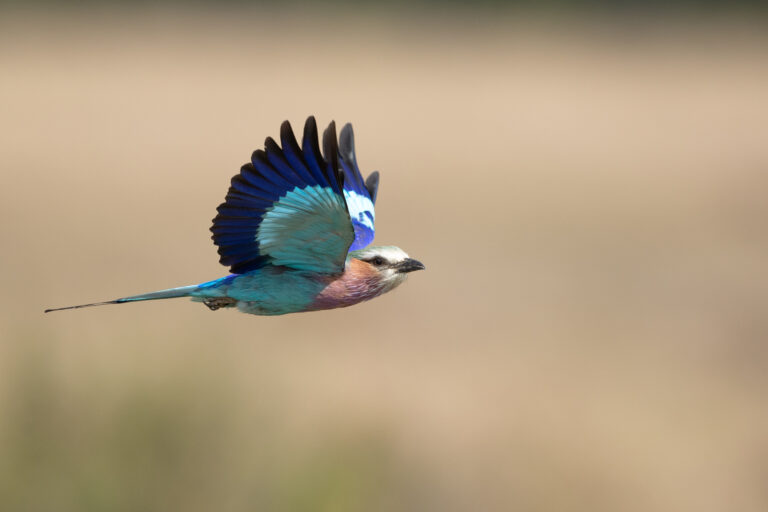
The lilac-breasted roller is the Mara’s most photographed bird. It is also the most straightforward — bright colours, habitual perch sites, tolerant of vehicles. You will get a competent roller frame on day one without trying.
Here is what you should actually be targeting.
The species most photographers walk away without:
- Secretary bird — stalking through open grassland, occasionally stomping prey; requires low vehicle positioning and patience; a frame of this bird in action is genuinely rare
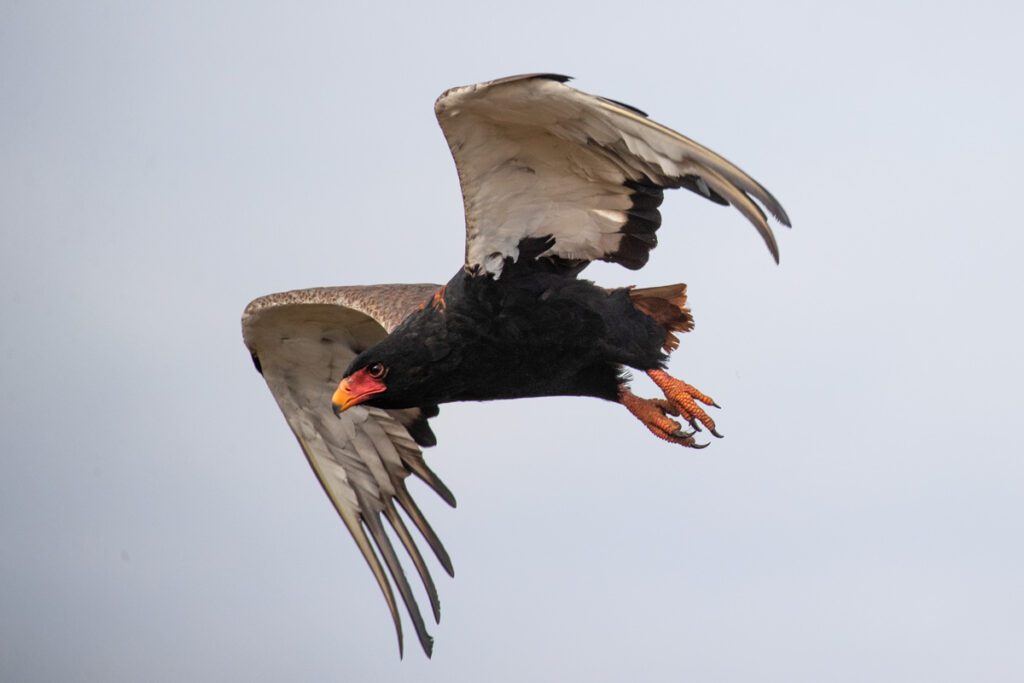
- Martial eagle — Africa’s largest eagle; powerful, fast, and rarely photographed in flight over open grassland; when it appears, your settings need to already be correct
- Saddle-billed stork — extraordinary scale and colour at wetland margins; undershot because most drives do not route to standing water deliberately
- African pygmy falcon — the continent’s smallest raptor; perches repeatedly on the same acacia branches; once you find a territory, the shot comes to you
- Oxpecker on buffalo — consistent, close, behavioural; the relationship between oxpecker and host produces intimate frames that tell a story most bird shots do not
- Vulture cluster at a kill — the scrum of lappet-faced, white-backed, and Rüppell’s griffon vultures around a carcass is organised chaos; the dominant birds, the displaced birds, the interaction — it is action photography of the most intense kind
None of these require rare luck. They require a guide who routes specifically toward them, and enough time at each sighting to wait for the right moment.
Light, Perch, Background — Three Decisions Made Before the Vehicle Stops
Bird photography in the Mara fails for three reasons, consistently. Not gear. Not species availability. These three variables.
Light: Birds are small subjects. Harsh midday light creates hot spots on feathers and kills the structural detail that makes a bird image worth looking at. You need front light or soft side light — which means positioning before 9am and again after 4pm. The golden hour that mammal photographers use is slightly late for most bird photography; the best avian light in the Mara is the thirty minutes before and the thirty minutes after sunrise, when the sky is still partly diffused.
Perch: A good perch does three things — it gives the bird a natural, uncluttered platform, it positions the subject at eye level or below your lens height, and it separates the bird cleanly from the vegetation behind it. At Mara Siligi Camp, guides scout perch sites actively — specific acacia branches, termite mound edges, and fence posts that particular species return to repeatedly. Knowing the perch means you arrive first, position correctly, and wait rather than chase.
Background: This is the variable nobody writes about. A bird photographed against a cluttered background of mixed vegetation and sky is visually unsolvable — the eye does not know where to settle. The Mara’s open grassland offers something rare: clean, receding backgrounds of golden grass or blue sky that isolate a subject entirely. To use this, you need the vehicle positioned so the background is as far behind the bird as possible. This is a compositional decision your guide makes, not you — and it is the fastest way to identify whether your guide understands bird photography.
Camera Settings for Mara Bird Photography — What Every Guest Carries Into the Field
Most bird photography content tells you to “use a fast shutter speed.” Here are the actual numbers that work in Mara conditions.
For perched birds:
- Shutter speed: 1/800s minimum; 1/1250s preferred to freeze any head movement
- Aperture: f/5.6 to f/8 — wide enough to create subject separation, narrow enough to keep the whole bird sharp
- ISO: expose for the bird, not the background — expose correctly and let the ISO climb; a slightly noisy sharp frame beats a clean blurry one
- Focus mode: single-point AF on the eye, always
For birds in flight:
- Shutter speed: 1/2500s minimum; 1/3200s for fast-moving raptors; do not compromise on this
- Aperture: f/6.3 to f/7.1 — you need the wing depth in focus, not just the leading edge
- Focus mode: continuous AF (AI Servo on Canon, AF-C on Nikon/Sony), with subject tracking enabled if your body supports it
- Drive mode: burst at maximum frame rate; you are selecting from a sequence, not a single frame
- Back-button focus: separate your AF activation from your shutter — this lets you lock, recompose, and fire without the camera hunting for focus between bursts
The setting most people get wrong: ISO. Bird photographers routinely underexpose to protect ISO, then try to recover shadows in post. In the Mara’s strong directional light, an underexposed bird loses the iridescent feather detail that cannot be recovered. Expose correctly. Accept the ISO.
Habitat by Habitat — Where the Best Bird Frames Come From and When
The Mara is not one habitat. It is four — and each requires a different time of day, different settings, and different species priorities.
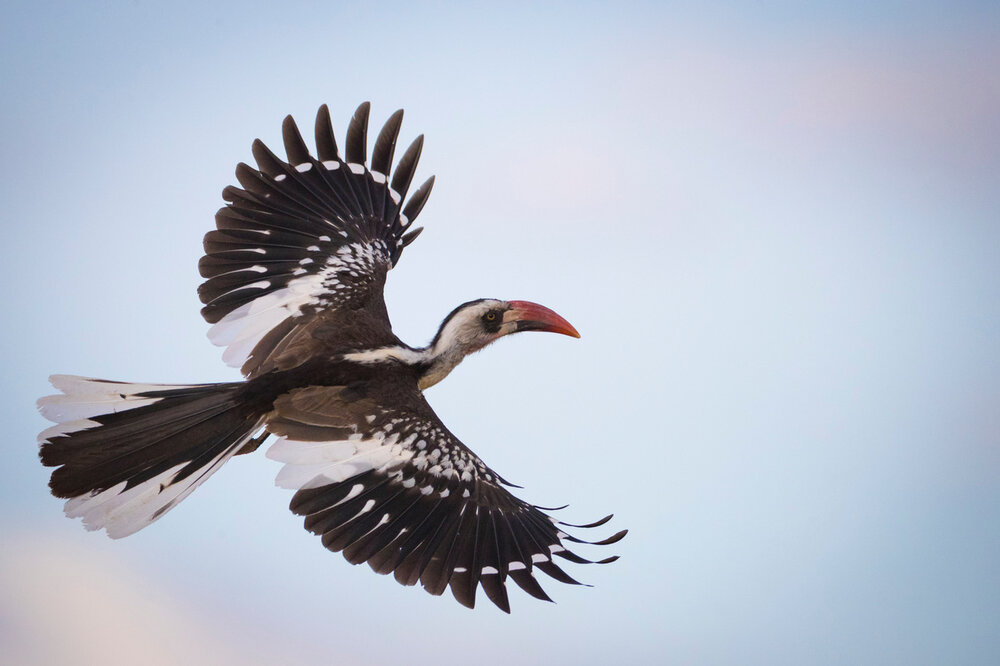
Open grassland (dawn to 9am, 4pm to dusk): Raptors, secretary birds, ground hornbills, bustards, and larks. Low angle light. Fast shutter for flight. This is where your best images come from if you are positioned early.
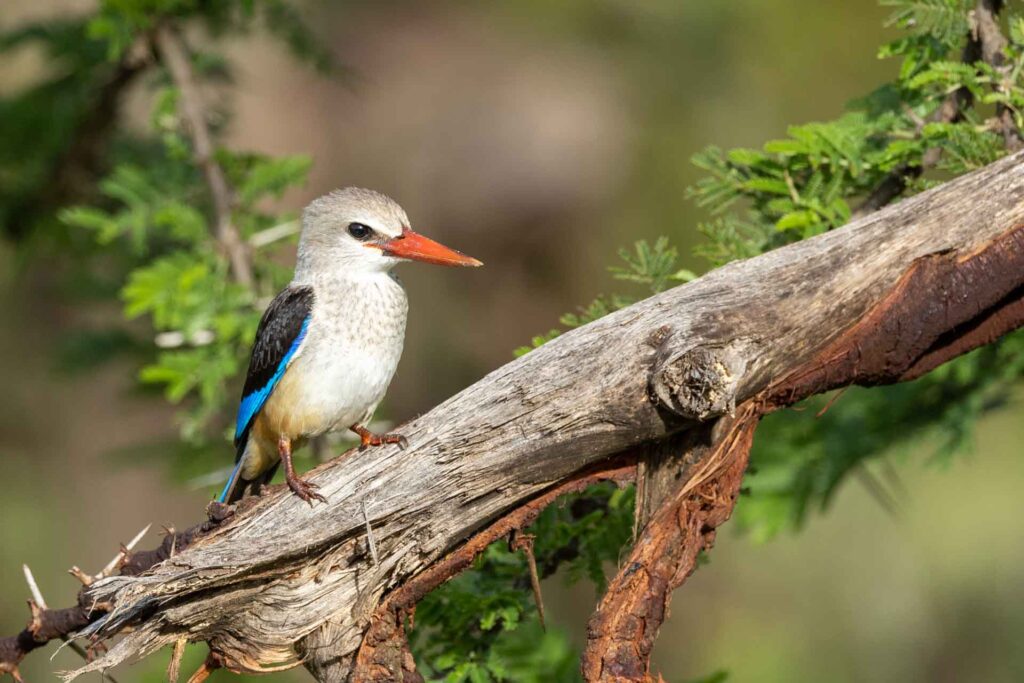
Riverine forest along the Mara and Talek rivers (7am to 11am): Kingfishers, go-away birds, hornbills, turacos, and bee-eaters in the acacia canopy. Softer, filtered light. Slower shutter for perched subjects. Patience-based photography.
Wetland margins and oxbow lakes (any time with overcast sky): Herons, storks, ibis, spoonbills, and waders. Overcast is better than direct sun here — it kills the reflection glare on water. Frame for behaviour, not just standing birds.
Kill sites (unpredictable — follow the guide network): Vultures, marabou storks, tawny eagles, and black-backed jackals. High ISO, fast shutter, burst mode. The lighting is whatever it is — you are shooting for moment, not mood. The Masai Mara photography tour moment that produces your most discussed image is often not a mammal at all. It is a dominant lappet-faced vulture displacing twelve white-backed vultures in a single movement. Any serious Masai Mara photography tour should be routing to active kill sites during migration season specifically for this reason.
The Species That Reward Patience Over Speed
Some birds in the Mara are only available to photographers who can sit quietly for twenty minutes without fidgeting, adjusting gear, or talking.
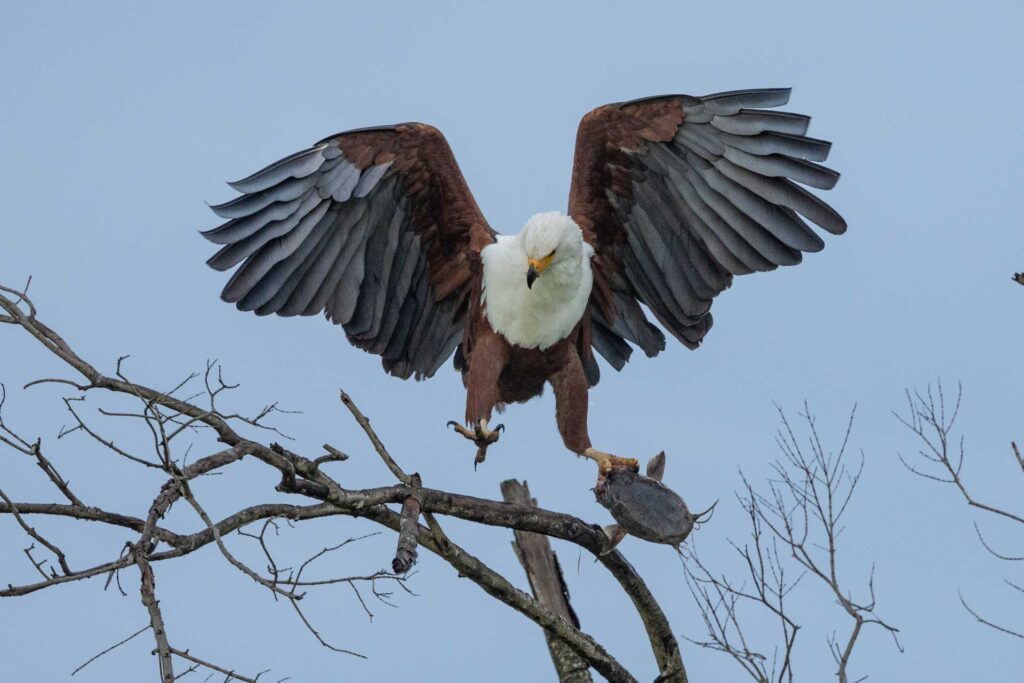
African fish eagle: You will hear it before you see it. It calls from a fixed perch above the river, drops to the water surface for fish, and returns to the same branch. If you are positioned and still before it begins, you get the dive sequence. If you arrive after it has already started, it has already finished.
Martial eagle hunting: Rare and impossible to predict, but when it happens over open grassland it is one of the most technically demanding shots in bird photography — a large bird at speed, against a bright sky, descending fast. Your settings must already be correct. There is no time to adjust.
Ground hornbill family group: These birds move slowly across open ground in family groups of three to eight. They are not shy. They are simply deliberate. Sit at ground level with the vehicle engine off and they will walk toward you. Most Masai Mara photography tour packages that include a specific birding morning will work this species into the early ground-level drive — engine off, vehicle still, at the edge of the family group’s known circuit. A good Masai Mara photography tour guide knows the difference between walking toward ground hornbills and waiting for ground hornbills to walk toward you. The second approach always produces better frames.
What Your Masai Mara Photography Tour Packages Must Include for Birding
If birding photography is any part of your trip goal, your package needs to be built around it — not offered as an optional extra after the mammal drives are scheduled.
Ask specifically before you book:
- Does the guide have dedicated birding photography knowledge, or general wildlife guiding experience?
- Are birding drives timed to match the habitats you want to shoot — river at 7am, grassland at dawn, wetland in overcast conditions?
- Is the vehicle configured for low-angle bird photography — can you shoot from a genuinely low position, not just a roof hatch?
- Does the itinerary include dedicated time at known kill sites during the migration for vulture photography?
- Are morning and afternoon drives structured as separate sessions with a habitat-specific brief for each?
Strong Masai Mara photography tour packages for birding answer every one of these questions clearly before you confirm. If the response is vague — “we cover all species” — that is your answer too.
How We Build a Birding Drive — and Why It Looks Nothing Like a Standard Game Drive
Mara Siligi Camp does not treat bird photography as a mammal drive with bonus sightings. Dedicated birding drives run as a separate session with a specific habitat plan, a species target list based on current seasonal conditions, and a guide briefing the evening before that covers expected light, target perch sites, and camera settings to carry from camp.
If you are combining mammal and bird photography across a six-day stay, we split the drive structure deliberately:
- Dawn drive: open grassland and raptor territory, mammal-priority with bird opportunism
- Mid-morning river drive: dedicated birding window, riverine and wetland species
- Afternoon drive: mammal-priority return with grassland bird coverage at dusk
Mara Siligi Camp sits 10 minutes from Mpuaai Gate and 15 minutes from Talek — meaning you reach the river corridor and the open grassland circuits within minutes of entering the reserve. For bird photography, that gate proximity is the difference between catching the pre-9am light and arriving into flat midday conditions.
The best Masai Mara photography tour packages for birding combine this kind of structured habitat routing with a guide who understands the difference between recording a species and photographing it. That distinction — between a field tick and a portfolio image — is what this guide, and every drive we run, is built around.
FAQs
Yes. The Masai Mara has 570+ recorded bird species, including raptors, vultures, hornbills, storks, kingfishers, and migratory birds across multiple habitats.
A strong tour should include dedicated birding drives, expert bird photography guides, low-angle shooting setups, and habitat-based routing for wetlands, rivers, and grasslands.
The best bird photography light is from sunrise to 9am and again after 4pm, while migratory bird activity is strongest between November and April.