Safari Camp in Masai Mara: Complete Guide to Costs, Seasons & Planning
Choosing a safari camp in Masai Mara is the single most important decision in your entire trip. Not the flights. Not the season. The camp. Where you sleep, who guides you, how your drives are structured, what is included in your rate and what gets added at checkout — all of this is determined by the camp you choose. We have watched guests arrive at the Mara underprepared and spend the first day managing confusion rather than watching wildlife. We have also watched guests arrive with complete clarity — knowing exactly what they paid for, what to expect, and what the morning drive looks like before they even land at the airstrip. The difference is almost always the camp they chose and the conversation they had before booking.
This guide walks you through every decision clearly. What safari camps include, what they cost in real terms, when to come, what a day actually looks like, and the mistakes we see catch first-time visitors off guard year after year. By the time you finish reading, you will know exactly what to look for and exactly what to ask before you book.
Table of Contents:
- Why the Masai Mara Is the Ultimate Safari Destination
- Types of Safari Camp in Masai Mara
- What a Safari Camp in Masai Mara Includes
- What Affects the Cost of a Safari Camp
- The Best Time to Visit Masai Mara
- What a Typical Safari Day Looks Like at Mara Siligi
- What to Pack for a Masai Mara Camp
- Tips to Plan Your Safari Camp Stay Smartly
- Mistakes to Avoid When Booking a Safari Camp
Why the Masai Mara Is the Ultimate Safari Destination
We have been based here long enough to stop being surprised by the Mara — and we are still surprised by the Mara. That is the honest answer to why guests keep coming back and why first-timers consistently tell us nothing prepared them for what they saw on the first morning drive.
The Masai Mara is not simply one of Africa’s great wildlife reserves. It is the benchmark against which every other safari destination is measured. The open savannah, the density of predators, the annual Great Migration of over two million wildebeest, zebra, and gazelle — nothing in the natural world quite prepares you for what the Mara delivers from the open roof of a 4×4 at dawn.
What makes a safari camp in Masai Mara different from any other wildlife accommodation is proximity. You are not visiting the wildlife from a distance. You are sleeping inside the ecosystem. Lions hunt within earshot of your tent. Elephants pass through the corridors between camp and the reserve boundary at dawn. The Mara River, where the migration crossings happen, is minutes from our safari resort near Talek Gate. You are not a tourist looking in from the outside. You are inside the landscape, and the landscape behaves accordingly.
What makes staying at a Masai Mara safari stay specifically worth choosing over a lodge or hotel-style accommodation:
- You are positioned inside or immediately adjacent to prime game-viewing territory — not a forty-five minute drive away from the action
- The tented format connects you directly to the sounds, smells, and rhythms of the bush in a way no fixed structure can replicate
- Smaller camp sizes mean more personalised guiding, more flexible drive scheduling, and a genuine relationship with the land rather than a managed tour through it
- The Maasai cultural connection — our guides, our community relationships, the traditional knowledge embedded in every drive — is woven into the camp experience in a way that no city hotel can offer
- Dawn drives are possible because our camp is already where it needs to be — no transfers, no logistics, just the vehicle and the open plains at first light
Types of Safari Camp in Masai Mara
Not all Masai mara camp and lodge are built the same. Understanding the three tiers before you compare options saves you from either overpaying for things that do not matter to your experience or underpaying and arriving disappointed. We are honest about where we sit and what that means for you.
Budget safari camps
Budget camps offer basic tented accommodation — usually without en-suite bathrooms, with shared meal facilities, and with shared or limited game drive vehicles. They are the right choice for travellers who want to be in the Mara on a tight budget, or for those combining a Mara stop with a longer Kenya itinerary and managing costs carefully across multiple destinations.
What we tell guests considering budget camps: the savings in accommodation often get absorbed by park fees, which are charged regardless of where you stay and are significant during peak season. Calculate the full cost — not just the tent rate — before deciding a budget camp represents the saving it appears to be.
Mid-range safari camps
This is where we sit — and we are proud of it. Mid-range camps like Mara Siligi Camp offer en-suite tents, full-board meals, private game drives, and a camp size small enough to feel genuinely personal. This is the tier where most first-time visitors find the best balance: you are not managing logistics or sharing a vehicle with strangers, but you are also not paying for a spa facility or a private pool that competes with the bush for your attention.
At this tier, what matters most is what is actually included. A mid range tented camp in masai mara that includes park fees, private drives, and all meals at a transparent total rate is genuinely better value than a cheaper camp that charges for each of these separately. We always ask guests to compare our total cost to a competitor’s total cost — not headline rates that can mean very different things depending on what each property includes.
Luxury and ultra-luxury camps
Luxury camps offer private butler service, exclusive conservancy access, premium dining, and — at the ultra-luxury end — helicopter transfers and private reserve exclusivity. The experience is extraordinary and the price reflects it. The wildlife access is often genuinely better due to conservancy positioning outside the main reserve where vehicle limits are tighter.
Our honest view: for most travellers visiting the Mara for the first time, the upgrade from mid range to luxury does not proportionally improve the core experience — the drives, the wildlife, the guides. Where luxury camps justify their premium is in privacy, exclusivity, and the refinement of non-drive time. If those elements matter deeply to you, the premium is worth it. If the wildlife is the primary reason you are coming, our camp delivers the same drives, the same wildlife, and the same guiding quality at a fraction of the luxury price.
What a Safari Camp in Masai Mara Includes
This is where the most confusion — and the most budget surprises — happen in the Mara. Here is what a complete, honest safari camp package covers, and how we structure ours at Mara Siligi.
Accommodation
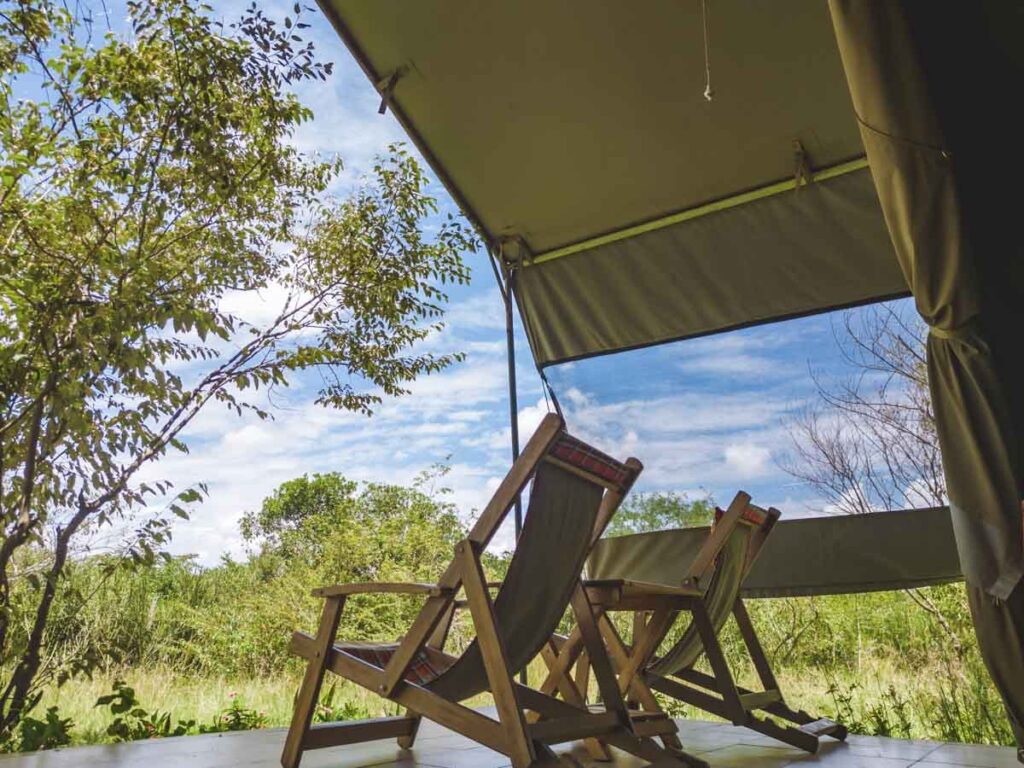
Our tents are en-suite with private bathrooms, hot showers, comfortable beds, and a private deck that looks directly onto the bush. Housekeeping happens every day. Solar power runs around the clock — your devices stay charged, your camera batteries are always ready. You return from your evening drive to a clean, made-up tent every night regardless of how long the afternoon drive ran.
Full-board meals
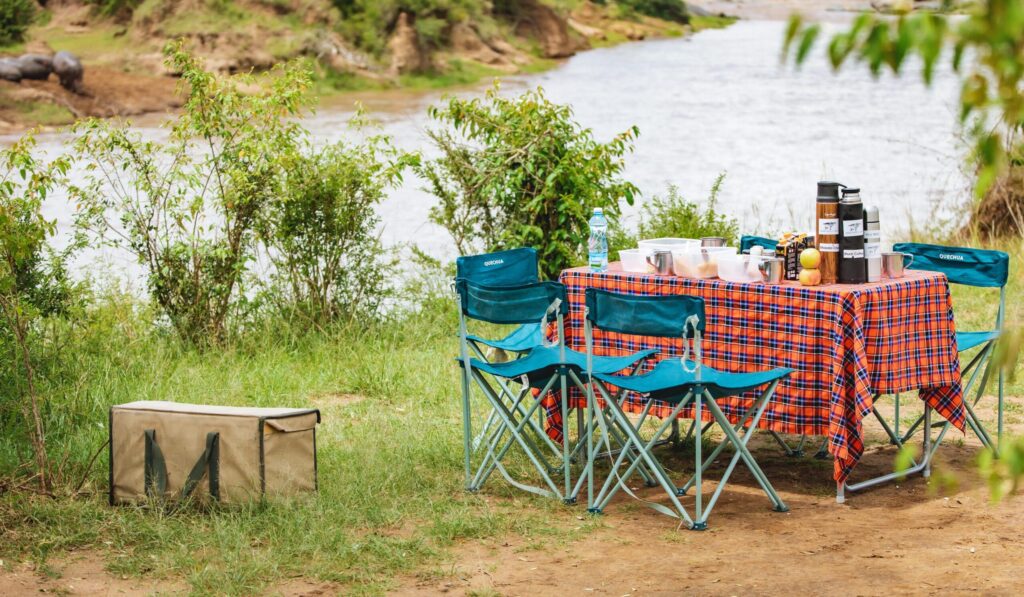
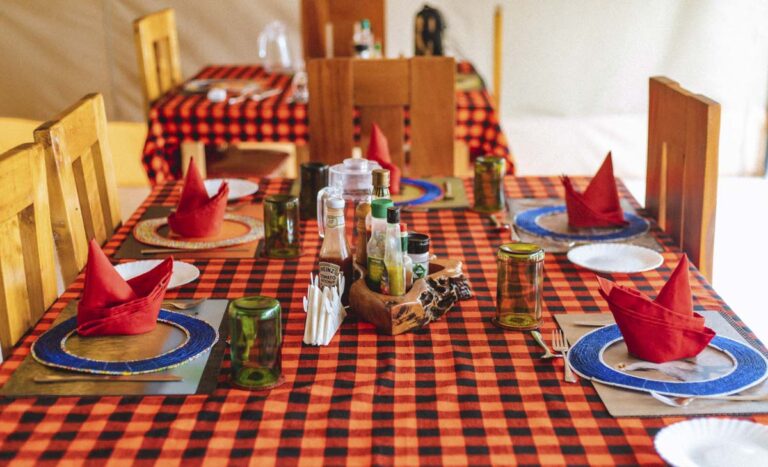
Every package at Mara Siligi Camp is full-board. Breakfast is ready before your morning drive — hot and cold options, tea and coffee prepared and waiting. Lunch is served when you return, either at camp or as a packed bush picnic on a full-day drive. Dinner is a proper sit-down meal, often under an open sky with the sounds of the bush around you. Tea, coffee, and soft drinks are available throughout the day. You do not think about food logistics during your stay with us. That is the point.
Game drives
Every masai mara safari accommodation experience at Mara Siligi is built around private game drives. Your vehicle, your guide, your group — nobody else. Morning and evening drives are included in every package as standard. Full-day drives are available and worth building into your stay, especially during migration season when time at the river translates directly into crossing opportunities.
Camp activities
These are included in every stay with us and never charged separately:
- Guided nature walks from camp with our experienced Maasai guides
- Stargazing sessions on clear evenings — zero light pollution, full Milky Way overhead
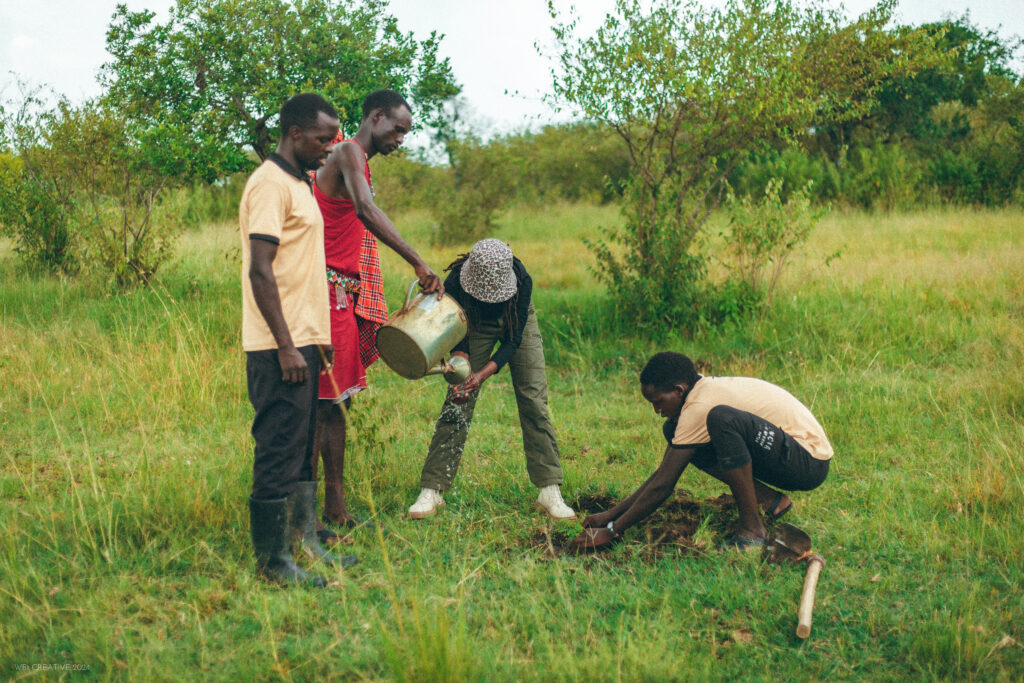
- Cultural visits to nearby Maasai communities through trusted relationships we have built over years
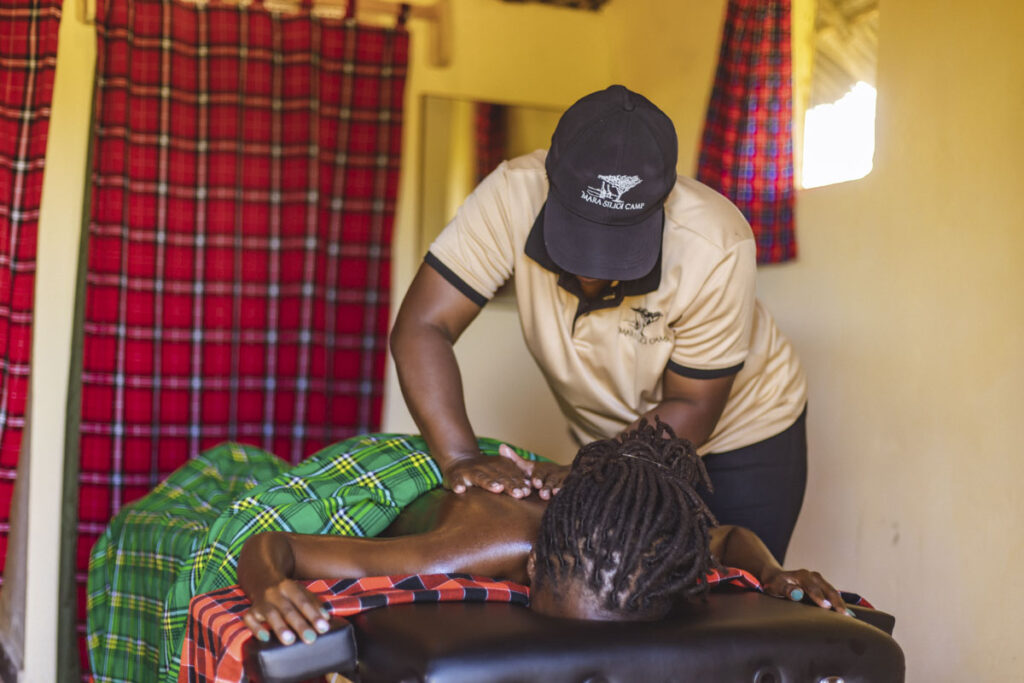
- Full access to our camp lounge, photo workspace, and wellness area
- Sundowner in the open plains — our guide selects the spot, cold drinks are on us, the horizon is yours
Optional add-ons
- Hot air balloon safari — we arrange it through trusted operators, always a separate cost
- Extended multi-destination itineraries — we can combine your Mara stay with Amboseli, Lake Nakuru, or Diani Beach
What Affects the Cost of a Safari Camp
Understanding what drives the cost of a masai mara camp stay helps you compare quotes accurately and avoid being misled by low headline rates. Here is how we think about it and what we tell every guest who asks us to help them compare.
Season
Peak season runs July through October — the Great Migration window. Park entry fees are higher during this period and camp demand is at its strongest. Green season runs March through May and November with significantly lower rates across all tiers. Shoulder season — January, February, and June — sits between the two in both wildlife quality and pricing.
Park entry fees are the one figure worth knowing specifically. The Masai Mara National Reserve charges a daily conservation fee per person for every day you drive inside the reserve:
- Peak season: USD 200 per adult per day
- Green season: USD 100 per adult per day
- Children aged 3–15: approximately USD 50–100 depending on season
This fee is charged on top of accommodation at most camps. At Mara Siligi Camp, we include it and state it clearly in every quote. Always ask any camp whether this fee is bundled or billed separately — it is the most common source of budget surprise for first-time Mara visitors.
Camp type and tier
As outlined above, budget, mid range tented camp in masai mara, and luxury camps operate at fundamentally different price points. Within each tier, what is included varies significantly. We always encourage guests to ask for a total cost breakdown rather than a nightly rate — the difference in what that number represents from camp to camp is often substantial.
Private vs shared drives
Our camps only offer private game drives. We made this decision early and have not reconsidered it. A camp that offers shared vehicles costs less per person on the drive line item. What that saving costs you in experience quality is, in our view, never worth it. The drive is where your safari actually happens.
Location
We sit ten minutes from Mpuaai Gate and fifteen minutes from Talek Gate. Every minute you save in transit is a minute you spend inside the reserve. That proximity is built into our camp rate and it is one of the most concrete pieces of value we offer every guest.
The Best Time to Visit Masai Mara
Every month in the Masai Mara delivers a genuinely different experience. The question is not whether any particular month is good — they all are — but which experience matches what you are looking for. Here is how we explain it to guests who ask us when to come.
Season | Months | Wildlife | What We Tell Guests |
Peak | Jul–Oct | Great Migration, river crossings, maximum predator activity | Book 4–6 months ahead. August fills first |
Shoulder | Jan–Feb, Jun | Calving season, excellent predator activity, fewer vehicles | Our honest recommendation for value seekers |
Green Season | Mar–May, Nov | Lush landscapes, baby animals, dramatic skies, empty plains | The most underrated window in our calendar |
Peak season — July to October
This is the Great Migration window and the reason most first-time visitors come to the Mara. Hundreds of thousands of wildebeest crossing the Mara River, predators at maximum density, the entire ecosystem at its most dramatic. If the migration is your primary reason for coming, plan for this window. Book your masai mara safari accommodations four to six months in advance — our August availability is consistently the first to fill each year.
Shoulder season — January, February, June
January and February are the months we recommend most enthusiastically to budget-conscious guests who want world-class wildlife. The calving season brings predator concentrations that rival peak season in intensity. Cheetah mothers with cubs, lion prides hunting actively, hyena clans working the edges of calving herds — the wildlife activity is extraordinary and the vehicle numbers are dramatically lower. You will often have sightings entirely to yourself.
Green season — March to May, November
Green season is the most misunderstood window in our calendar. The afternoon rains last an hour and clear to skies that our photographer guests specifically travel for. The plains turn a shade of green that peak-season visitors never see. Our budget friendly camp near Talek rates are at their most accessible during this window and the experience our guides tell us they personally find most rewarding.
What a Typical Safari Day Looks Like at Mara Siligi
Understanding the rhythm of a day with us helps you arrive prepared — physically, creatively, and in terms of what to expect from each session.
5:00am — Wake call. Tea, coffee, and light snacks ready at our dining area. Your guide briefs you on overnight sightings, any predator activity reported by our network, and where the morning drive is heading
5:30am — We depart for the reserve. The drive to the gate in pre-dawn light is often productive in itself — nocturnal animals returning, early bird activity, the landscape before the day arrives
6:00–10:30am — Prime game drive window. Golden hour light, active predators, migration herds on the move. This session produces the majority of your strongest sightings across your stay with us
10:30am — Return to camp. Full breakfast served. Camera equipment charged. Our guides review the morning with you and discuss afternoon positioning based on what we saw and where the activity is building
11:00am–3:30pm — Rest period. Midday light is flat and the wildlife is resting in shade. We use this window for editing, reading, or simply sitting on your tent deck watching whatever moves across the plains
4:00pm — Afternoon drive departs. The light softens from 4:30pm. Predators become active again, herds settle at water sources. Different from the morning in character but equally rewarding
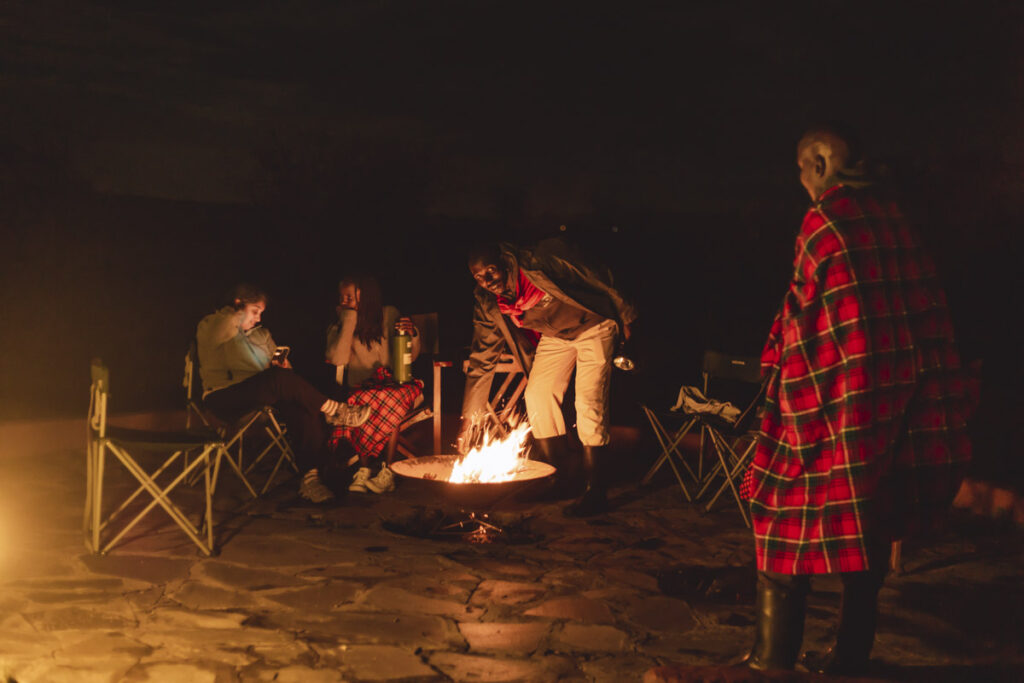
6:30–7:00pm — We return to camp as last light fades. Dinner. Campfire. Tomorrow’s drive planned around today’s sightings and your guide’s instinct for where to be at first light
This rhythm compounds across your stay. By day three, our guides know what you want to see, you know the landscape, and the drives feel like returning to a place you are beginning to understand rather than being taken somewhere new.
What to Pack for a Masai Mara Camp
Packing for a stay at mid range tented camps in masai mara requires different thinking from hotel travel. Here is what we tell every guest who asks us:
Clothing
- Neutral colours — khaki, olive, brown, beige. Bright colours disturb wildlife and are uncomfortable in the bush heat
- Layers — our mornings are genuinely cold even in peak season. A fleece or light down jacket for the dawn drive is essential, not optional
- Long sleeves and trousers for evening — mosquito protection at dusk matters
- Comfortable closed walking shoes for our bush walks
- A wide-brimmed hat for midday sun between drives
Photography and electronics
- Camera with telephoto lens — 300mm minimum, 400–600mm preferred for our game drive distances
- Extra batteries and memory cards — significantly more than you think you need
- Bean bag for vehicle shooting — we provide these but guests with preferred sizes bring their own
- Dust protection for all equipment — our tracks generate significant dust in dry season
- Universal power adapter — our tents have charging points running on solar power
Health and safety
- Malaria prophylaxis — consult your physician before travel and begin as directed
- High-factor sunscreen — the Mara sun on an open-roof vehicle is intense
- Insect repellent — DEET-based for evening use around camp
- Any prescription medication in sufficient supply — our nearest pharmacy is in Narok town
- Travel and medical evacuation insurance — bring documents in both digital and printed form
Documents
- Kenya eVisa — apply at evisa.go.ke well before your departure date
- Yellow fever certificate if required by your routing
- Your booking confirmation from us — we use it for gate access administration
Tips to Plan Your Safari Camp Stay Smartly
Book directly with us
When you book directly with Mara Siligi Camp, you communicate with the people who will actually be your hosts, your guides, and your camp team. You get accurate information about inclusions, direct answers to specific questions, and the ability to customise your stay before you arrive. We do not use intermediaries and we do not charge more for direct bookings — we charge less, because we are not paying a platform commission.
Ask us for the total cost in writing
Before you compare our quote to any other camp’s, ask every camp you are considering for a written total per-person cost for your specific dates and group size — accommodation, park fees, meals, drives, and transfers combined. Comparing headline rates without this full picture is not a comparison. We send this breakdown to every prospective guest before they pay a deposit, without being asked.
Build in more nights than you think you need
Three nights is our minimum recommendation for a meaningful masai mara safari stays experience. Four to five is where the Mara stops feeling like a highlight reel and starts feeling like a place. The first drive is orientation. The second is where you start reading the landscape. By day three you are not watching wildlife — you are understanding it. Do not shortchange yourself on time in the bush.
Choose your season intentionally
We do not have a best season we push to every guest. We ask what matters most to you — the migration, the value, the intimacy, the photography — and we recommend the window that matches your priorities. Peak for the crossing drama. Shoulder for world-class wildlife at better value. Green for the most personal Mara experience at our most accessible rates.
Prioritise your drive over your tent
If you have a fixed budget and are choosing between a better tent and a private vehicle, choose the private vehicle every time. The tent is where you sleep. The drive is where your safari happens. A standard tent after a private dawn drive in golden light beats a luxury suite after a shared vehicle every time. We have never offered shared vehicles and we never will.
Mistakes to Avoid When Booking a Safari Camp
Booking too late for peak season
Our August availability fills four to six months in advance. If your heart is set on the Great Migration river crossings and you start looking in June, your options at well-located camps — including ours — will already be limited. Set your dates, contact us early, and pay your deposit while the dates you want are still available.
Comparing camps on headline rate alone
The nightly rate is the least useful number in any safari camp comparison. What matters is the total per-person cost for your specific dates — accommodation, park fees, meals, drives, and transfers all included. Two camps at the same headline rate can have a total cost difference of several hundred dollars per person once park fees and drive costs are factored in. We always encourage guests to do this comparison on total cost and we make it easy by providing our full breakdown upfront.
Choosing a shared vehicle to save money
The saving on a shared drive is real in the short term. The cost to your experience is also real. In a shared vehicle, your guide makes decisions for the group average. You stop when the group decides and move when the group decides. At a sighting that matters to you — a leopard with a kill, a cheetah teaching cubs to hunt — you want to stay as long as the moment lasts. In our vehicles, you do.
Not asking what is included before you book
Park entry fees, airstrip transfers, laundry, Wi-Fi, activities — these are all line items that camps handle differently. Some include everything. Some include nothing beyond the tent. The only way to know is to ask, in writing, before you pay a deposit. We send a written inclusions breakdown to every guest before we request any payment. If a camp cannot or will not do this, that tells you something important.
Underestimating park entry fees
The Masai Mara National Reserve conservation fee is a significant daily cost — USD 200 per adult per day in peak season, USD 100 in green season. On a five-night stay during August, that is USD 1,000 per adult in park fees alone before a single meal, night of accommodation, or game drive is paid for. We include this fee in our packages and state it clearly in every quote. Always confirm with any camp whether it is bundled or billed separately before you compare their rate to ours.
Overpacking
Our vehicles have limited storage and our bush walks are more comfortable with less. Pack soft-sided bags — they fit into vehicle storage far more easily than rigid suitcases. We offer same-day laundry service. You need significantly less than you think for a week in the bush. Every extra kilogram makes both the journey and the experience less comfortable than it should be.
Ready to Book Your Safari Camp in Masai Mara?
We are Mara Siligi Camp — a masai mara camp near the Talek Gate. Full-board, all-private drives, park fees included, and a team that has helped hundreds of travellers plan their first and most memorable Mara safari. Tell us your dates, your group size, and what matters most to you. We will send you a complete written breakdown before any deposit is requested.
FAQs
Choose a camp based on its location, inclusions, guide quality, and whether it offers private or shared game drives. Always compare the total experience, not just the room rate.
A minimum of three nights is recommended to experience multiple game drives and wildlife encounters. Four to five nights allow for a more relaxed and rewarding safari.
Yes, private game drives offer greater flexibility, personalized wildlife viewing, and more time at sightings. They provide a significantly more immersive safari experience than shared vehicles.