Masai Mara Photography Tour
There is a version of a Masai Mara photography tour that looks impressive in a brochure and delivers very little in the field. Overcrowded vehicles, drives that leave at dawn because it sounds good rather than because the light demands it, and a guide who positions the vehicle for the animal — not for your lens.
Then there is the version that actually works.
This post sets the baseline. It applies whether you are booking a dedicated wildlife photography safari kenya itinerary or adding photography drives to a standard migration stay. And tells you exactly what to look for — and ask for — when comparing masai mara photography tour packages.
If you are serious about your photography, read every section.
Table of Contents
- Vehicle Setup — What We Use and Why
- Group Size on a Masai Mara Photography Tour — Why We Cap at 4 Per Vehicle
- Safari Drive Timing: Optimizing Golden Hour for Masai Mara Photography
- The Editing and Mentorship Component — What Is Included vs What Costs Extra
- Location Advantage — 10 Minutes From Mpuaai Gate
- What Mara Siligi Gives You That Other Packages Do Not
- Who Should Book a Masai Mara Photography Tour With Us
Vehicle Setup — What We Use and Why
A Masai Mara photography tour lives or dies on the vehicle. Before you book anything — any camp, any package, any guide — ask specifically about the vehicle. The answer tells you almost everything. The second question to ask is whether your masai mara photography guide actively shoots alongside you — or simply drives and points.
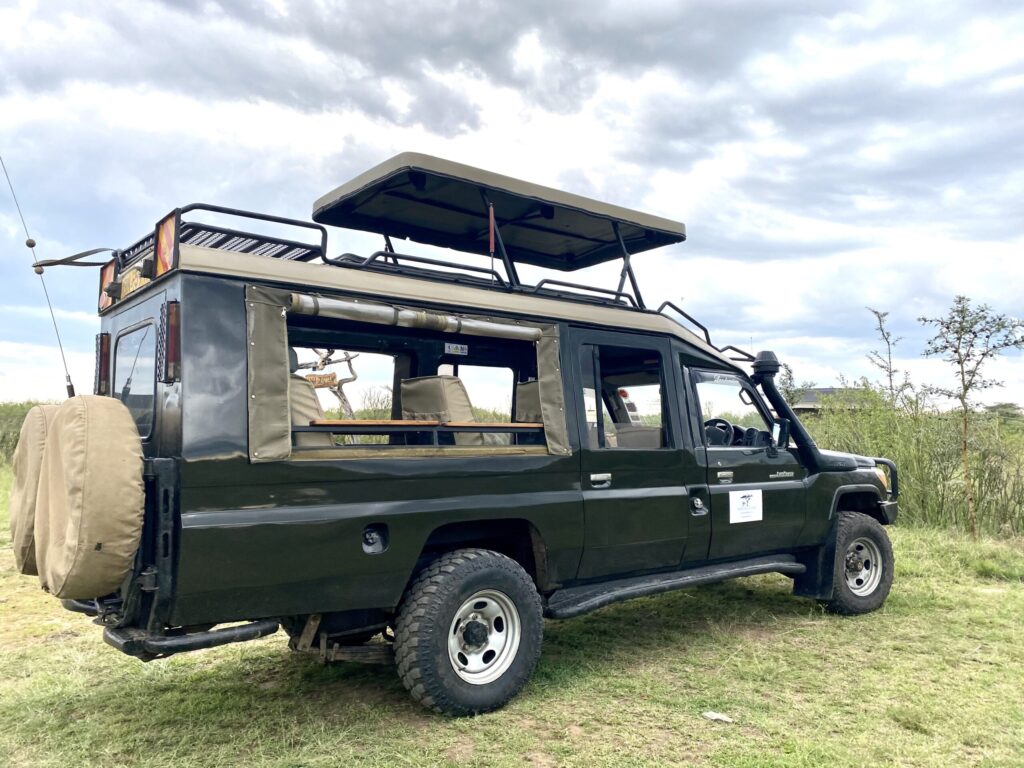
At Mara Siligi Camp, we use open-sided 4×4 vehicles with a roof hatch for elevated shooting. Here is why each element matters:
Open 4×4 vs Closed Pop-Top Roof
Closed vehicles with pop-up roofs force you to shoot from a standing position through a narrow opening. You lose shooting angles below the horizon, your movement is restricted, and in a vehicle with multiple photographers, you are constantly negotiating space and bumping into each other.
An open-sided vehicle gives you:
- Full lateral shooting across 180 degrees without repositioning
- Low-angle shots that are impossible through a pop-top
- Unrestricted lens movement — critical for tracking fast-moving subjects
- Better communication with your guide mid-drive without shouting over vehicle sides
Bean Bags — Non-Negotiable
A bean bag resting on the vehicle door or roof rail is the single most effective image-stabilisation tool available on a game drive — more effective than any in-body stabilisation system at long focal lengths. We provide them on every vehicle. If a photography package does not mention bean bags, ask why.
Roof Hatch for Elevated Perspective
For eye-level shots of taller subjects — giraffe, standing elephant, birds on high perches — elevation matters. Our roof hatch gives photographers the option to shoot from height without switching vehicles or missing the moment while repositioning.
What to ask any operator: Is the vehicle open-sided or pop-top? Do you provide bean bags? How many people share the vehicle?
Group Size on a Masai Mara Photography Tour — Why We Cap at 4 Per Vehicle
This is the standard most masai mara photography tour packages get wrong — and it is the one that affects your images most directly.
A standard game drive vehicle holds 6–8 passengers comfortably. A photography vehicle should hold significantly fewer. At Mara Siligi Camp, we cap dedicated photography drives at 4 photographers per vehicle. Here is the practical reason for every number above that.
What Happens at 5 or 6 Photographers Per Vehicle
- Shooting angles conflict. At 5 or 6 people, at least two photographers are always shooting through or across each other. Someone always has a door frame in their shot. Someone is always waiting.
- The vehicle cannot be positioned for everyone simultaneously. A guide optimising position for 6 different focal lengths and shooting preferences is optimising for nobody. With 4, a position that works well works for everyone.
- Vibration compounds. Every additional person on a vehicle increases movement and vibration. At long focal lengths — 400mm, 500mm, 600mm — vehicle shake is the enemy of sharpness. Fewer people means a more stable platform.
- Decision-making slows. In a fast-moving wildlife situation, 6 people with different subjects in mind creates hesitation. 4 photographers can agree on a position in seconds.
We will not put more than 4 photographers on a dedicated photography vehicle. If a camp offers you a photography package on a vehicle with 6 or more people, that is a general game drive with a nicer name.
Safari Drive Timing: Optimizing Golden Hour for Masai Mara Photography
Every camp will tell you they do early morning drives. Very few camps actually time their drives around the light. For photography in the Mara, timing is not a small operational detail — it is the difference between coming home with technically acceptable wildlife photos and images that genuinely feel cinematic, atmospheric, and alive.
We plan our photography-focused drives around natural light conditions first, because wildlife photography is ultimately about light far more than equipment.
What “Early Morning” Actually Means for Photography
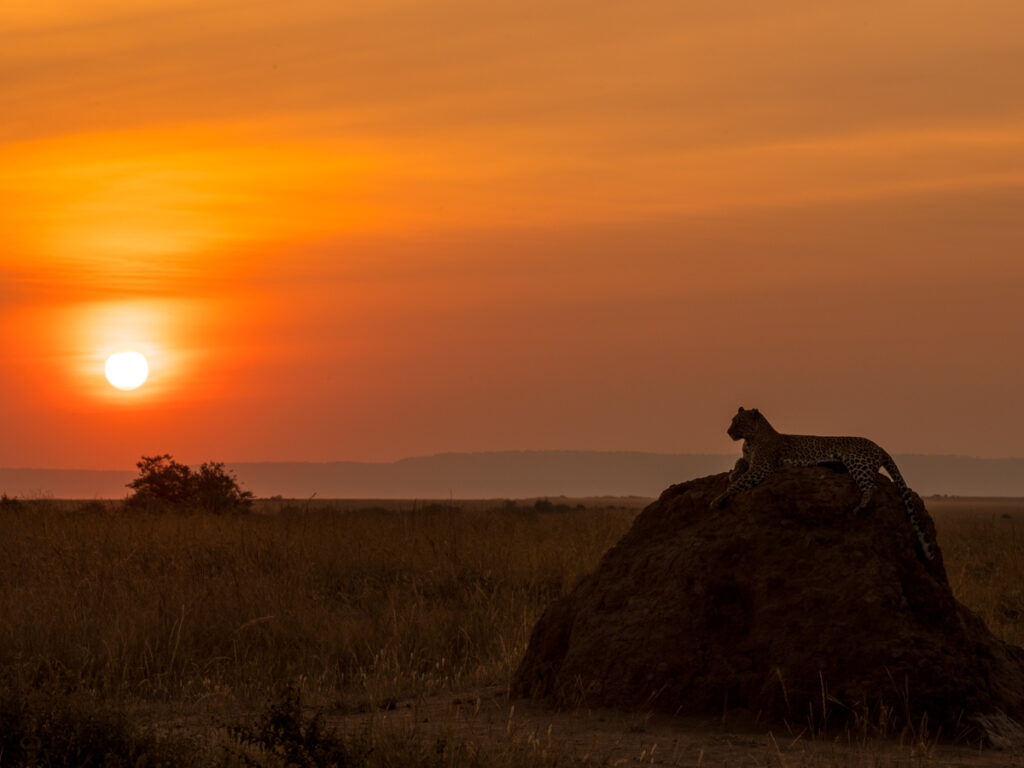
The golden hour in the Masai Mara is not a metaphor. Golden hour wildlife photography africa is not just a phrase photographers use — in the Mara, that 30-minute window is genuinely the difference between a frame and a photograph. That window closes fast.
During this period, dust in the air softens the light beautifully, animal movement is at its peak, and the low-angle sun creates the kind of texture, shadow, and eye detail photographers spend entire safaris chasing. It is also when the Mara feels most dramatic — cool air, long shadows, and predators still active from the night before.
At Mara Siligi Camp, our photography drives leave before first light — typically 05:30 to 05:45 depending on the time of year — so that you are positioned at your first location by sunrise, not driving toward it while it happens without you.
What Most Camps Actually Do
Most camps time drives around breakfast service, staff rotas, and what is convenient. A 06:30 departure sounds early. In practice, it puts you at the first sighting at 07:00–07:15, well past the best light of the day. By 09:00 you are driving in flat, harsh mid-morning light that is technically easier but photographically unremarkable.
This matters especially on a serious Masai Mara photography tour, where the quality of light often shapes the entire mood of an image. Wildlife sightings alone are not enough — timing and positioning are what elevate a photograph from a record shot into something memorable.
Afternoon Drives — The Second Golden Window
We time afternoon drives to return after last light, not before dinner service. The 30 minutes before sunset — when the light turns orange and predators begin to move — is the second non-negotiable window of any serious Masai Mara photography tour. Leaving early to make a 19:00 dinner sitting misses it entirely.
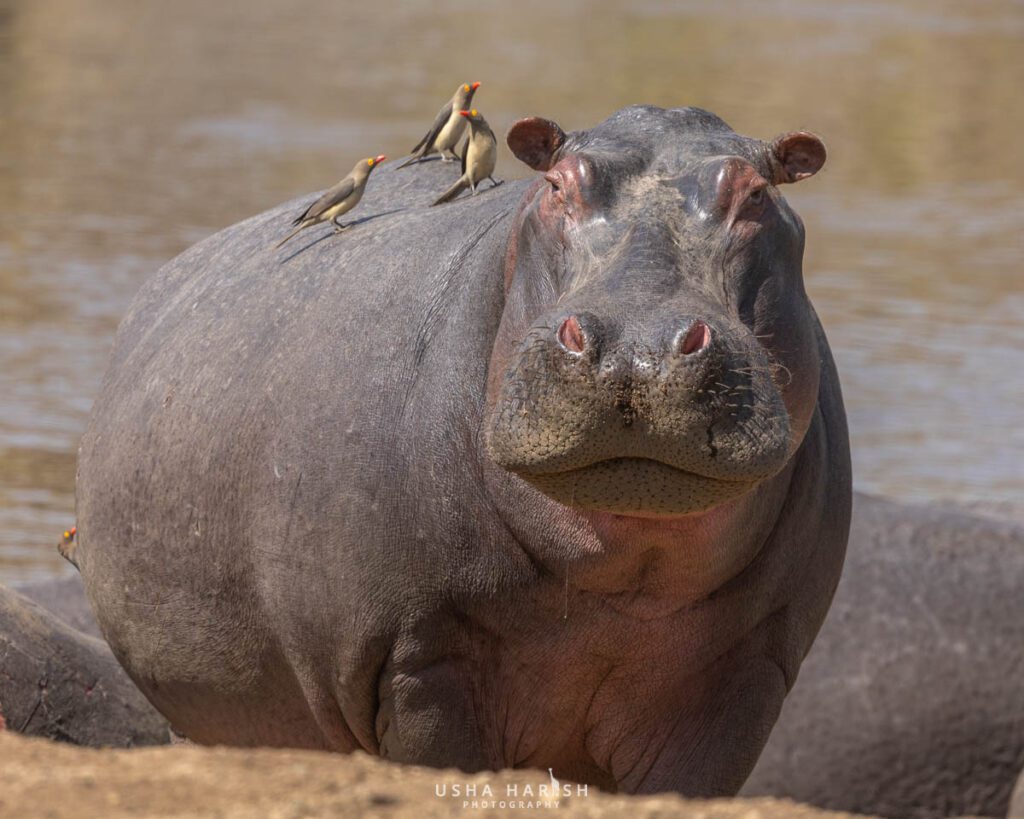
Late afternoon is also when the plains begin to soften visually. Dust catches the light, silhouettes become possible, and animal behaviour often becomes more active again after the midday heat. For photographers, this is one of the most rewarding parts of the day in the Mara ecosystem.
At Mara Siligi, dinner moves around the drive. Not the other way around.
The Editing and Mentorship Component — What Is Included vs What Costs Extra
This is the section where masai mara photography tour packages vary most widely — and where marketing language most frequently obscures what you are actually getting.
What Is Included at Mara Siligi Camp
- In-field coaching during drives — your guide-photographer works with you on positioning, timing, and anticipating animal behaviour before the critical moment arrives. This is not a lecture; it is real-time collaboration
- Morning image reviews at the photography lounge — informal, low-pressure sessions where the previous drive’s images are discussed as a group
- Camera settings consultation before drives — particularly useful for guests transitioning to new equipment or unfamiliar with wildlife-specific settings. This covers best camera settings for safari wildlife in practical terms — shutter speed, ISO, burst mode, and autofocus behaviour for fast-moving subjects in variable light.
What Costs Extra — We Will Always Tell You Upfront
- Dedicated one-to-one post-processing sessions — if you want extended individual Lightroom or Capture One mentorship, this is available as an add-on and priced separately
- Printed contact sheets or edited selects from your stay — available on request at additional cost
- Dedicated wildlife portrait sessions with specific briefed guide attention — available as an upgrade on longer stays
We tell you this before you book, not after you arrive. If a photography package does not clearly separate what is included from what costs extra, ask for a written breakdown.
Location Advantage — 10 Minutes From Mpuaai Gate
In wildlife photography, proximity to action is a multiplier on everything else. The best vehicle, the most skilled guide, and the most perfectly timed drive still cannot compensate for spending 45 minutes transiting to your first sighting.
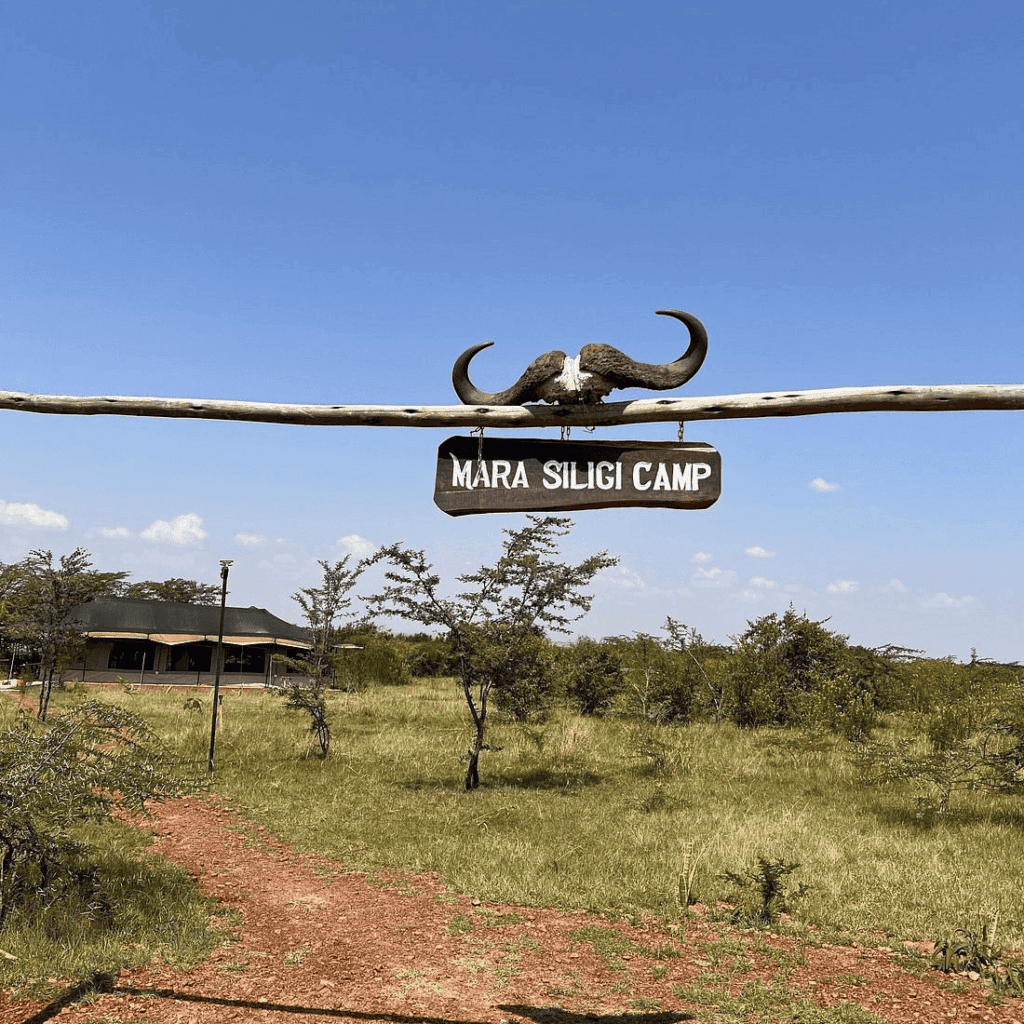
Mara Siligi Camp sits 10 minutes from Mpuaai Gate, which is one of the primary access points to the central Mara ecosystem. In practical terms:
- You are in prime wildlife territory within 10 minutes of leaving camp — not 30 or 45
- When a crossing is reported at the Mara River, your guide can reach the location before most vehicles that started the same drive from further-positioned camps
- Your morning golden hour is spent photographing subjects, not driving to them
Why This Matters Specifically During Migration Season
River crossings begin and end without warning. A herd that has been building at the bank for two hours can commit and cross in 4–7 minutes. Camps positioned close to the active crossing corridors reach those moments. Camps positioned on the periphery often arrive to find it already over.
For any Masai Mara photography tour that targets migration crossings, camp location is not a comfort variable. It is a photographic one.
What Mara Siligi Gives You That Other Packages Do Not
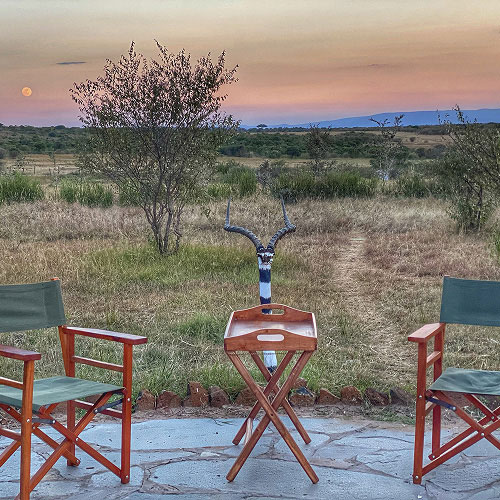
What Mara Siligi Camp offers is a different calculation — not a lesser one. Our approach is built around the elements that genuinely improve a wildlife photography experience, rather than adding luxury features that look impressive in a brochure but have little impact once you are actually out in the field.
For many photographers, especially those booking a Masai Mara photography tour, the difference between an average safari and an exceptional one comes down to a handful of practical details: space in the vehicle, timing, guide quality, and access to productive wildlife areas. Those are the things we prioritise relentlessly.
- A 4-person vehicle cap, always — you will never share a photography vehicle with 6 strangers here
- Drive timing built around light windows, not operational convenience — this is a genuine, non-negotiable part of how we run photography drives
- A guide who photographs — our lead photography guide shoots on the same drives you do. They are not explaining what you should do; they are doing it alongside you
- Proximity to Mpuaai Gate — 10 minutes to the most productive wildlife corridors in the central Mara
- Real in-field collaboration — if you miss a shot because of positioning, your guide repositions and tells you why. If you nail a sequence, they tell you why that worked too
- Honest pricing — what is included is included. What is extra, we tell you before you book
We also understand that photographers work differently from standard safari travellers. Sometimes you want to stay with a scene longer. Sometimes you need silence in the vehicle while waiting for behaviour to unfold. Sometimes the right image takes patience rather than covering maximum ground. Our drives are designed around that mindset.
For photographers who want a serious Masai Mara photography tour without paying luxury camp rates, Mara Siligi delivers the components that actually affect your images — vehicle quality, group size, drive timing, and location — at a mid-range price point.
Who Should Book a Masai Mara Photography Tour With Us
Book a Masai Mara Photography Tour at Mara Siligi If:
- You are a serious amateur or semi-professional photographer who wants field conditions that respect your equipment and your time
- You are happy with comfortable mid-range accommodation and genuinely spectacular game drives
- You want a photography-focused experience that does not require a $2,000-a-night budget to access proper vehicle standards and guide attention
- You are travelling solo or with one or two other photographers and want a small, collaborative group dynamic
- You want honest advice on timing, migration windows, and what to realistically expect from your images
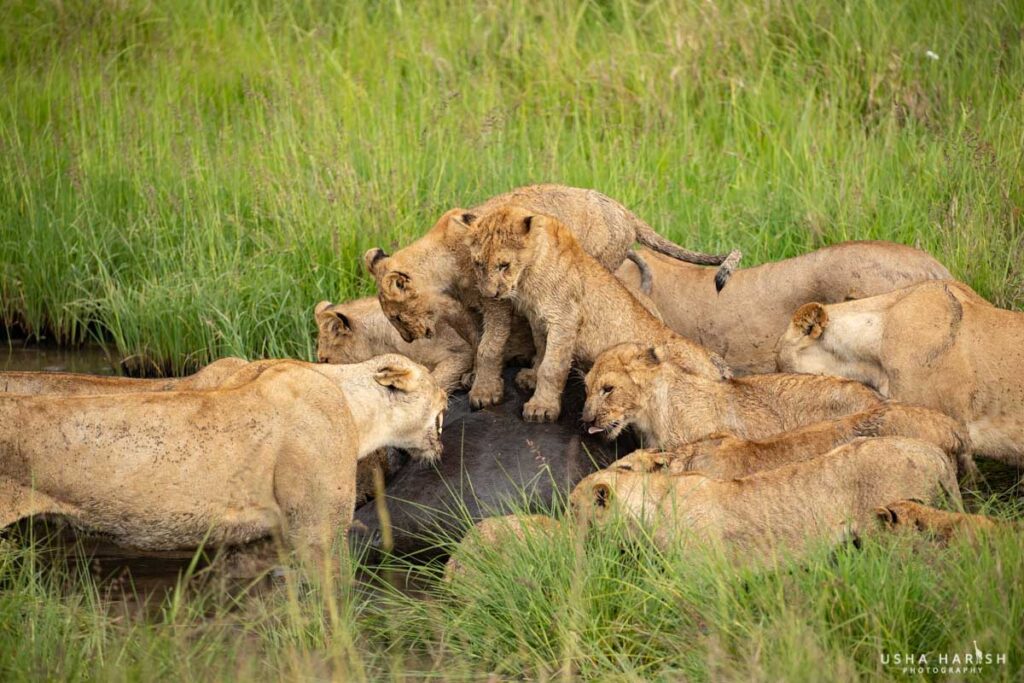
Our guests are often photographers who care far more about time in the field than luxury for its own sake. They would rather have an extra hour in perfect light with a leopard than a larger suite they barely spend time in during the day. That is exactly the kind of safari experience we are designed around.
We also work well for travellers who are still developing their wildlife photography skills but want to learn in a practical, supportive environment. Because our guides actively photograph themselves, drives naturally become collaborative rather than purely observational. Guests ask questions in real time, experiment with compositions, and learn how positioning, light, and patience affect the final image.
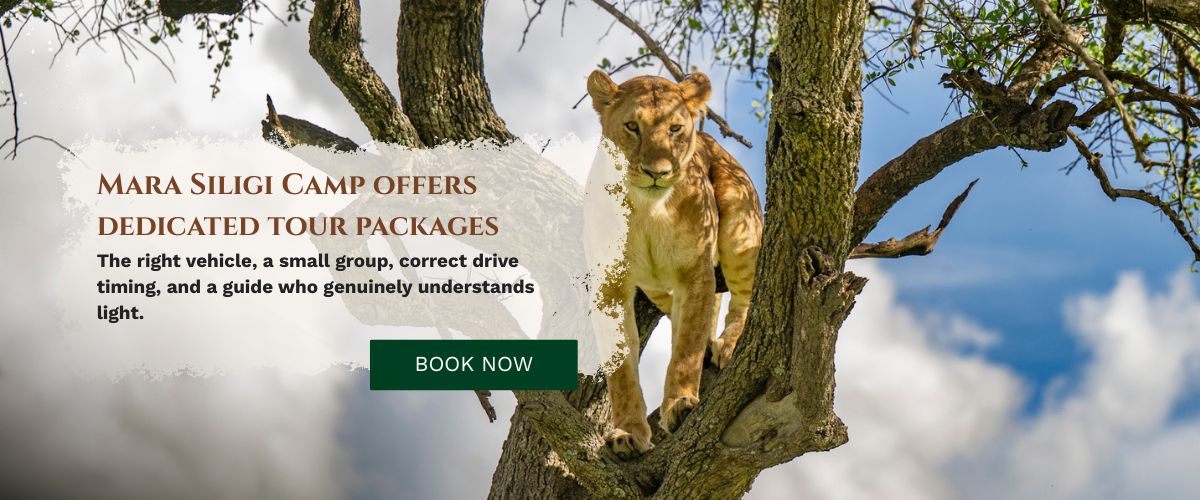
The baseline for any serious masai mara photography tour package is not complicated: the right vehicle, a small group, correct drive timing, and a guide who genuinely understands light. Everything else builds on those four things.
At Mara Siligi Camp, those four things are non-negotiable. If that is what you are looking for, we would like to hear from you.
FAQs
A maximum of 4 photographers per vehicle is the standard for a dedicated wildlife photography safari. At 5 or 6 people, shooting angles conflict, vehicle positioning becomes a compromise, and vibration from additional weight increases camera shake at long focal lengths of 400mm and above. A guide optimising position for 6 different focal lengths effectively optimises for nobody. If a camp offers a photography package on a vehicle with more than 4 people, it is a standard game drive with a different name.
The two best windows for wildlife photography on a game drive are the 30–45 minutes immediately after sunrise and the 30 minutes before sunset. These golden hour periods produce warm, directional light that separates subjects from backgrounds with depth and texture impossible to replicate at other times of day. Most camps depart at 06:30, which puts you at the first sighting after the best light has already passed. Photography-focused camps like Mara Siligi depart before first light — typically 05:30 to 05:45 — so you arrive at your first location at sunrise, not after it.
Yes — open-sided vehicles are significantly better for wildlife photography than closed vehicles with pop-top roofs. An open 4×4 gives you full lateral shooting across 180 degrees, low-angle shots that are impossible through a narrow roof opening, unrestricted lens movement for tracking fast-moving subjects, and direct communication with your guide without shouting over vehicle sides. Closed pop-top vehicles force photographers to stand through a narrow opening, restricting angles and creating constant space conflicts in groups. Bean bags can also be mounted more effectively on open vehicle doors than on roof hatches.