Masai Mara Photography Tour for Indian Photographers
For Indian wildlife photographers, the Masai Mara is more than just another safari destination — it’s one of the few places in the world where dramatic wildlife behaviour, open landscapes, golden light, and consistent big cat sightings come together in a way that’s incredibly rewarding to photograph.
From Great Migration river crossings and cheetah hunts to intimate lion portraits and cinematic savannah landscapes, a Masai Mara photography tour offers photographic opportunities that are completely different from shooting in Indian forests.
This guide covers everything Indian photographers need to know before planning their Mara experience with Mara Siligi Camp — including gear recommendations, photography styles, cultural comfort, tour seasons, and the kind of portfolio-defining images guests regularly capture in East Africa.
Table of Contents
- Why Indian wildlife photographers keep returning to the Mara
- Why Mara Siligi Offers the Best Masai Mara Photography Tour for Indian Travelers
- Best Lenses for Masai Mara Safari Photography: Gear Recommendations for 2026
- Masai Mara Photography Style Shift — From Dense Cover to the Open Plains of the Mara
- Shooting the Mara with someone from home
- What past Indian guests captured
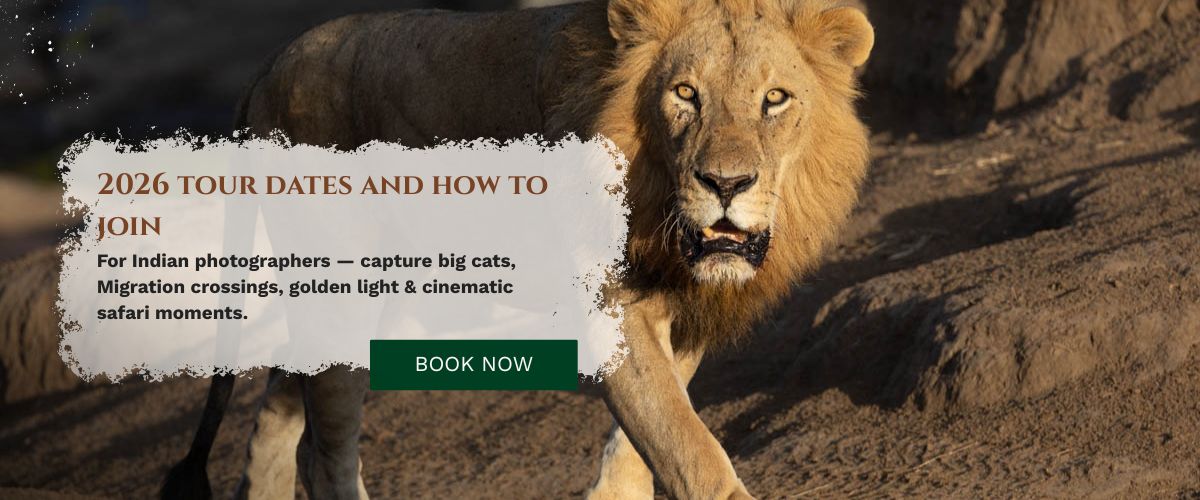
- 2026 tour dates and how to join
At a Glance: Masai Mara Photography Tour 2026
Feature | Details |
Primary Goal | Big Cat tracking and Great Migration photography in Masai Mara |
Best Time | June and Nov – December (excluding May) |
Group Size | Exclusive small groups (Max 4-6 photographers) |
Guidance | Photography-led by Indian mentor Usha |
Accommodation | Mara Siligi Camp (centrally located between Mpuaai Gate and Talek Gate) |
Dietary Options | Dedicated Indian Meals |
Recommended Gear | 400mm to 600mm lenses |
Why Indian Wildlife Photographers Keep Returning to the Masai Mara
You’ve shot Jim Corbett. You’ve waited for hours in a Ranthambore hide. You know what a great wildlife image takes. So why are more and more Indian wildlife photographers making the journey to Kenya’s Masai Mara Photography Tour— and then booking again the very next year?
The simple answer: nowhere else on earth gives you this kind of consistent, open-vehicle, golden-light access to big cats and the world’s greatest wildlife spectacle.
Here’s what pulls Indian photographers back, year after year
- The Great Migration (July–October) — over 1.5 million wildebeest, zebra, and gazelle crossing the Mara River. You cannot recreate this in any Indian forest.
- Unobstructed sightlines — the open savannah gives you wide, cinematic frames that dense Indian forest simply doesn’t allow.
- Big cat density — cheetah, leopard, and lion sightings are far more frequent and predictable than in most Indian reserves.
- Soft golden light, twice a day — the Mara sits just south of the equator. Sunrise and sunset light windows are long, warm, and magazine-quality.
- An entirely different subject portfolio — elephants, hippos, Cape buffalo, crocodiles, and over 450 bird species expand your catalogue beyond what Indian safaris offer.
For photographers who’ve maxed out their Indian safari catalogue, the Mara isn’t just the next destination — it’s the next level.
Why Mara Siligi Offers the Best Masai Mara Photography Tour for Indian Travelers
Plenty of camps operate in the Mara. What makes Mara Siligi Camp the right choice for a dedicated Masai Mara photography tour comes down to three things: intention, intimacy, and understanding.
What Makes the Difference
Boutique camp, small groups
- Mara Siligi Camp is an eco-friendly tented camp, not a large resort. Smaller groups mean fewer vehicles at a sighting, more vehicle-positioning flexibility, and guides who actually know your name and your shot list.
Guides who understand the photographer’s mindset
- The team is trained to prioritise light, animal behaviour, and clean backgrounds — not just “we saw a lion.” They know when to move, when to hold position, and when to stay quiet.
Photography-first game drives
Early morning and late afternoon drives are structured around the light. You’re not forced back to camp for a set lunch that interrupts the golden hour.
Full power access in camp
- 24-hour solar power means your batteries charge overnight and your cards offload safely. No compromises when you’re shooting 2,000 frames a day.
Location inside the conservancy
- Being within the Mara ecosystem (not on its fringes) means less drive time, more shooting time, and access to areas that larger convoys can’t reach.
The difference in one sentence: You’re not joining a generic safari with a camera in your bag — you’re on a purpose-built photography expedition where every logistical decision is made with your images in mind.
Best Lenses for Masai Mara Safari Photography: Gear Recommendations for 2026
Most Indian wildlife photographers who come to the Mara are already well-equipped. A typical Masai Mara photography tour attracts photographers carrying professional wildlife setups, long telephoto lenses, and high-speed mirrorless systems ready for action photography.
But the Mara has its own conditions — open plains, fast-moving game drives, dust-heavy terrain, and long shooting hours — that reveal certain gear gaps very quickly. Here’s a practical breakdown of what most Indian photographers bring, and what Usha additionally recommends after multiple photography seasons in the Mara.
What Most Indian Photographers Bring
Gear Category | Typical Equipment |
Camera Bodies | Canon R5 / Nikon Z9 / Sony A1 |
Zoom Lens | 100–500mm or 150–600mm |
Prime Lens | 500mm or 600mm prime |
Wide Lens | 16–35mm for landscapes |
Batteries | 3–4 batteries + dual charger |
Storage | 512GB+ fast memory cards |
Support | Bean bag for vehicle window |
What Usha Recommends in Addition
Recommended Gear | Why It Matters |
1.4x teleconverter | Cheetah + open plain = reach matters |
Dust-proof camera covers | Essential during dry season wind |
Extra compact flash storage | 2,000 frames/day is normal |
Laptop + hard drive backup | Nightly editing and backup |
Polarising filter | Useful for midday water shots |
Lightweight rain cover | October weather can surprise you |
Important Note
One thing Indian photographers consistently underestimate: the Mara’s dust and vibration.
Game drives cover rough terrain at speed, often for several hours at a stretch. Unlike Indian forest safaris where vehicles may remain stationary for long periods, the Mara involves continuous movement across open tracks, dry soil, and uneven ground. Fine dust gets everywhere — lens rings, camera buttons, memory card slots, tripod heads, and even inside camera bags if they’re left partially open.
Lens sealing matters more here than in a forest hide. Even high-end camera bodies need regular cleaning and careful handling after every drive.
Bring:
- A lint-free cloth
- A lens pen
You’ll use them every single morning — and usually again before sunset drives.
It also helps to:
- Keep lenses mounted instead of changing frequently in the field
- Store gear in zipped compartments during drives
- Carry simple rain or dust covers for sudden weather and heavy vehicle movement
The vibration from long drives can also loosen tripod plates, filters, and mounting systems over time, so checking your setup daily becomes part of the routine.
Flight Weight Restrictions
Checked luggage weight limits on regional flights within Kenya (Nairobi to Mara airstrip) are strict — usually around 15kg total, including soft bags.
For photographers carrying professional wildlife gear, this becomes one of the biggest logistical adjustments of the trip.
Recommended:
- Pack your camera bag as carry-on
- Consolidate your clothing
- Prioritise lenses, storage, and batteries over unnecessary extras
- Use lightweight safari clothing that can be layered and reused
Most photographers quickly realise they need far less clothing than expected, but almost always wish they had carried more photography gear or storage.
Nobody regrets less clothing. Everyone regrets less glass.
Masai Mara Photography Style Shift — From Dense Cover to the Open Plains of the Mara
The Masai Mara offers one of the most dramatic visual environments for wildlife photography, defined by vast open savannahs, uninterrupted sightlines, and constantly changing light conditions. A Masai Mara photography tour is not just about photographing wildlife — it is about adapting to a completely open ecosystem where composition, timing, and storytelling operate at a much larger visual scale.
In the Masai Mara, the most immediate shift is the openness of the landscape. Unlike enclosed environments, everything here is exposed — sky, horizon, grass plains, weather, and movement all exist within the same frame. This makes Masai Mara photography composition highly intentional, where background control becomes critical because there is no natural cover to simplify or hide distractions.
Storytelling Shift in Masai Mara Wildlife Photography
- Images move beyond isolated subject focus to full ecosystem storytelling
- Wildlife is framed in relation to the wider Masai Mara landscape
- Herds are captured moving across vast open plains, showing scale and movement
- Predators are photographed against expansive horizons rather than tight backgrounds
- Dramatic skies, light, and weather become active elements in composition
- The landscape becomes a core storytelling layer, not just a backdrop
Behavioural Sequence Photography in the Masai Mara
- Open visibility allows uninterrupted tracking of wildlife behaviour
- Photographers can follow action from beginning to end without obstruction
- Masai Mara safari photography becomes highly sequence-driven
- Full hunts can be documented from approach to climax
- River crossings can be captured as complete narrative events
- Territorial movement and herd dynamics can be photographed in continuity rather than isolated frames
The Masai Mara also naturally encourages minimalist and cinematic compositions. The scale of the plains, combined with golden-hour light and dust-filled air, creates strong opportunities for silhouettes, negative space, and clean horizon-based framing. Lone acacia trees, elephants crossing open ground, and predators moving through vast empty spaces define a distinct Masai Mara photography style that is powerful, simple, and visually expansive.
Overall, the Masai Mara demands a shift in visual thinking — from working within constraints to working with space, distance, and scale. It is an environment where wildlife photography becomes broader, more cinematic, and more narrative-driven, allowing every frame to capture not just an animal, but the full scale of the Mara ecosystem around it.
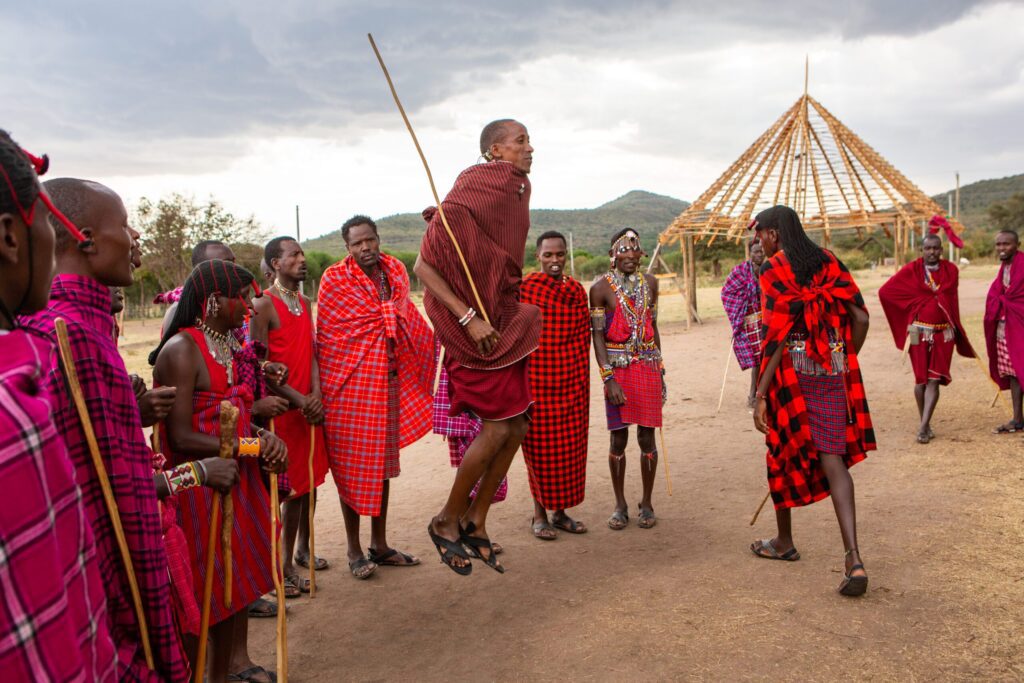
Language, Culture, Food — What It’s Like Shooting the Mara with Someone from Home
This is something that’s harder to quantify but impossible to overlook. Shooting the Mara with a camp that understands Indian culture isn’t a minor comfort — it actively makes you a better photographer on this trip.
A Masai Mara photography tour packages involves long game drives, early wake-ups, unpredictable wildlife movement, and physically demanding shooting schedules. When the people around you understand your habits, communication style, food preferences, and photography priorities, you spend less mental energy adjusting — and more energy creating better images.
For many Indian photographers, that cultural familiarity changes the entire rhythm of the safari experience.
Here’s What Actually Changes When the Cultural Context Fits:
You communicate your shot list without friction
Describing what you want:
- “The way the light falls like a Corbett morning”
lands instantly. No translation layer, no blank stares.
That familiarity makes a real difference during wildlife photography drives where timing, positioning, and understanding visual intent matter enormously. Instead of struggling to explain the mood or type of frame you’re chasing, guides and fellow photographers immediately understand the reference point. Whether it’s soft golden backlight, misty morning atmosphere, or a dramatic predator portrait, the communication feels natural and efficient.
This becomes especially valuable when wildlife moments unfold quickly and decisions need to happen in seconds.
Food that actually works for you
We provide meals that cater to Indian dietary needs, including vegetarian options.
Not:
- “We have pasta.”
But:
- Real options
- Real flavours
- Familiar meals after long game drives
On a photography-focused safari, food becomes more important than most travellers expect. Long hours in the field, early departures, and physically demanding shooting schedules make comfort and familiarity matter. Good food helps maintain energy, keeps routines stable, and removes unnecessary stress during the trip.
You’re not spending mental energy managing hunger or food anxiety. You’re focused on photography.
The debriefs are more honest
At the end of a long drive, when you’re reviewing the day’s images over dinner:
- Conversations flow
- You give real feedback
- You get real input on tomorrow’s plan
Timing instincts are shared
The understanding that:
- You’ll skip the midday nap if there’s a leopard sighting
- You’d rather eat in the vehicle than miss the light
doesn’t need to be negotiated.
You’re not the odd one out
In a group of Indian photographers, there’s an immediate ease that removes the low-grade social friction that can exist in mixed international groups.
You focus on photography, not on fitting in.
What Past Indian Guests at Mara Siligi Have Captured
The proof is in the portfolio. Indian photographers who’ve joined Mara Siligi camp’s photography tours have returned home with images that cross a very clear threshold — from strong wildlife photographs to frames worthy of international competitions, exhibitions, magazine features, and professional wildlife portfolios.
For many photographers, a Masai Mara photography tour becomes the turning point where their work evolves from isolated sightings into cinematic wildlife storytelling. The combination of open landscapes, consistent wildlife activity, dramatic light, and extended time with subjects creates photographic opportunities that are extremely difficult to replicate elsewhere.
The Mara doesn’t just improve the quantity of sightings — it improves the quality and depth of the images photographers are able to create.
The Shots That Define a Mara Siligi Photography Experience
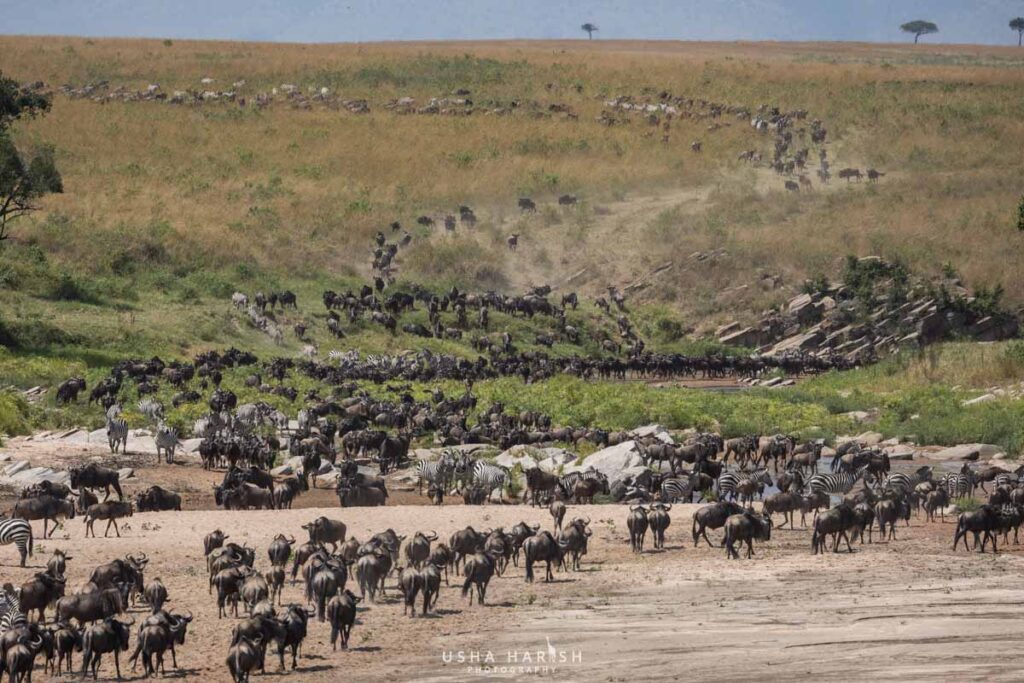
River crossing sequences
Shot from low angles at the Mara River bank:
- Wildebeest mid-leap through chaotic river crossings with water spray, panic, dust, and movement filling the frame
- Crocodiles rising from beneath the surface during dramatic migration crossing moments
- Full behavioural storytelling sequences captured from beginning to end rather than isolated wildlife sightings
- Layered compositions featuring herds, river texture, dramatic skies, and predator interaction in a single frame
Not lucky single frames.
One of the biggest differences photographers experience in the Mara is the ability to stay with a wildlife event long enough to build a complete visual story. Instead of reacting to one unpredictable moment, photographers can anticipate movement, track behaviour, and shoot cinematic sequences that showcase the scale and intensity of the Great Migration.
These river crossing scenes remain one of the most iconic experiences in African wildlife photography and are among the most sought-after images during a Masai Mara photography tour.
Cheetah hunts on open plains
The clean backgrounds of the Mara conservancy mean these action sequences have proper separation, structure, and visibility that are extremely difficult to achieve in dense forest environments.
The open terrain allows photographers to:
- Track fast predator movement across long distances
- Anticipate behavioural patterns before the hunt begins
- Maintain uninterrupted visual contact during chase sequences
- Capture acceleration, eye contact, dust trails, and predator-prey interaction in real time
Indian photographers consistently cite this as their best-ever action series because the Mara provides a rare opportunity to photograph wildlife behaviour without constant visual obstruction from trees, foliage, or uneven terrain.
The result is a much more cinematic style of wildlife storytelling where every frame feels intentional, clean, and emotionally charged.
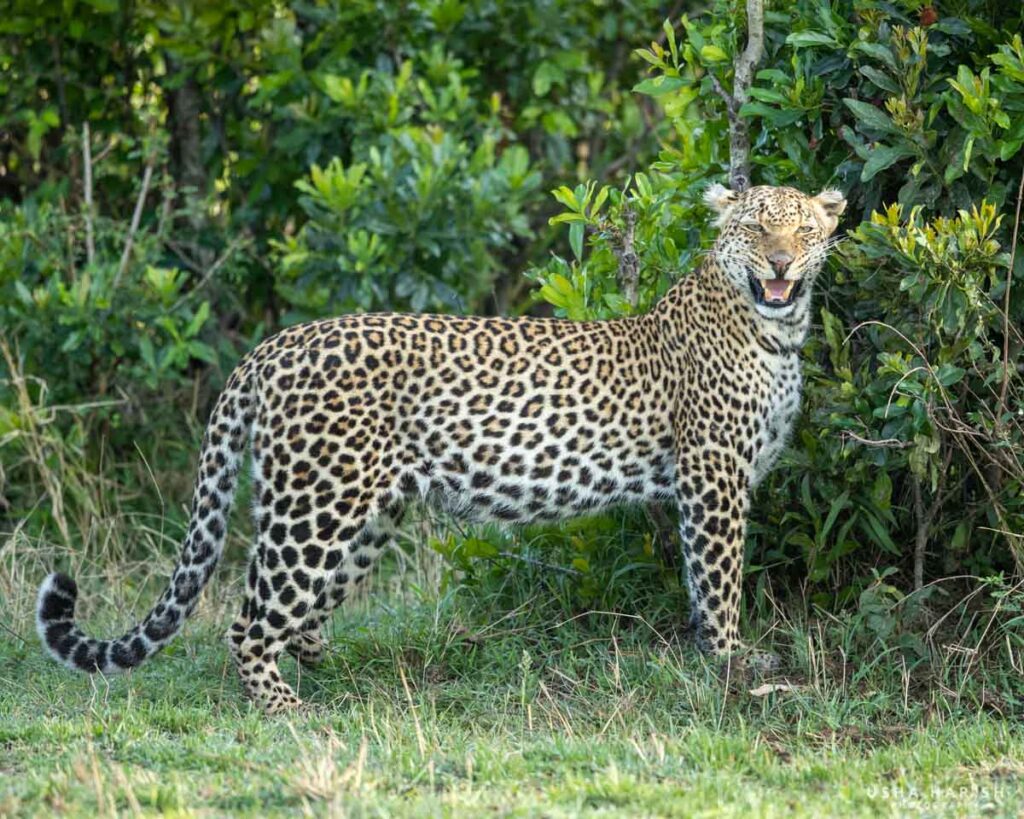
Intimate cat portraits
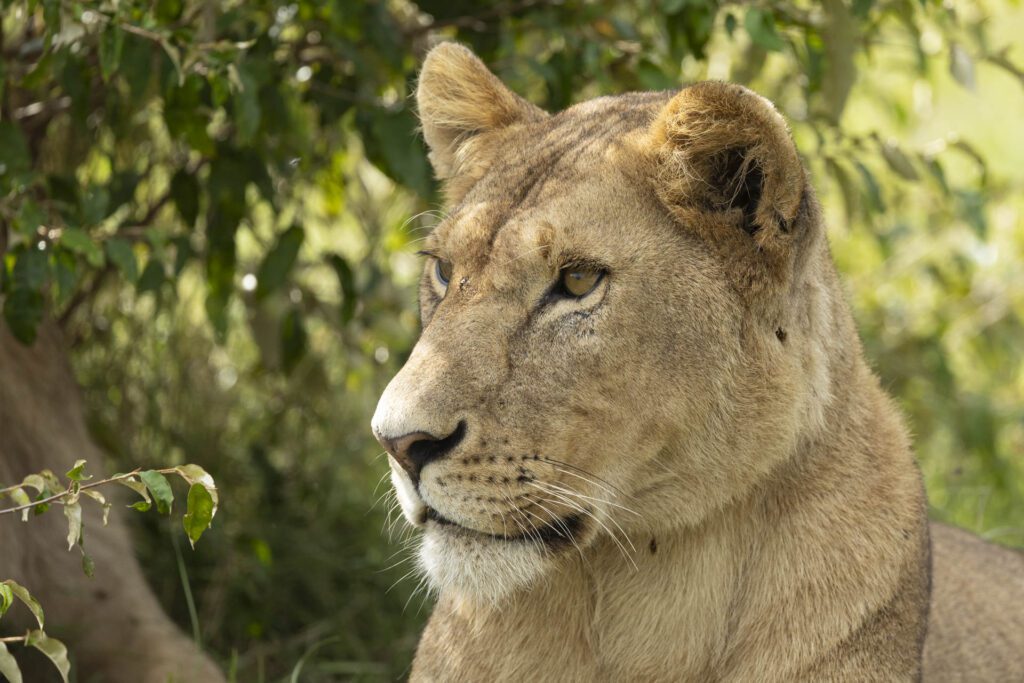
The Mara’s habituated big cats allow:
- Eye-level angles that create a stronger emotional connection within the frame
- Pin-sharp portraits with clean background separation and natural light falloff
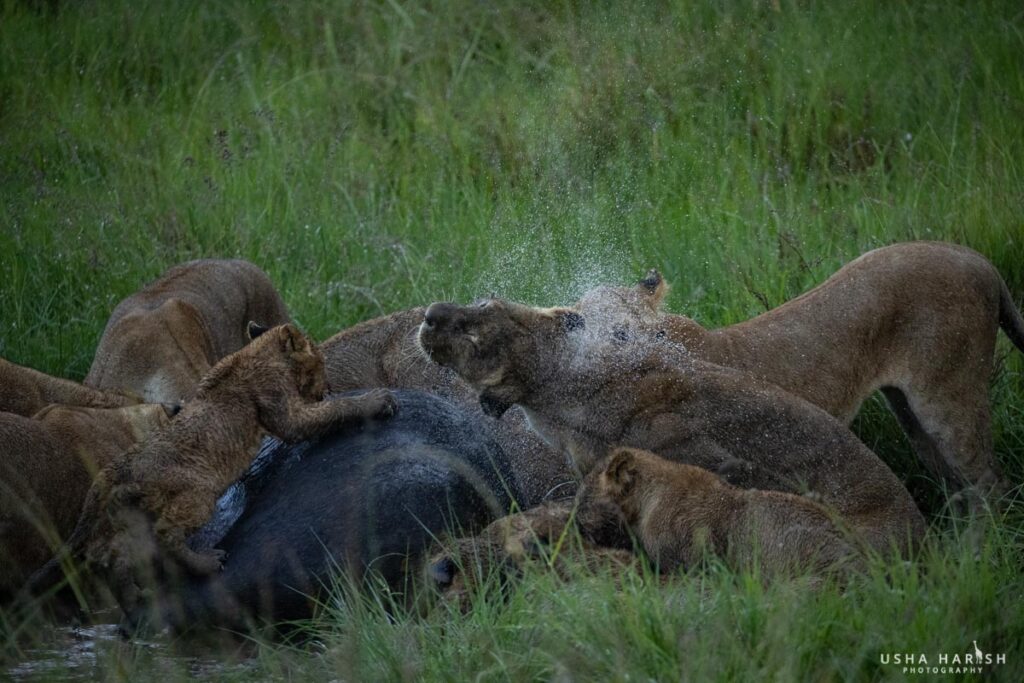
- Natural behavioural moments including grooming, resting, interaction between cubs, and predator observation
- Longer viewing windows that allow photographers to experiment with composition, focal length, and perspective
Unlike fast-moving sightings common in dense forests, the Mara often provides extended time with subjects. This allows photographers to slow down and focus on details such as:
- Eye contact
- Facial expression
- Light direction
- Fur texture
- Mood and atmosphere
These portraits often become some of the strongest images in a photographer’s portfolio because they combine technical sharpness with emotional depth and behavioural authenticity.
Landscape-scale wildlife scenes
Examples include:
- Elephant herds moving beneath dramatic storm light across open savannah terrain
- Thousands of wildebeest spread across a single plain during migration season
- Aerial-perspective grassland imagery showing scale, texture, and movement across the ecosystem
- Solitary wildlife framed against vast East African horizons and golden light conditions
One of the defining characteristics of wildlife photography in the Mara is scale. The environment allows photographers to include landscape as an active part of the story rather than just a background element.
Night photography and astrophotography
The Mara’s low light pollution and clear equatorial skies open up:
- Milky Way compositions stretching above the savannah landscape
- Long-exposure night photography with dramatic star-filled skies
- Astrophotography opportunities rarely possible near urban environments
- Silhouettes of safari camps, acacia trees, and wildlife beneath natural night skies
Night photography becomes an entirely different creative experience in the Mara. After sunset, the open plains transform into one of the most visually dramatic environments for landscape and astrophotography.
Photographers often experiment with:
- Star trails
- Wide-angle night landscapes
- Minimalist tree silhouettes
- Atmospheric camp imagery beneath the Milky Way
These images add another dimension to the final portfolio and help document the complete visual atmosphere of the Mara beyond traditional daytime safari photography.
Upcoming Masai Mara Photography Tour Packages: 2026 Dates & Booking
Mara Siligi Camp runs dedicated Masai Mara photography tour packages across the year, with the peak season aligned to the Great Migration.
If capturing the wildebeest river crossing is on your bucket list — and it should be — the window is July through October.
Season | Months | What You’ll Photograph | Status |
Peak Migration | Jul – Oct 2026 | River crossings, big cat hunts, wildebeest herds | High demand |
Green Season | Nov – Dec 2026 | Lush landscapes, newborn animals, dramatic skies | Available |
Shoulder Season | Apr – Jun 2026 | Quieter Mara, excellent bird photography, calf season | Available |
Groups are kept small deliberately — typically 4 to 8 photographers per tour — so vehicle positioning stays flexible and your drive time is genuinely photography-driven, not crowd-managed.
How to Secure Your Spot
- Visit marasiligicamp.com/photo-safari for full photography tour details and the current availability calendar.
- Use the inquiry form on the contact page to share:
- Preferred dates
- Group size
- Specific subjects or conditions you want to photograph
- A deposit secures your spot.
Given the small group sizes and peak-season demand from Indian photographers, early booking is strongly advised — especially for the July–October migration window.
If you’re planning to travel as a photography group (club, workshop, or friends), We can accommodate private group bookings with a customised itinerary.
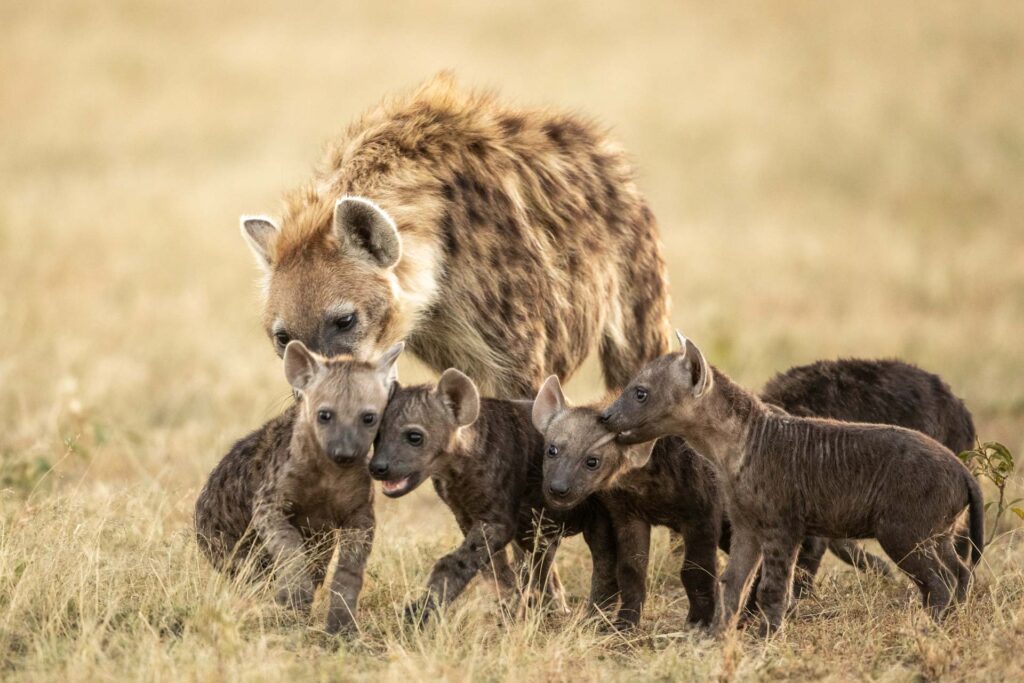
Ready to Bring the Mara Home in Your Portfolio?
Join the growing community of Indian wildlife photographers who’ve made Mara Siligi Camp their base camp for East Africa’s greatest photographic theatre.
FAQs
Yes. Mara Siligi Camp provides dedicated Indian meals, including vegetarian options. Dietary preferences can also be accommodated on request.
Yes. The Great Migration season in the Masai Mara usually runs from July to October, when photographers can capture wildebeest river crossings, predator action, and large herd movements.
It’s recommended to book several months in advance, especially for July to October migration season, as photography groups are small and peak dates fill quickly.