
Masai Mara Safari Stay — What to Expect on Your First Stay
You have looked at enough photos. You have read enough itineraries. You know the Masai Mara is something special — but you still cannot quite picture what the actual experience feels like. The smell of the air when you step out of the vehicle. The sound your tent makes at 2am. The moment your guide goes quiet and points at nothing — and then you see it.
This is that article. A complete guide to what a Masai Mara safari stay actually feels like — from the moment you arrive to your first night in the bush.
Table of Contents:
- Before Your First Drive: What Arriving at Mara Siligi Feels Like
- The Morning Drive: Everything That Will Happen to You
- Between Drives: What a Masai Mara Safari Stay Looks Like Mid-Morning
- The Afternoon Drive: A Different Rhythm
- Your First Night in a Tented Safari Camp
- What Nobody Tells You Before a Masai Mara Safari Stay — But We Will
- Ready to Experience This Yourself?
At a Glance: Your Daily Rhythm at Mara Siligi
Time | Activity | The Experience |
05:30 AM | Wake-up Call | Fresh coffee/tea brought to your tent in the cool morning air. |
06:00 AM | Morning Game Drive | Crisp light, active predators, and the “wild” smell of the savannah. |
09:30 AM | Bush Breakfast | Breakfast in the wild, surrounded by the savannah. |
01:00 PM | Camp Lunch | Authentic Indian & Continental meals at Mara Siligi. |
04:00 PM | Afternoon Drive | Chasing the sunset and unique lighting for photography. |
07:30 PM | Campfire & Dinner | Sharing stories under the stars before your first night. |
Before Your First Drive: What Arriving at Mara Siligi Feels Like
The moment you leave the road and enter camp — what shifts
You turn off the C14. The tarmac ends. The track narrows, and the bush closes in on either side. The air changes — it is cooler, earthier, quieter in a way you notice immediately after hours on the road. This is the point where the journey into true masai mara safari accommodation begins to feel real, as the outside world slowly fades and the Mara ecosystem starts to take over.
By the time you reach Mara Siligi Camp, tucked into the foothills of Oldonyo Loip Hill safari Resort near Talek, something in you has already started to settle. The camp does not announce itself loudly. It sits where it belongs — among the trees, solar-powered, Maasai-owned, deliberately small at ten tents — just 10 minutes from Mpuaai Gate (formerly Ol Kiombo Gate) and 15 minutes from Talek Gate.
You step out. Someone from the team is already walking towards you, smiling, without any of the formal efficiency of a hotel lobby. You are handed something cool to drink. You are asked how your journey was — and they actually wait for the answer.
Check-in, your tent, your first hour at Mara Siligi
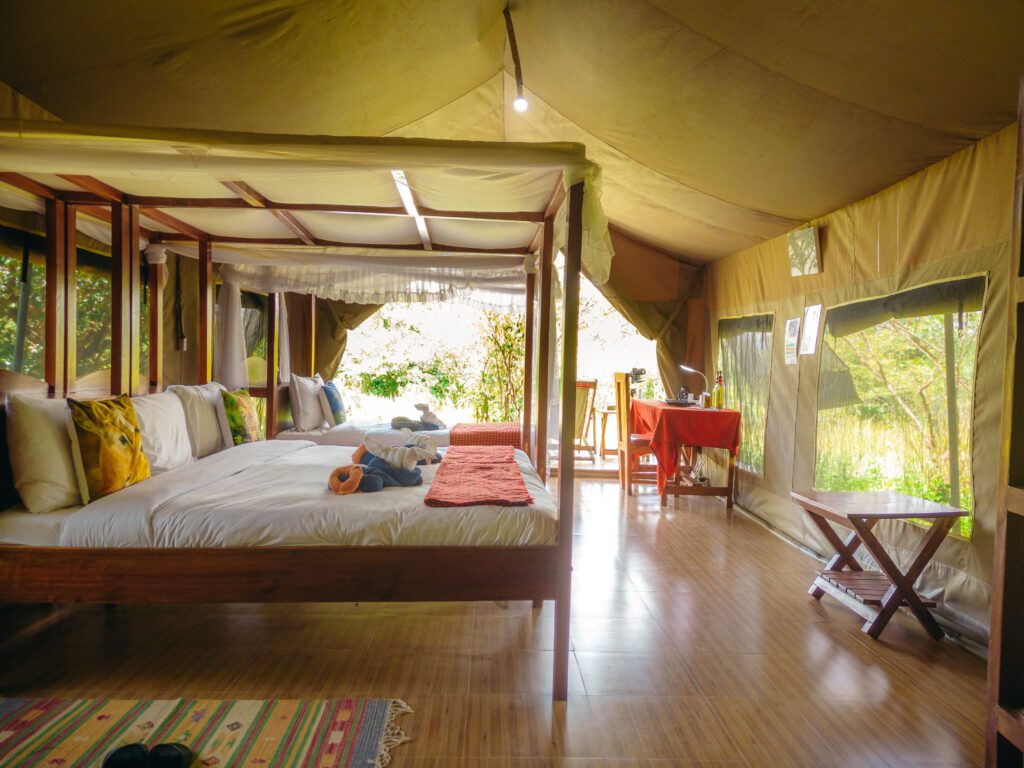
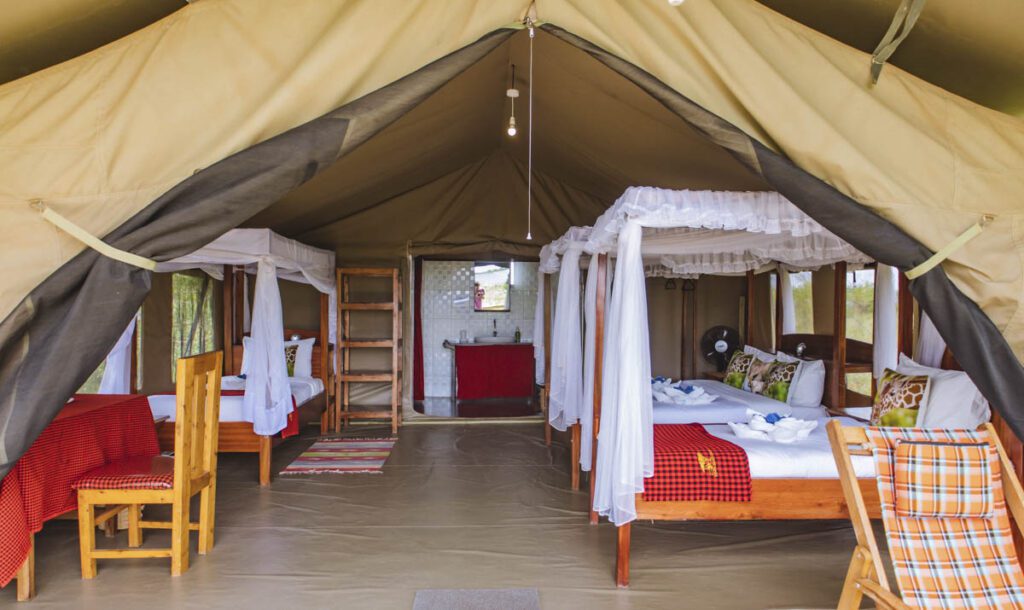
Check-in is quick. There is no queue. Someone walks you to your tent — a proper canvas structure with a private deck, an ensuite bathroom, and more space than you expected.
Your first instinct will be to put your bags down and immediately look out from the deck. Do it. The view through the tree line, the quality of the light, the absence of any urban noise — it hits you properly in that first moment of stillness.
Extension cords, charging points, hot water — it is all sorted. You will not spend your first hour troubleshooting. You will spend it breathing.
Afternoon tea, meeting your guide, the first look at the plains
In the late afternoon, if you arrive with time before sunset, your guide will take you out for an introductory drive. This is not the main event — it is the preview. You see the landscape. You get your first feel for the open savannah, the golden grass, the scale of the sky.
Your guide, one of Mara Siligi’s own Maasai team, starts reading you — your pace, your interests, what you reach for your camera for. By tomorrow morning, they will already know how to position the vehicle for you.
Back at camp, the evening fire is lit. Dinner arrives. You sleep earlier than you planned.
The Morning Drive: Everything That Will Happen to You
The 5:30am knock — how we wake you up and why
There is a soft knock on your tent at 5:30am. Not a phone alarm. Not an automated wake-up call. A person — quiet, unhurried — letting you know it is time.
You unzip your sleeping bag. The air inside the tent is cool. You pull on your layers (you packed them, as suggested), and within minutes you are walking to the lounge where hot chai and coffee are already waiting.
This is the best part of waking up early anywhere in the world. You are not rushing. The morning is yours.
Driving out of camp in darkness — what that silence feels like
You leave before first light. The vehicle moves slowly through the camp gate and onto the track towards Talek Gate — approximately ten to fifteen minutes away. Outside, it is dark. The headlights catch dust. You might hear something move just beyond the beam, hidden somewhere in the grass surrounding the Masai Mara camps and lodge landscape.
Nobody talks much. Your guide is already watching, already reading sounds you have not yet learned to hear.
The sky begins to lighten at the edges. Somewhere ahead, Africa is waking up.
First light on the savannah — what your guide is watching for
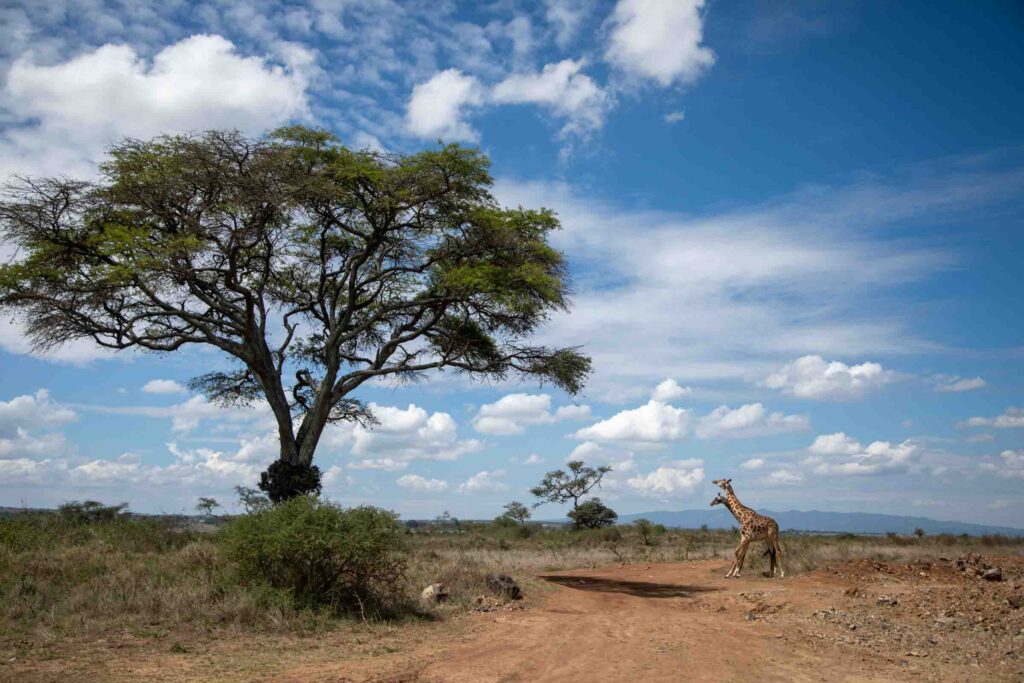
The moment the sun clears the horizon, the Masai Mara transforms. The golden light hits the grass at an angle that makes everything — every animal, every tree, every ridge — look like it was placed there by a photographer.
Your guide is not looking at what you are looking at. They are scanning the tree lines, the dried riverbeds, the distant rise where predators move at dawn. They are reading tracks you drove over without noticing. They are listening to birdsong as an alarm system.
Before you spot anything, your guide has already spotted three things.
How our Maasai guides read the landscape before you even see movement
Jacob. Jonathan. Robert. William. The guides at Mara Siligi Camp know this land the way you know your own neighbourhood — except their neighbourhood includes lion territories, migration patterns, and a lifetime of watching how animals behave before weather changes. That depth of local knowledge is one of the reasons many travellers specifically choose a smaller, locally rooted Masai Mara camp experience over larger commercial safari operations.
They communicate with other vehicles on the radio. If a cheetah has made a kill three kilometres north, they know. If a lion pride moved at midnight and is likely resting near the lugga, they know where to look.
What guests consistently say is that these guides do not just show you animals — they show you why the animals are there, what they are about to do, and how to watch without disturbing them.
Your first big sighting — what to do, what not to do
The vehicle slows. Your guide cuts the engine. Everyone goes still.
Across the grass — closer than you thought possible — something is watching you back.
What to do:
- Move slowly if you need to shift position
- Raise your camera gradually, not suddenly
- Stay seated — standing in the vehicle changes your silhouette and can alert or disturb wildlife
- Let your guide signal when it is right to speak
What not to do:
- Do not gasp loudly or slam the vehicle door
- Do not stand before your guide confirms it is safe
- Do not stare down your phone screen — look with your eyes first
The first sighting is always the one you remember most clearly. Let it happen to you.
Between Drives: What a Masai Mara Safari Stay Looks Like Mid-Morning
Breakfast after your morning drive — what is served and where
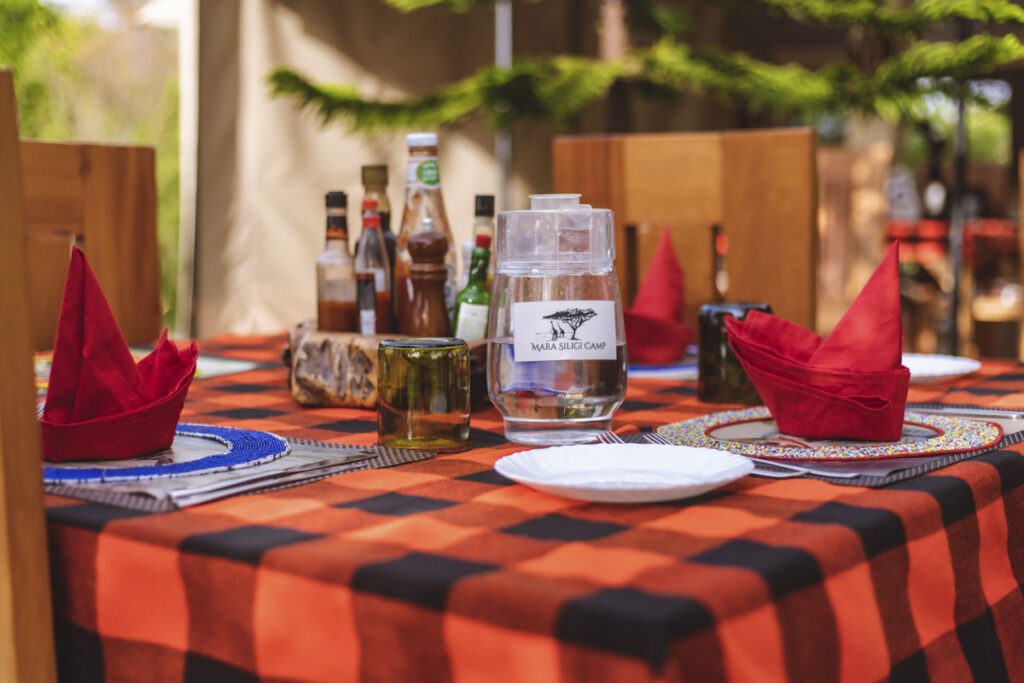
You return to camp between 9 and 10am, easing back into the slower rhythm of the morning at the Safari Camp in Masai Mara. Breakfast is already waiting — sometimes served in the dining area, sometimes arranged as a full bush breakfast out in the open plains, with tables set against the backdrop of the Mara landscape stretching in every direction.
Chef Steven’s kitchen serves fresh, wholesome food: eggs made to order, toast, fruit, porridge, Indian and continental options. Coffee is refilled without asking. You eat more than you expected. You sit longer than you planned.
How guests use the quiet mid-morning hours
The hours between 10am and 4pm belong to you. Most guests use them like this:
- A hot shower and a change of clothes
- Reading in the lounge or on the tent deck — a small library and wildlife coffee-table books are there for the browsing
- Time in the photography lounge — download your morning’s shots, review composition, edit, compare notes with your guide or fellow guests
- A massage with Melvin — mentioned by name in review after review as something not to skip
- Uploading photos, charging batteries, doing the quiet admin of the trip
If you want something more active in the afternoon, the team can arrange a Maasai cultural village visit, a beadwork workshop with local artisans, or a birdwatching walk with a guide who will name species you have never heard of.
Or nothing. Just sitting on your deck listening to the birds. That is also a complete activity here.
Your deck, the view, the stillness that surprises most first-timers
First-time safari guests often say the same thing: they did not expect the quiet to be this good.
Your tent deck faces the bush. There is no traffic noise, no neighbouring hotel, no ambient city hum. In the middle of the day, the Mara settles into a heat-haze stillness. You sit in the shade of your canvas awning and realise you have not looked at your phone in two hours — not as a discipline, just as a natural consequence of where you are.
The Afternoon Drive: A Different Rhythm
How afternoon light and predator behaviour changes what you see
You leave again around 4pm. The light is already beginning its descent towards gold. The temperature drops a few degrees. And the savannah wakes up again.
Predators who rested through the hottest hours begin to move. Lions stretch and yawn and start to think about the evening. Elephants make their way to water. The pace of everything shifts.
The afternoon drive has a different feeling from the morning one. This rhythm — two drives a day, meals in between, total immersion in the landscape — is the core structure of any masai mara safari stay and the reason guests consistently say the days feel both full and unhurried. The morning is about discovery. The afternoon is about watching things unfold.
Sundowner drinks in the bush — what that moment actually looks like
At some point during the afternoon drive, your guide stops the vehicle in an open spot with a clear view of the western sky.
From a cool box in the vehicle: drinks, snacks, a moment that is completely unhurried.
The sun drops. The sky turns colours you do not have names for — amber, then copper, then something between pink and purple that lasts about four minutes before it goes dark.
You are sitting in the middle of the Masai Mara with a drink in your hand and absolute silence around you. No camera quite captures it. Most guests stop trying and just watch.
Returning to camp as the sky darkens
The drive back is in the dark. Your guide uses a spotlight to scan the roadside — and this is where nocturnal animals appear. Genets, civets, bush babies with wide reflective eyes. Sometimes more.
You arrive back at Budget friendly camp near talek to a lit fire, warm food smells from the kitchen, and the satisfaction of a day that was genuinely full.
Your First Night in a Tented Safari Camp
Sounds you will hear from your tent at 2am — and what they are
Around midnight, you wake up. You lie still and listen.
Insects — a continuous, textured sound that you tune into like a frequency. Maybe a hyena, distant, giving its hollow whoop. Possibly something large moving through the camp perimeter — a deliberate, unhurried sound. The Maasai security team, patrolling with traditional spears, will be there. You will hear their footsteps too, calm and steady.
These sounds are not frightening once you place them. They are the sound of being exactly where you wanted to be.
Temperature, bedding, what to wear to sleep
Nights in the Mara get genuinely cold, especially from June to October. Your tent will have:
- Quality blankets and duvets
- A hot water bottle placed in your bed during evening turndown service — a small detail guests specifically mention, every time
- Enough layering to stay comfortable through a cold night
Wear: light thermal base layers, warm socks. Keep a fleece on the chair beside the bed for the 5:30am wake-up.
The electric fence and your peace of mind
Mara Siligi Camp is protected by a secure perimeter electric fence, designed to provide guests with a safe and comfortable Masai Mara safari accommodation experience while still keeping them close to the natural environment. The Maasai security team patrols throughout the night, and many guests mention that once they understood the camp setup, they felt completely at ease — even when hearing wildlife sounds somewhere beyond the camp perimeter.
The camp’s position on Maasai land, rather than directly beside the river, also means you are away from the highest hippo and crocodile traffic zones. The location was chosen deliberately.
What Nobody Tells You Before a Safari Stay — But We Will
The silence is louder than you expect
You will notice on your first evening that the silence is not empty — it is full. It has texture. It takes a few hours to stop waiting for the next notification, the next sound from a screen, the next interruption. And then something releases. Guests describe this as the most unexpected part of a safari stay.
You will stop checking your phone without even deciding to
Nobody announces a phone detox at Mara Siligi. WiFi is in the lounge only. But most guests report that by day two, they are simply not reaching for their phones between drives. Not as a rule. Just because there is always something better to look at.
The second day is always better than the first — here is why
On day one, everything is new and slightly overwhelming. Your eyes do not yet know what to look for. Your body is adjusting to the early mornings. Your mind is still partly back wherever you came from.
On day two, something clicks. This shift is one of the things that makes a Masai Mara safari stay genuinely different from any other travel experience — it takes time to settle into, and then it holds you completely. You recognise the landscape. You anticipate the rhythm. Your guide already knows you. You stop photographing everything and start watching instead. The animals feel closer, not because they are — but because you are finally present enough to see them properly.
This is why we always recommend at least three nights at any Masai Mara camp. Two drives is an introduction. Day two is where the safari actually begins.
Ready to Experience This Yourself?
What to tell us when you reach out
When you contact us, it helps to share:
- Your preferred travel dates (and whether you are targeting migration season: July to October)
- How many people are travelling and whether children are in the group
- Any dietary needs or food preferences — Chef Steven will plan around them
- Whether you have specific wildlife priorities: migration, big cats, birdlife, photography
- Whether you want to add a hot air balloon safari over the Mara at dawn — this is arranged from camp and needs advance notice
- Whether a Maasai cultural village visit or a beadwork workshop interests you — both can be built into your stay
The more we know, the better we can match your guides and your game drive timing to what you actually want to see.
Reserve your Masai Mara safari stay
Mara Siligi Camp is a boutique eco-friendly Masai Mara safari accommodation near Talek, with 10 tents, Maasai guides, and 450 five-star reviews. A mid range tented camp in masai mara built for guests who want the real thing.
FAQs
Yes. Mara Siligi Camp has a secure electric perimeter fence and Maasai security staff on patrol throughout the night. Guests are always escorted around camp after dark, and the setup is designed to balance safety with an authentic wilderness experience.
Layered clothing works best. Mornings and nights can be cold, especially between June and October, while afternoons are warmer. Neutral colours, a fleece jacket, comfortable shoes, and a light thermal layer are recommended.
Very likely — and that is part of the experience. Guests often hear insects, distant hyenas, bush babies, or animals moving near the camp perimeter. The sounds can feel unfamiliar at first, but most guests quickly find them calming rather than intimidating.