Activities on a Masai Mara Safari Tour
A Masai Mara safari tour with us includes morning and evening game drives, guided nature walks, birdwatching across 400+ species, Masai cultural village visits, hot-air balloon safaris, beadwork workshops with local artisans, sunset drinks in the bush, tree planting, and stargazing sessions, all shaped around what’s happening in the bush that day, not a fixed resort timetable.
That’s the short answer. Below, we’ll walk you through exactly what each activity involves, when to book it, and how to plan your Masai Mara safari booking around the experiences that matter most to you.
Table of Contents:
- What Activities Are Available on a Masai Mara Safari Tour?
- What Wildlife Can You See on a Masai Mara Safari?
- When Is the Best Time to Visit the Masai Mara?
- Is a Hot-Air Balloon Safari Worth It?
- What Cultural Experiences Can You Have in the Masai Mara?
- Why Choose Mara Siligi Camp for Your Safari?
What Activities Are Available on a Masai Mara Safari Tour?
Your day can include guided game drives, nature walks, birdwatching, a hot-air balloon safari, Masai cultural village visits, beadwork workshops, sunset bush drinks, tree planting, and stargazing and no two days need to look the same.
We don’t run our camp on a fixed resort schedule. If there’s a predator sighting building at dawn, you leave at dawn. Here’s what’s on offer during your stay with us:
Activity | What You Get | Best For |
Morning & evening game drives | Big Five sightings, migration routes, active predator zones | First-time and repeat safari-goers |
Guided nature walks | Led by local Masai guides, on-foot bush knowledge | Guests who want a slower pace |
Birdwatching safaris | 400+ species across the ecosystem | Photographers and birders |
Hot-air balloon safaris | Aerial views over the Mara at sunrise | Couples, special occasions |
Masai cultural village visits | Traditional homestead and community life | Families, first-time visitors |
Beadwork workshops | Hands-on craft sessions with Maasai artisans | Anyone wanting a hands-on souvenir |
Sunset drinks in the bush | Evening cocktails as the light changes | Relaxed evenings |
Tree planting | Offset your travel footprint during your stay | Eco-conscious travellers |
Stargazing | Open Mara skies, far from city light | Evening downtime |
A few things worth knowing before you book:
- Your package is all-inclusive. Accommodation, all meals, morning and evening game drives, and nature walks are covered, no hidden charges.
- Game drives adapt in real time. Our local Masai guides stay in radio contact with other guides across the ecosystem, so when something’s happening, you’re moving toward it, not reading about it later.
- You don’t need to choose just one activity. Most guests combine a few, a balloon safari one morning, a cultural visit the next afternoon, stargazing after dinner.
This flexibility is exactly why Masai Mara safari tours booked with a smaller, family-run camp tend to feel less rushed than those run out of large lodges with fixed group timetables.
What Wildlife Can You See on a Masai Mara Safari?
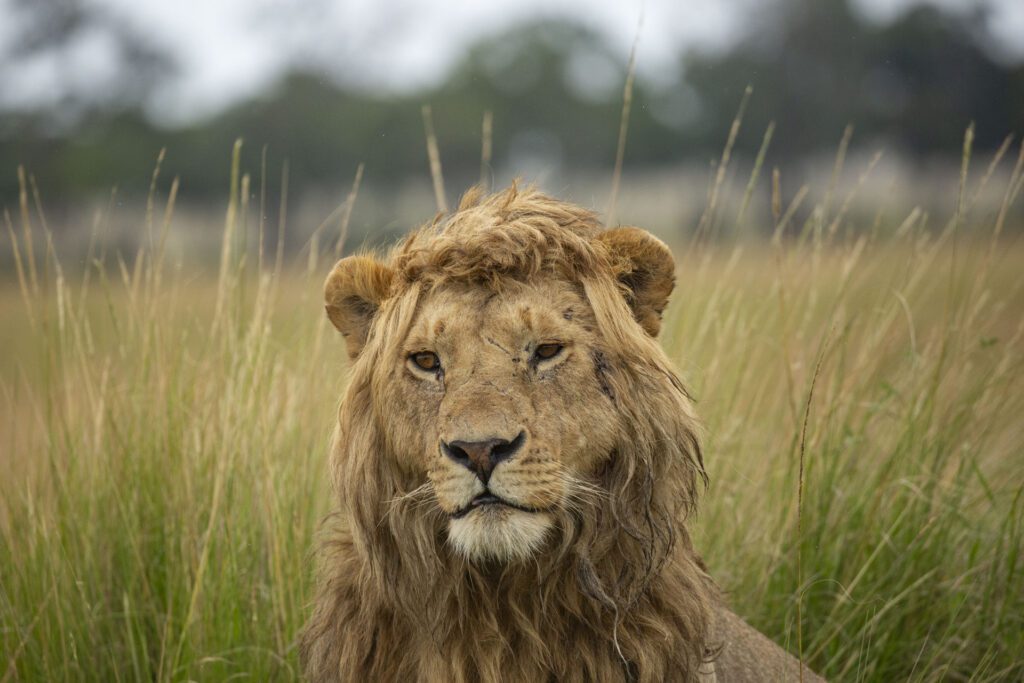
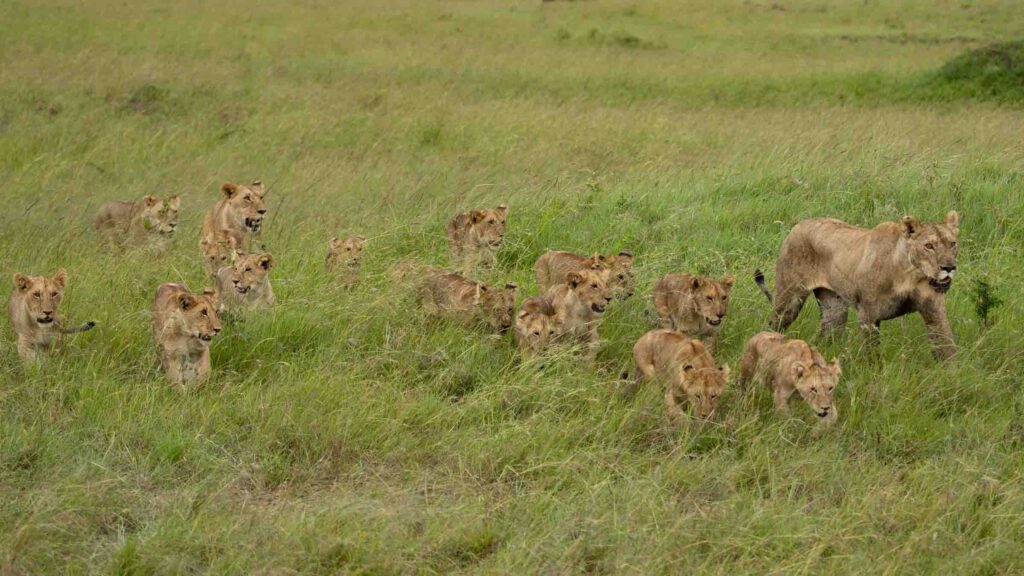
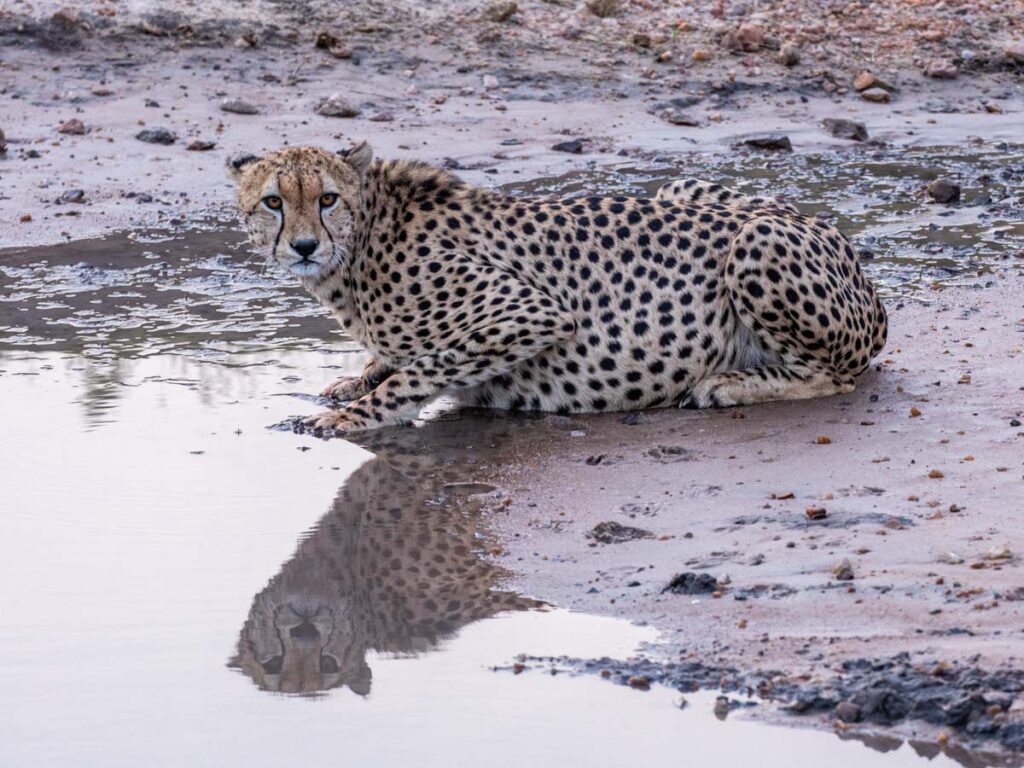
You can expect to see the Big Five (lion, leopard, elephant, buffalo, and rhino), plus cheetahs, giraffes, hippos, and more than 400 recorded bird species across the Masai Mara ecosystem.
The Mara is one of the most reliable places in Africa to see predators in the open. Our guides, who grew up near Oldonyo Loip Hill, where our camp sits, read the land in a way you can’t learn from a guidebook. That local knowledge is what turns a good drive into a great one.
What guests typically spot during a multi-day stay:
- Lions, leopards, and cheetahs on active hunts or resting in the shade
- Elephant and buffalo herds moving across open plains
- Giraffes, zebras, and antelope species throughout the reserve
- Hippos and crocodiles along the Mara River
- Over 400 bird species, from raptors to rollers, for anyone bringing a long lens
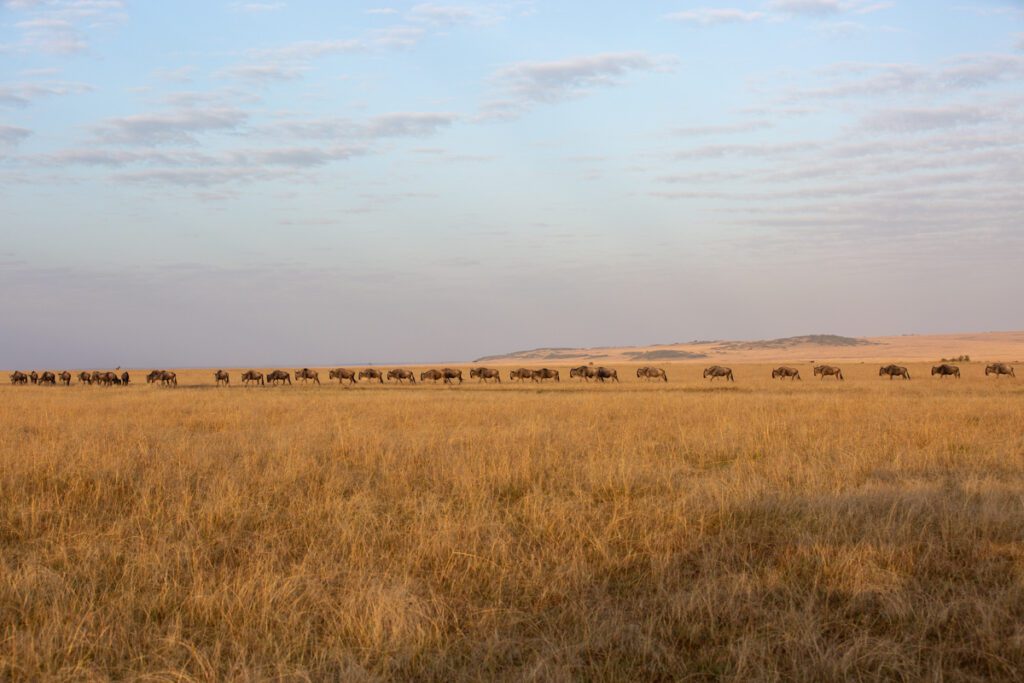
Between July and October, wildebeest herds move through the northern game circuits closest to our camp during the Great Wildebeest Migration, and the Mara River crossings themselves are one of the most dramatic wildlife events anywhere on the continent.
We also run a dedicated photography lounge so you can review, edit, and talk through your shots with other guests at the end of each drive, and we offer custom photography tour packages on request for anyone serious about their images.
When Is the Best Time to Visit the Masai Mara?
July through October is peak season, driven by the Great Wildebeest Migration, with Mara River crossings expected to peak between early August and mid-September 2026. If you’d rather skip the crowds, the dry season is best for predator sightings, and January to March is ideal for newborn wildlife and birding.
Timing your safari trip around what you actually want to see makes a real difference:
Season | What to Expect | Good For |
July – October | Great Wildebeest Migration, river crossings peaking early August–mid-September | Migration viewing, dramatic river-crossing footage |
Dry season (broadly June–October) | Predators most active, animals gather near water | Big cat sightings |
January – March | Newborn wildlife, strong birdlife | Families, birders, quieter camps |
A practical note: peak migration weeks fill up fast. Riverfront-adjacent camps like ours typically book out six to twelve months ahead for August dates, so if the migration is the reason you’re travelling, we’d suggest getting in touch and locking in your dates as early as you can.
Where you stay also affects how much of the migration you actually see. We sit just 10 minutes from Mpuaai Gate (formerly Ol Kiombo Gate) and 15 minutes from Talek Gate, both of which open directly onto the northern game circuits. That means you’re often in position before crossings even start, while camps further from the reserve are still en route.
Is a Hot-Air Balloon Safari Worth It?
Yes, if you want a perspective of the Mara you can’t get from a vehicle a sunrise balloon safari shows you migration herds, river systems, and the full scale of the plains from the air, and it pairs naturally with a bush breakfast afterward.
We include hot-air balloon safaris as one of the activities available during your stay, and it’s consistently one of the experiences guests mention most in their reviews. Here’s why it’s worth building into your itinerary:
- You see scale you can’t see from the ground. Wildebeest columns, river bends, and herd movement patterns are far easier to read from the air.
- Sunrise light over the Mara is genuinely different. Early morning is when the light is softest and wildlife is most active below.
- It’s a good match for couples and special occasions. Anniversaries, honeymoons, and milestone birthdays are common reasons guests book one.
- It doesn’t replace your game drives – it adds to them. Most guests do a balloon safari once during a multi-night stay, then continue with vehicle-based drives for the rest.
If you’re deciding whether to add it to your safari itinerary, our honest take: it’s a splurge, but it’s the kind of splurge people rarely regret. Ask us about it when you book and we’ll help you fit it around your game drive schedule.
What Cultural Experiences Can You Have in the Masai Mara?
You can visit a Masai cultural village, take part in a beadwork workshop with local Maasai artisans, and join guided nature walks led by guides who grew up on this land, all built into your stay, not sold as separate add-ons.
Wildlife draws most people to the Mara, but the culture is what stays with them. Because we’re a family-run camp rather than a managed chain, our connection to the local Maasai community runs through daily life at camp, not a scripted tour stop.
Cultural experiences available during your stay:
- Masai cultural village visits – see traditional homestead life and speak directly with community members
- Beadwork workshops – hands-on sessions with local Maasai artisans, and a genuine keepsake to take home
- Guided nature walks – your guide shares plant knowledge, tracking skills, and land history passed down rather than studied
- Tree planting – a small, direct way to give back to the land you’re visiting
Guests consistently tell us it’s the guides, not just the sightings, that make the trip. As one recent reviewer put it, they stayed multiple nights and specifically recommended not skipping a morning walk, because that’s where you actually hear about the wildlife and plants from someone who knows them firsthand. That kind of first-hand, local expertise is hard to script, and it’s a big part of what makes a stay with us feel personal rather than packaged.
Why Choose Mara Siligi Camp for Your Safari?
We’re a family-run, solar-powered tented camp at the foothills of Oldonyo Loip Hill, 10 minutes from Mpuaai Gate and 15 minutes from Talek Gate, rated 5.0 out of 5 across 450+ reviews on Google and TripAdvisor, with local Masai guides and fully all-inclusive packages.
Here’s what that means in practice:
- We live here. This isn’t a managed chain running a script. It’s a family-run camp, and it shows in how guests are received and how guides approach every sighting.
- You’re close to the action, not just “nearby.” Being minutes from two gates means you’re often in the reserve before camps further out have finished breakfast.
- Our guides track the herds daily. Local Masai guides who grew up near Oldonyo Loip Hill stay in radio contact with other guides across the ecosystem, so you’re moving when a crossing is building, not hearing about it afterward.
- You get real comfort, not just a tent. All 10 tents, 5 standard for solo travellers and couples, 5 family tents for groups with children, include ensuite bathrooms with hot water, private decks, and solar-powered lighting.
- Everything’s included. Accommodation, all meals, morning and evening game drives, and nature walks come with every stay. No hidden charges.
- We’re accessible. Fly directly to Ol Kiombo Airstrip, just 15 minutes from camp, or arrange a scenic road transfer from Nairobi.
Whether you’re weighing a handful of Masai Mara camps and lodges or you already know you want to be close to the river crossings, we’d encourage you to look at proximity, group size, and how personal the service actually is, not just the price on the page. Guests looking for Masai Mara safari tours that feel unhurried and genuinely local tend to find that combination hard to beat here.
Ready to Start Your Masai Mara Safari Booking?
From sunrise balloon safaris to fireside dinners after a day tracking the Big Five, everything about a stay with us is built around how the bush actually moves — not a fixed timetable. Tell us your dates, group size, and what you most want to see, and we’ll help you build an itinerary around it.
Reserve your stay with Mara Siligi and let us take it from here.
Frequently Asked Questions
Game drives, nature walks, and all meals are included in every package at no extra cost. Activities like the hot-air balloon safari and custom photography sessions can be arranged directly with us when you book, so we can build them into your schedule in advance.
Most guests stay 3 to 4 nights during peak migration weeks (August–September), which gives enough time for multiple game drives and a realistic chance of catching a river crossing, since crossings can start and end within an hour and timing isn’t guaranteed on any single day.
Yes. We regularly host families, our family tents comfortably fit two adults and two children, and there’s no minimum age requirement. Guides also adjust the pace and timing of game drives for younger guests.