
Planning a Masai Mara Holiday in October?
If you’re considering October for your Masai Mara trip, you’re asking the right question. October falls toward the end of the Great Migration season, giving you a mix of benefits that earlier months don’t always offer strong wildlife activity, fewer crowds, and potentially better value.
In this guide, we’ll walk you through what October is like on the ground: migration activity, weather, crowd levels, and how to choose the right package for your dates. We’ll also share what to check before booking your Masai Mara Holiday package, and why we believe our camp offers the kind of stay that can make the most of your October safari.
Table of Contents:
- Is October a Good Time for a Masai Mara Holiday?
- The Great Migration in October: What You Can Expect
- October Safari Conditions: Weather, Crowds and Game Viewing
- Choosing the Best Masai Mara Travel Package for Your Trip
- A Stay at Mara Siligi Camp: What Makes It Special
- How to Plan Your October Safari from Start to Finish
Is October a Good Time for a Masai Mara Holiday?
Yes. October is one of the better months to visit if you want strong wildlife viewing without competing for space at every sighting.
Here’s why we think it works so well:
- Migration herds are often still present, particularly in the northern Mara near the Mara River, even though the busiest crossing activity of August and early September has usually passed.
- Crowds thin out compared to peak season, since many travellers book August and September specifically for the highest crossing activity.
- Weather stays largely dry, with light rain typically only starting later in the month.
- Prices are usually more moderate than the August–September peak, since demand eases slightly.
If seeing a river crossing is your absolute priority, August and early September will give you better odds. But if you want a strong safari experience with fewer vehicles at each sighting and a bit more flexibility on pricing, October is a choice we’d happily recommend.
It’s also worth thinking about who October suits best. If it’s your first safari, you might assume peak season is the only “real” time to go but a quieter month can actually give you a better first experience. You get more space at sightings, a more relaxed pace at camp, and guides who aren’t juggling back-to-back groups all day. If you’ve already seen the peak crossings on a previous trip, you might prefer October specifically because it feels less rushed.
The Great Migration in October: What You Can Expect
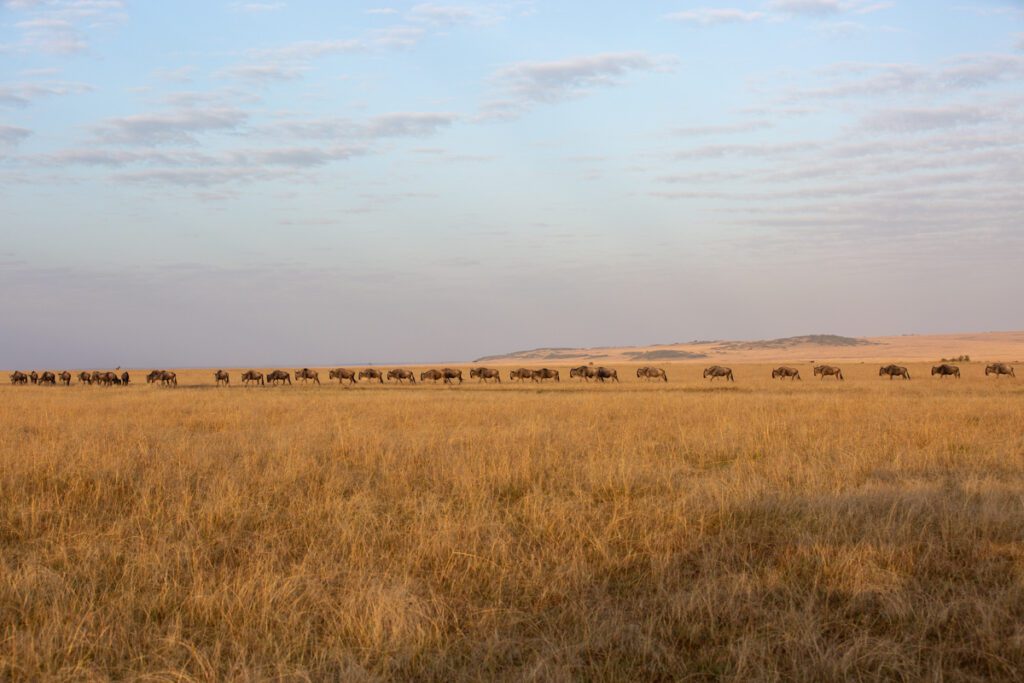
October is the closing phase of the Great Migration in the Masai Mara. Herds that arrived from July onward may still be moving through the reserve, and the Mara River crossings that peak in early August through mid-September can continue into early October.
Here’s what this means for your trip:
- Herds are still in the reserve, especially in the north near the Mara River, though numbers gradually thin as the month goes on.
- Crossings can still happen, but they become less predictable as the season winds down and herds start moving back toward the Serengeti.
- Predator activity stays high, since large cats and other predators follow the herds closely throughout this period.
- Sightings are less crowded, since fewer vehicles are gathered at each crossing point compared to peak weeks.
October gives you a genuine chance to see migration activity and possibly a river crossing, but it’s the tail end of the season rather than the guaranteed peak. If a crossing is your top priority, we’d suggest staying for at least 4 nights to improve your odds, since crossings depend on herd movement rather than a fixed schedule.
Keep in mind that even outside the migration window, the Masai Mara supports resident wildlife populations year-round. Lion prides, elephant herds, and other year-round residents remain in the reserve regardless of where the migrating herds are, so your October safari isn’t solely dependent on catching a crossing to be worthwhile.
Guides also play a bigger role during this shoulder period. Since crossing activity is less predictable in October than in peak weeks, our guides stay in regular contact with other camps and drivers, helping us get you to the right area at the right time rather than waiting at a single spot and hoping. When you choose a Masai Mara travel package, this local knowledge can make a real difference to how we plan your game drives and make the most of your time in the reserve.
October Safari Conditions: Weather, Crowds and Game Viewing
October generally gives you dry, warm days with cooler mornings and evenings comfortable conditions for your early game drives.
Condition | What to Expect in October |
Weather | Warm, mostly dry days; light rain can begin later in the month |
Crowds | Fewer vehicles than peak August–September weeks |
Game viewing | Strong, with migration herds and resident wildlife both active |
Vegetation | Still relatively short from the dry season, making animals easier to spot |
A few practical notes for you:
- Mornings and evenings can be cool, so pack a layer for early drives.
- Because the dry season has run through most of the year by October, roads are typically in good condition for your game drives.
- Booking a camp close to the park gates matters even more outside peak season, as it gives you more time inside the reserve rather than travelling to it, which is exactly why we chose our location.
Vehicle traffic at popular sightings is one of the clearest differences between October and peak season. In August and September, a single crossing point can draw dozens of vehicles at once. In October, that number typically drops, giving you a calmer, more comfortable game-viewing experience and often better photography conditions, with fewer vehicles to work around in your frame.
Choosing the Best Masai Mara Travel Package for Your Trip
Not every Masai Mara safari package is built the same way, and October’s conditions make certain options a better fit than others. Here’s a quick comparison to help you decide:
Package Type | Typical Length | Good Fit for October? |
Mid-Range Safari | 2–3 days | Yes, a solid option if your dates are flexible |
Photography Safari | 6 days | Yes, good light and active predator sightings |
Family-Friendly Safari | 5+ days | Yes, fewer crowds make it easier with kids |
Honeymoon/Couples Safari | 4 days | Yes, the quieter season suits a more private trip |
When you’re comparing Masai Mara tour packages for an October trip, check the following:
- What’s included. Your package should clearly list accommodation, meals, guided game drives, and park entry fees separately from optional add-ons.
- Length of stay. We recommend at least 3 nights; 4–5 nights gives you a better chance of catching migration activity before it fully winds down.
- Guide experience. Our local guides track herd movement daily and use their knowledge and communication with other guides to help you reach active areas at the right time.
- Add-on options. Our Masai Mara trip packages can include experiences such as a hot air balloon flight, cultural village visit, or private bush dinner if you want to make your trip more special.
If you’re travelling with a specific interest, photography, a family trip, or a couples getaway, we recommend choosing a package built around that focus rather than a generic itinerary.
Why Choose Mara Siligi Camp for Your October Safari?
October is a quieter time in the Masai Mara, but that doesn’t mean you need to compromise on your safari experience. In fact, the combination of late-season wildlife activity and fewer visitors can make this a great time to slow down and enjoy the Mara differently.
At Mara Siligi Camp, we focus on giving you a more personal safari experience. Rather than following a rigid itinerary, we can plan your days around your interests, whether you’re hoping to photograph wildlife, spend more time on game drives, or simply enjoy a relaxed few days in the wilderness.
Our local Masai guides know the area well and stay connected with other guides in the region. During October, when the location of the remaining migration herds can change quickly, this local knowledge helps us decide where to take you based on what’s happening in the Mara that day.
You also have the flexibility to shape your October stay around what matters most to you. You can spend more time out on game drives, add a cultural experience, enjoy a bush breakfast, or simply return to camp and take in the surroundings between safari outings.
If you’re looking for an October safari that feels personal, flexible, and focused on your experience rather than a fixed schedule, we’d love to help you plan your stay at Mara Siligi Camp.
How to Plan Your October Safari from Start to Finish
Here’s a straightforward planning sequence to help you book your October trip with us.
- Decide your priority. Are you looking for migration activity, or is a quieter, more affordable safari your main goal? This will help you decide how many nights to book and which package suits you best.
- Pick your stay length. A minimum of 3 nights works well for a shorter trip; 4–5 nights gives you a stronger chance of seeing migration activity before it tapers off.
- Choose your camp based on location. Staying within 10–15 minutes of a park gate means more time in the reserve and less time in transit.
- Compare Masai Mara holiday packages based on what’s included. Accommodation, meals, game drives, and park fees should be clearly itemised rather than bundled vaguely.
- Book your transfers from Nairobi. Flights from Wilson Airport to Ol Kiombo or Keekorok airstrips take about an hour; the road route via Narok takes 5–6 hours.
- Confirm any add-ons. If you’d like a hot air balloon flight, cultural village visit, or private bush dinner, let us know when you book so we can include it in your itinerary.
- Share your dietary and group needs. We can usually arrange vegetarian, vegan, gluten-free, or allergy-specific meals with advance notice.
Working through this sequence before you pay a deposit helps you avoid gaps in your itinerary and gives you a clear picture of what your trip will include.
One more practical point: October sits between two busier booking periods, so availability is generally easier to secure than in August or September. That said, well-located camps near the park gates, including ours, can still fill up quickly, so we’d suggest confirming your dates a few months ahead rather than leaving it to the last minute.
Summary
October offers you a practical middle ground for a Masai Mara trip: migration herds may still be present, crowds are lighter than during peak season, and the weather is generally dry and comfortable. It’s a good choice if you want strong wildlife viewing without competing for space at every sighting.
If you’re comparing Masai Mara holiday packages for October, focus on camp location, stay length, and what’s actually included in the price. A well-located, locally guided Masai Mara safari package gives you a better opportunity to experience late-season migration activity alongside the reserve’s year-round wildlife.
Ready to plan your October safari? Get in touch with us for a personalised itinerary and quote. Just share your travel dates and group size, and we’ll help you plan your stay.
Frequently Asked Questions
Yes, with some caveats. October is the tail end of the migration season, so herds are often still present, particularly in the northern Mara, and river crossings can continue into early October. Crossing activity is less predictable than the August–September peak, so we recommend a stay of at least 4 nights to improve your chances.
Generally, yes. Prices tend to ease slightly after the August–September peak, since demand is lower. October still offers strong wildlife viewing and fewer crowds, making it a good value window if you don’t need to see peak crossing activity specifically.
October typically brings warm, mostly dry days with cooler mornings and evenings. Light rain can start later in the month as the short rains approach, but it usually doesn’t disrupt your game drives. We’d suggest packing a light layer for early morning and evening drives.