Masai Mara Photography Tour for Bird and Wildlife Photography
Everyone comes to the Mara chasing lions. But if you only point your lens at the big cats, you’re missing half the story. The Masai Mara is bursting with color, movement, and personality in its smaller residents, from lilac-breasted rollers flashing electric blue to dwarf mongooses darting through the grass.
On our Masai Mara photography tour, we help you slow down and see this side of the reserve too. You’ll learn to frame birds mid-flight, capture the quiet drama of a dik-dik at dawn, and come home with a portfolio that’s as rich in detail as it is in scale.
At Mara Siligi Camp, our photography safaris are built by a photographer, for photographers, which means we plan every drive around light, behavior, and the perfect frame, whether your subject weighs four tonnes or forty grams. This guide walks you through exactly what to expect, what to pack, and how we set you up for it.
Table of Contents
- Why Birds and Smaller Wildlife Deserve Your Lens
- Best Birds to Photograph in the Masai Mara
- Smaller Wildlife You Shouldn’t Overlook
- Gear and Settings for Bird and Small Wildlife Shots
- Best Time for a Photography Safari Focused on Birds
- Why Book Your Photography Tour With Us
Why Birds and Smaller Wildlife Deserve Your Lens
You’ve probably scrolled past hundreds of lion and elephant shots online. Birds and smaller creatures are where you can actually stand out.
Here’s why we encourage every guest to widen their focus:
- Better light discipline. Small, fast subjects force you to nail your shutter speed and focus tracking, skills that make your big-game shots sharper too.
- Constant opportunities. Even on a slow game drive with no predator sightings, there’s always a bird, lizard, or mongoose doing something photogenic.
- Unique portfolio pieces. A perfectly timed shot of a bee-eater catching an insect mid-air is rarer, and often more striking, than another lion portrait.
- Storytelling depth. Smaller wildlife shows the Mara’s ecosystem in full: predator, prey, scavenger, and pollinator, all in one frame.
Think of it this way: the big cats give you the headline, but the birds, reptiles, and smaller mammals give you the paragraph underneath, the texture that makes a gallery feel complete rather than repetitive. Our guides know this landscape intimately, and we build the patience and positioning these subjects need right into your itinerary.
That’s really the philosophy behind every Masai Mara photography tour we run: we’re not just driving you to sightings, we’re helping you build a complete, well-rounded body of work, one that includes the quiet, overlooked frames alongside the dramatic ones.
Best Birds to Photograph in the Masai Mara
The Mara hosts an incredible range of birdlife, and you don’t need to be a dedicated birder to appreciate what’s in front of your lens. Here’s what to watch for.
Raptors and Birds of Prey
- Secretary birds — tall, striking, and often seen stalking through open grassland
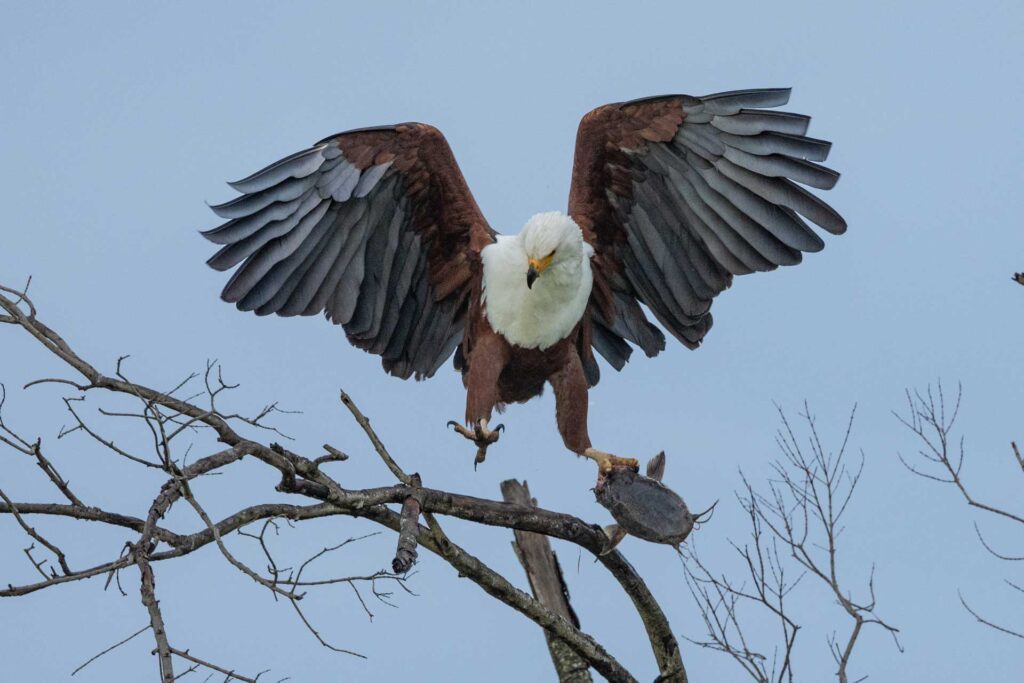
- Martial eagles — Africa’s largest eagle, powerful and dramatic against the sky
- Bateleur eagles — recognizable by their short tail and rocking flight pattern
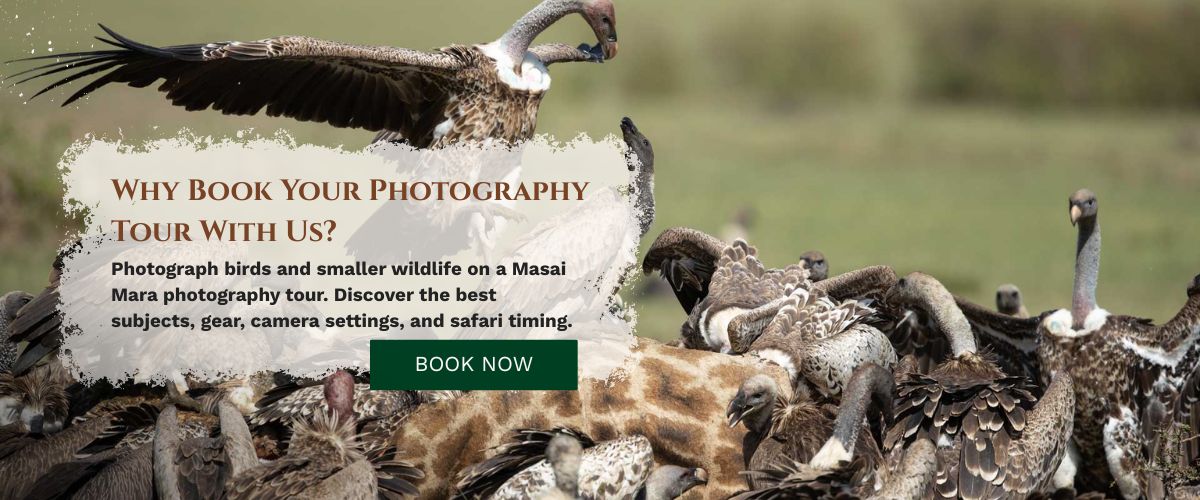
- Vultures — gather in numbers at kills, offering raw, high-action storytelling shots
Color and Movement Specialists
- Lilac-breasted rollers — the Mara’s unofficial mascot, prized for their rainbow plumage
- Carmine and little bee-eaters — fast, colorful, and a real test of your reflexes
- Kingfishers — found near rivers and waterholes, perfect for reflection shots
- Superb starlings — iridescent, common, and endlessly cooperative subjects
Ground and Wetland Birds
- Ostriches — often seen displaying, especially during breeding season
- Crowned cranes — Kenya’s national bird, elegant and easy to photograph in open plains
- Herons and storks — plentiful around the Mara and Talek rivers
If you’re specifically hunting for feathered subjects, a kenya bird photography safari trip built around wetlands, riverbanks, and early light will give you the most consistent results. Pairing your Mara days with an extension to Lake Naivasha, a spot our guides often recommend, adds even more birding variety to your trip.
The most photogenic Mara birds for beginners are the lilac-breasted roller, the superb starling, and the crowned crane – all common, colorful, and relatively easy to approach by vehicle.
Smaller Wildlife You Shouldn’t Overlook
Beyond birds, the Mara’s smaller mammals and reptiles bring texture and surprise to your gallery.
- Dik-diks — tiny, alert antelopes that make for tender, intimate portraits
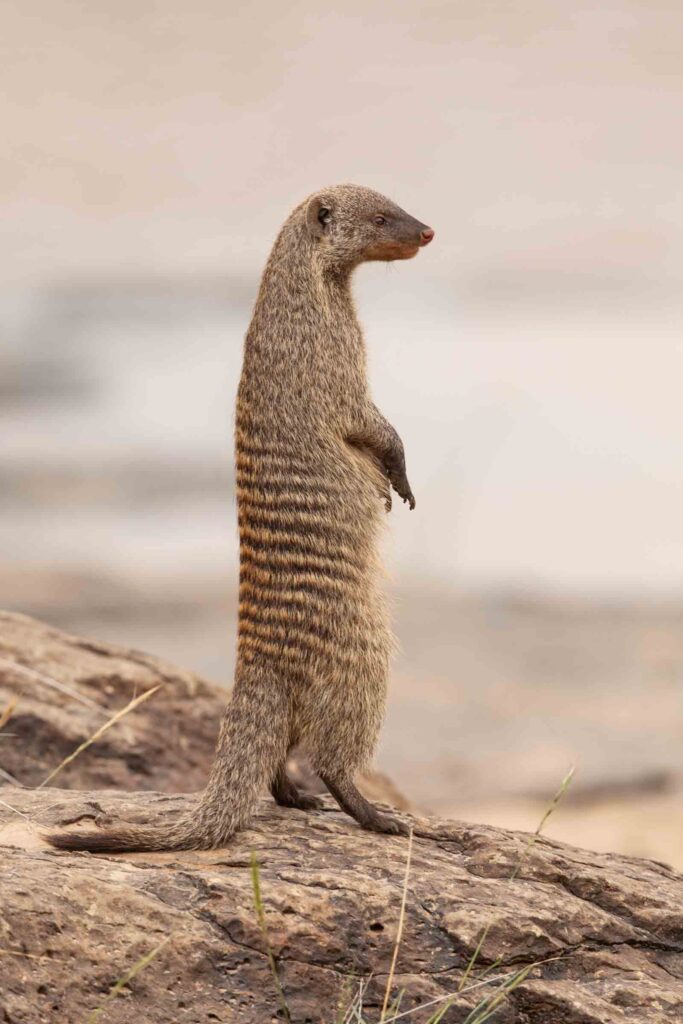
- Banded and dwarf mongooses — social, curious, and full of personality
- Rock hyraxes — often sunbathing on kopjes, easy to photograph up close
- Agama lizards — their blue-and-orange breeding colors pop against rock and sand
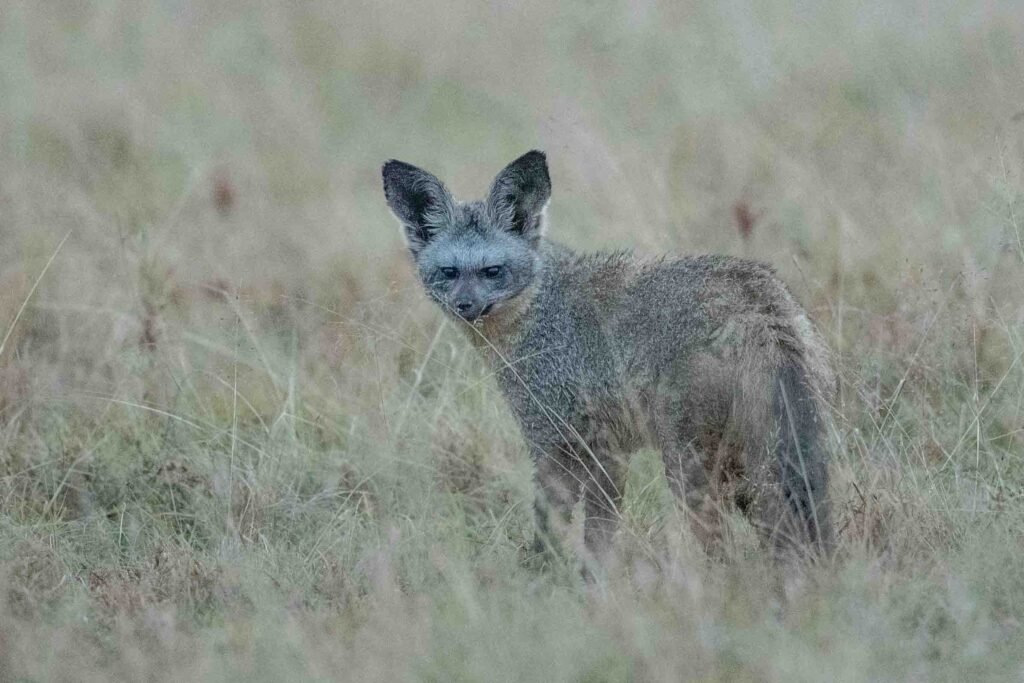
- Bat-eared foxes — nocturnal and shy, but unforgettable when you catch them
- Warthogs and mongoose families — comic relief that also makes for great behavioral shots
These subjects reward patience over speed. You’re not just driving past them, you’re waiting in the right spot, at the right time of day, for the right behavior to unfold. Our guides know where these animals den, feed, and rest, so your odds of a genuinely interesting shot go up dramatically compared to a standard, sighting-driven game drive.
A simple way to think about it: big cats reward you for being in the right place; smaller wildlife rewards you for staying in the right place a little longer.
We also encourage guests to keep an eye on the ground and the rocks, not just the horizon. Some of our favorite guest images from past trips are the quiet ones, a hyrax family piled on a warm kopje, or a dwarf mongoose sentry standing guard while the rest of its troop forages nearby. These moments rarely make it into a highlight reel, but they’re often the shots that guests say they treasure most once they’re back home, scrolling through their gallery.
Gear and Settings for Bird and Small Wildlife Shots
You don’t need a completely different kit for smaller subjects, but you do need to think differently about how you use it.
What to pack:
- A telephoto lens, ideally 300mm or longer, 400–600mm gives you the reach small subjects demand
- A teleconverter if you’re working with a shorter lens and want extra reach
- Fast SD cards and spare batteries, since burst shooting drains both quickly
- A bean bag or window mount for stability on long lenses
- A wide-angle lens too, useful for camp shots and environmental portraits between drives
Settings worth remembering:
- Shoot in shutter priority or manual mode with a fast shutter speed (1/2000s or higher for birds in flight)
- Use continuous autofocus (AF-C) and burst mode to track erratic movement
- Widen your aperture for shallow depth of field on small, close subjects
- Raise your ISO before you sacrifice shutter speed — a little noise beats a blurry bird
Subject type | Recommended lens | Shutter speed | Focus mode |
Birds in flight | 400–600mm | 1/2000s or faster | AF-C, burst mode |
Perched birds/small mammals | 300–500mm | 1/500s–1/1000s | AF-C, single point |
Reptiles/close-up detail | 300mm+ or macro | 1/250s–1/500s | Single-shot AF |
Our purpose-built vehicles come equipped with bean bags, camera mounts, elevated roof hatches for 360° shooting, and power inverters for charging batteries in the field, so you’re never scrambling for stability or power mid-shoot. Cooler boxes on board mean you’re not cutting a promising session short just because it’s time for a break.
Best Time for a Photography Safari Focused on Birds
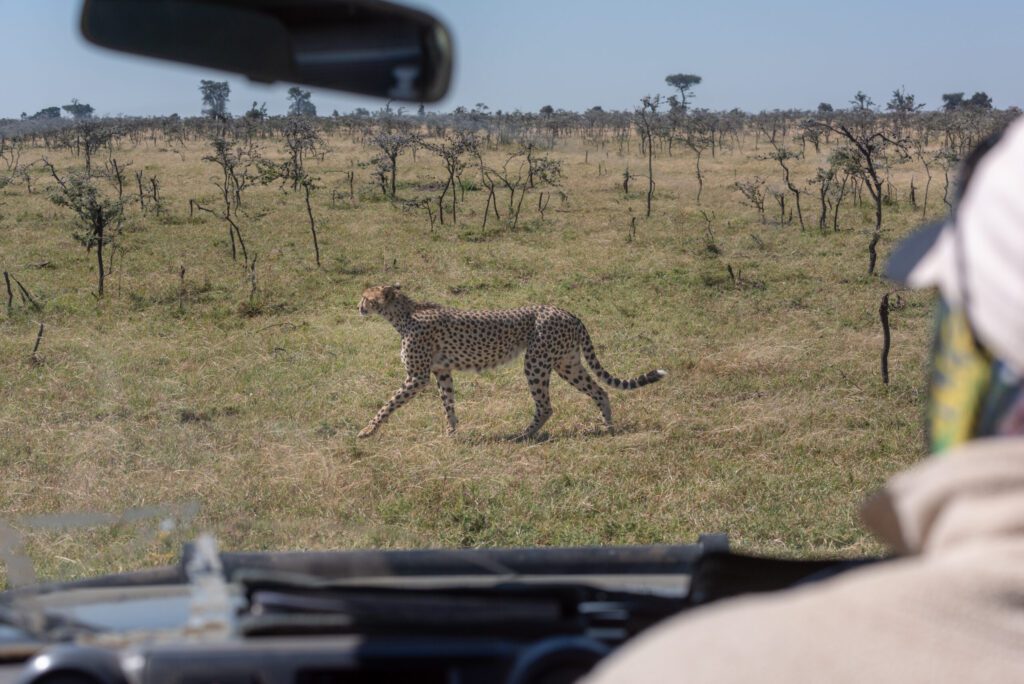
Timing matters just as much for a dik-dik at dawn as it does for a lion at sunset.
- Early morning (golden hour): Birds are most active, light is warm and directional, and smaller mammals are often out feeding before the heat sets in
- Late afternoon: A second window of soft light and activity, ideal for backlit shots of birds in flight
- Wet season (November–May): Lush greenery, migratory birds, and dramatic skies — great for color and contrast
- Dry season (June–October): Easier sightings around water sources, plus the added bonus of the Great Migration between July and October
If you’re weighing the best time for photography safari results specifically for birds and smaller wildlife, aim for the shoulder months. You’ll find abundant birdlife, greener backdrops, and noticeably thinner crowds compared to peak migration season, without missing out on quality big-game encounters.
Rather than running fixed-schedule game drives, we structure your day around light: early golden-hour shoots, a midday break for editing and rest back at camp, and late-afternoon positioning for action and drama. That flexibility matters more for bird photography than almost any other genre, since a five-minute delay can mean missing an entire flight sequence.
Why Book Your Photography Tour With Us
We built our Masai Mara photography tour packages around the way photographers actually work, not around a fixed tourist schedule.
Here’s what that looks like in practice:
- Photographer-led guiding. Our co-founder, Usha Harish, is a wildlife photographer herself, and she designs every itinerary around light, behavior, and framing — not just sightings.
- Small groups. We keep it to 3–4 photographers per vehicle, so everyone gets a clear angle and personal guidance, even on a fast-moving subject like a bee-eater.
- Flexible timing. Instead of rigid drive schedules, we chase golden hour and stay out longer when the light — or the moment — calls for it.
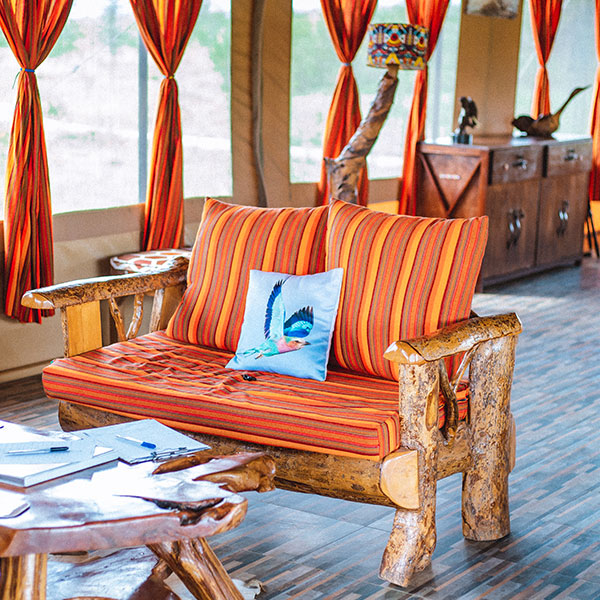
- A creative base camp. Marasiligi Camp sits at the foothills of Oldonyo Loip Hill, with charging stations in tents and common areas, reliable Wi-Fi for backups, and evening bonfires where you can review the day’s shots with fellow photographers.
- Extension options. Add days in Lake Naivasha for dedicated birding, or Amboseli for elephant portraits against Kilimanjaro.
- Full support. Full-board stays, local Maasai guides trained to think about framing, and an in-camp post-processing workshop between drives.
Whether you want a dedicated Masai Mara photography tour packages built around birds and smaller wildlife, or a broader itinerary that balances big cats with the Mara’s quieter residents, we’ll tailor the vehicle positioning, timing, and pace to match your goals. Reach out to us at Mara Siligi Camp, and let’s design a photography safari that matches exactly what you want to capture.
Ready to Photograph the Mara’s Smaller Wonders?
You don’t need to choose between lions and lilac-breasted rollers, a well-planned trip gives you both. With the right guide, the right light, and a little patience, the Mara’s smaller residents can end up being the most memorable frames in your entire portfolio.
Spots fill up fast, especially around migration season, so if you’re ready to build a trip around birds, small mammals, and everything in between, get in touch with us today. We’d love to help you plan it.
Frequently Asked Questions
The Mara is excellent for both. While it’s famous for lions and the Great Migration, it also hosts hundreds of bird species, from raptors like martial eagles to colorful lilac-breasted rollers and bee-eaters, making it a strong destination for dedicated bird photography.
A telephoto lens of 300mm or longer works well, though 400–600mm gives you more reach for skittish or distant subjects. Pairing it with a teleconverter and a bean bag for stability helps you get sharper, closer shots from inside the vehicle.
Early morning and late afternoon golden hours are ideal. Light is soft and directional, birds are most active, and smaller mammals like dik-diks and mongooses are often out feeding before the day heats up.