Masai Mara photography tour packages focused on river crossings
For wildlife photographers, the Great Migration river crossings in the Masai Mara are the ultimate action scene. Thousands of wildebeest crowd the riverbanks, tension builds in the herd, dust rises into the air, and suddenly the entire landscape erupts into motion.
Animals leap from steep banks. Water explodes with splashes. Crocodiles lurk beneath the surface. And within seconds, the moment you traveled thousands of miles for unfolds.
Capturing this requires more than luck. You need the right location, timing, and safari structure, which is why many photographers specifically look for Masai Mara photography tour packages focused on river crossings.
A well-planned Masai Mara photography tour ensures you spend more time at the Mara River, track herd movements effectively, and position yourself where the most dramatic crossings happen.
If photographing the migration is your goal, here’s how the right Masai Mara photography tour packages help you capture unforgettable river-crossing moments.
Table of Contents
- When River Crossings Actually Happen in the Masai Mara
- Where Photographers Position for the Best River Crossing Shots
- How Photography Tour Packages Increase Your Chances of Seeing Crossings
- What to Look for in Masai Mara Photography Tour Packages for Migration Season
- Shooting Techniques for Capturing High-Drama Wildebeest Crossings
- Why Camp Location Matters for River Crossing Photography Tours
When River Crossings Actually Happen in the Masai Mara
One of the biggest misconceptions travelers have is believing river crossings happen constantly during migration season. Many visitors expect to see dramatic action the moment they arrive, but the reality is far more complex.
In reality, crossings are unpredictable and highly dependent on herd pressure, weather conditions, and predator presence. Wildebeest often gather along the riverbanks for hours or even days before attempting to cross. They may approach the edge multiple times, retreat, and then suddenly surge forward when one animal makes the first move.
When you book a Masai Mara photography tour package for the Great Migration, understanding this timing becomes extremely important. Planning your trip during the right migration window increases your chances of witnessing the intense and chaotic river crossings that photographers travel across the world to capture.
Most river crossings typically occur during the following months:
July – Early Migration Movement
- First large herds begin entering the Masai Mara from the Serengeti
- Early crossings start at select river points along the Mara River
- Wildlife activity begins increasing across the ecosystem
- Great time for photographers seeking fewer safari vehicles and quieter locations
- Ideal period for travelers booking early-season Masai Mara photography tour packages
August – Peak River Crossing Season
- Largest wildebeest herds arrive in the Mara ecosystem
- Frequent crossing attempts occur at multiple river crossing points
- High probability of dramatic wildlife action including crocodile encounters
- Intense wildlife scenes provide incredible opportunities for a Masai Mara photography tour
- One of the most popular months for photographers planning Masai Mara photography tour packages for river crossing photography
September – Consistent Migration Activity
- Strong river crossing activity continues across major crossing locations
- Excellent predator interaction opportunities as lions and crocodiles follow the herds
- Slightly fewer crowds compared to the peak of August
- Great time for photographers who want strong migration scenes with slightly calmer safari traffic
Because crossings can happen suddenly and without warning, photographers benefit from booking longer Masai Mara photography tour packages lasting 4–7 days. Spending more days inside the reserve allows you to track herd movements and revisit active crossing points.
With a well-planned Masai Mara photography tour, you increase your chances of witnessing multiple crossing attempts instead of relying on a single opportunity. This patience often rewards photographers with the dramatic images that define the Great Migration.
Where Photographers Position for the Best River Crossing Shots
Not every location along the Mara River offers the same photography opportunities. While the river stretches across large parts of the Masai Mara ecosystem, only certain sections regularly witness dramatic migration crossings.
Experienced safari guides know that specific crossing points become active when herds start gathering nearby. These locations are often where wildebeest naturally approach the river during their migration route. If you are on a well-planned Masai Mara photography tour, your guide will track herd movement and position the vehicle near these high-activity zones.
Certain crossing points are known for:
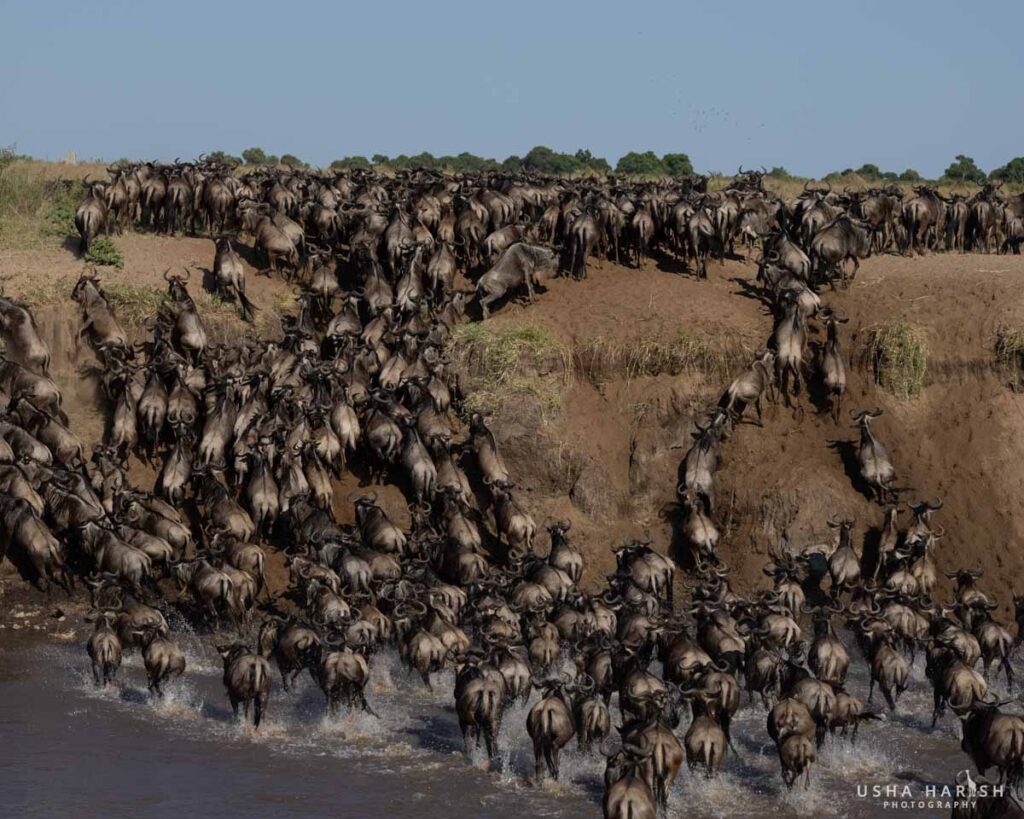
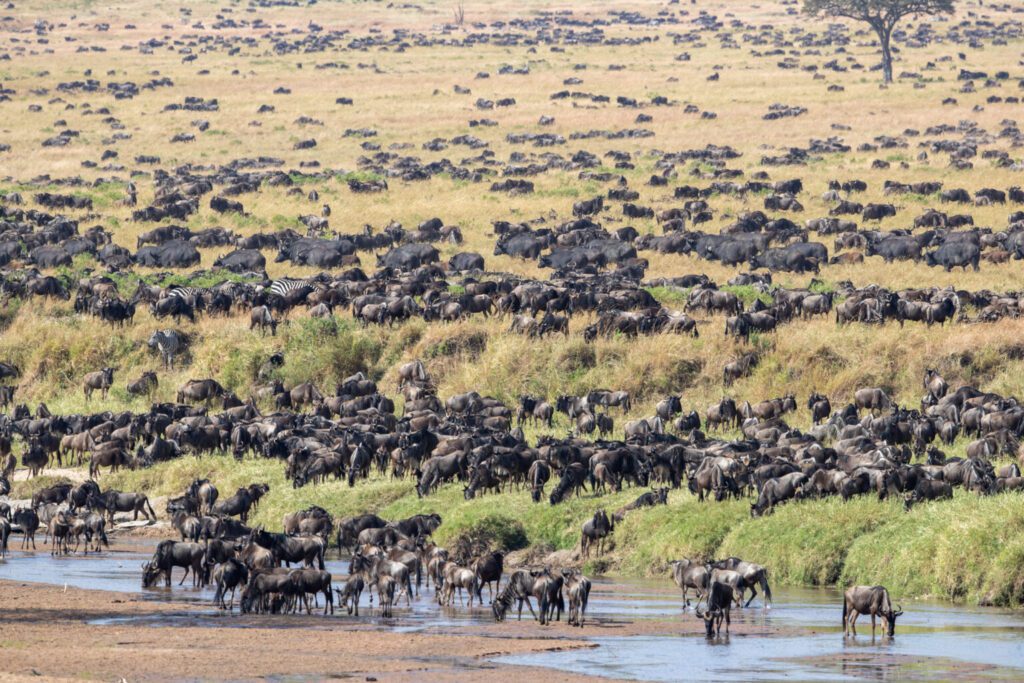
- Large herd gatherings where thousands of animals cluster along the riverbanks before attempting a crossing
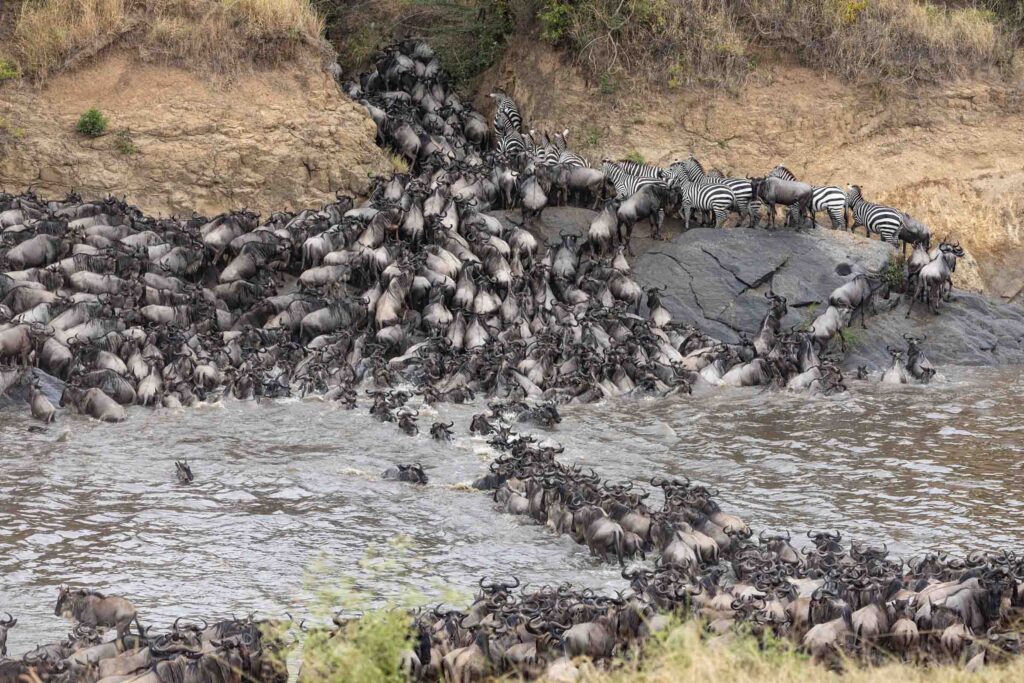
- Steep riverbank jumps that create powerful action shots as wildebeest leap into the water
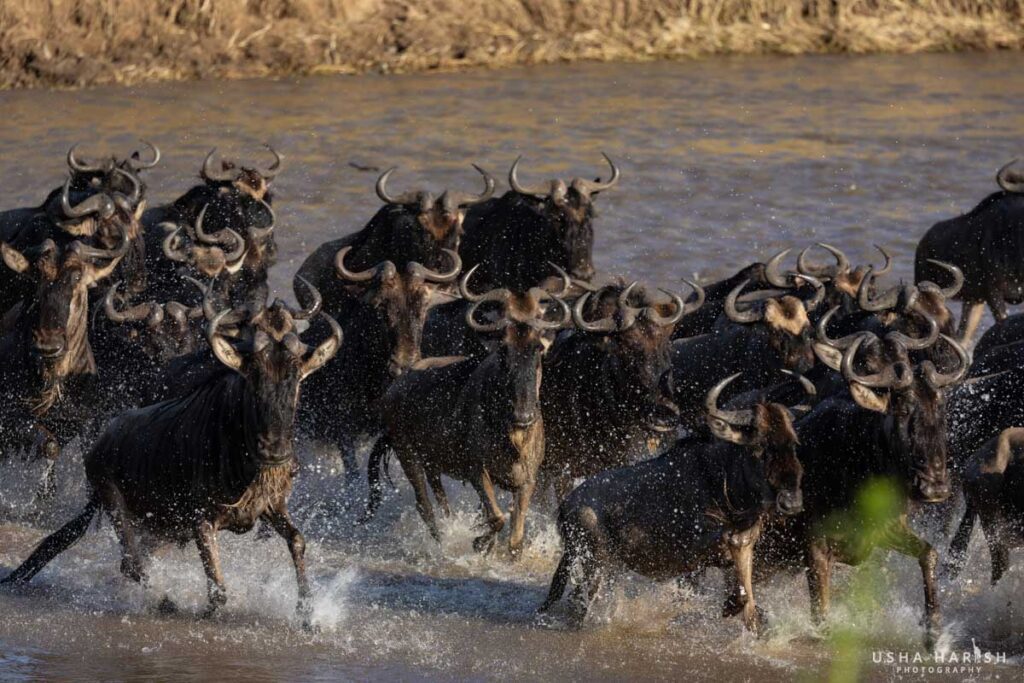
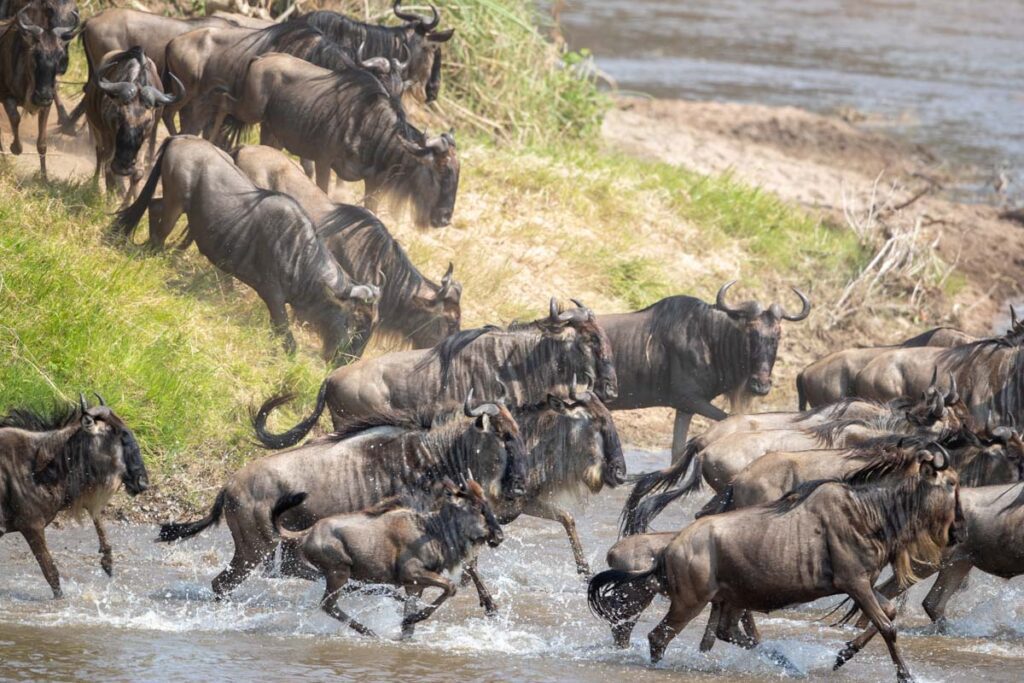
- Dramatic water splashes when herds rush into the river simultaneously
- Predator ambush zones where crocodiles wait beneath the surface and lions patrol nearby areas
These elements create the intense and chaotic scenes that photographers hope to capture during a Masai Mara photography tour for the Great Migration.
During a Masai Mara photography tour, experienced guides carefully observe animal behavior and track herd patterns. Instead of randomly driving around the reserve, they focus on positioning the vehicle near areas where crossing attempts are most likely to occur.
Key characteristics photographers look for include:
- Steep Riverbanks
These locations create the iconic leap shots where wildebeest plunge dramatically into the river. The steep drop often forces animals to jump, resulting in dynamic images filled with motion, dust, and splashing water. - Clear Sight Lines
Open landscapes are extremely important for wildlife photography. When the riverbank area is unobstructed, you can capture wide-angle images showing the scale of the migration, with hundreds or even thousands of animals moving together. - Animal Movement Corridors
Certain areas naturally funnel animals toward the river. These routes form over years of migration patterns, making them reliable spots where herds gather before attempting to cross.
When you choose Masai Mara photography tour packages designed specifically for migration photography, guides prioritize these high-probability crossing locations. This approach ensures you spend more time in areas where the action is most likely to unfold.
For photographers, positioning is everything. Being in the right place when the herd finally commits to the crossing can make the difference between simply witnessing the migration and capturing truly unforgettable images.
How Photography Tour Packages Increase Your Chances of Seeing Crossings
Standard safaris often follow fixed schedules and predetermined routes. While they offer excellent wildlife viewing, they may not always provide the flexibility needed for migration photography. River crossings can take hours to unfold, and the most dramatic moments often happen without warning.
This is where a dedicated Masai Mara photography tour package becomes extremely valuable. These tours are designed specifically for photographers who want to spend more time observing wildlife behavior and waiting for the perfect moment.
Migration photography requires patience, planning, and the ability to adapt quickly to changing wildlife movements. A well-structured Masai Mara photography tour improves your chances of witnessing river crossings in several important ways.
- Extended Time at Riverbanks
Photographers often wait for long periods before herds decide to cross. During a standard safari, vehicles may leave after a short stop. Photography-focused safaris allow you to stay longer at active riverbanks, increasing your chances of capturing the moment when the herd finally moves. - Early Arrival at Crossing Points
Reaching the river early can make a big difference. Guides on Masai Mara photography tour packages often arrive before other safari vehicles, allowing you to secure the best vantage points and prepare your camera settings before the action begins. - Real-Time Herd Tracking
Experienced safari guides continuously observe animal behavior and communicate with other guides in the reserve. This real-time information helps track herd movements and identify where the next crossing attempt may occur during your Masai Mara photography tour. - Flexible Game Drives
River crossings rarely happen according to a strict timetable. Photography tours provide the flexibility to extend game drives or remain at a location when wildlife activity intensifies, ensuring you do not miss critical moments.
Because river crossings can happen suddenly, these advantages make Masai Mara photography tour packages far more effective for wildlife photographers. With the right tour structure, you spend more time in high-probability locations and significantly improve your chances of witnessing one of the most dramatic events in the natural world.
What to Look for in Masai Mara Photography Tour Packages for Migration Season
If capturing dramatic river crossings is your goal, not every safari will deliver the experience you expect. Many standard safaris focus on general wildlife viewing, which may not provide the positioning, timing, or flexibility required for migration photography.
When you start evaluating Masai Mara photography tour packages, it helps to focus on features that directly improve your chances of witnessing and photographing the Great Migration. The right combination of location, guiding expertise, and safari structure can significantly impact your results.
Here are the most important factors to consider when choosing a Masai Mara photography tour package for migration season.
- Strategic Camp Location
Where you stay plays a major role in your photography experience. Camps located closer to the Mara River and major migration routes reduce travel time to crossing points. This means you can reach active areas earlier in the day and spend more time observing herd behavior before a crossing begins during your Masai Mara photography tour. - Open Photography Vehicles
Wildlife photography requires space and flexibility. Open safari vehicles allow photographers to move lenses freely, adjust angles, and capture unobstructed views of the riverbanks and wildlife activity. This setup is especially useful when herds suddenly surge toward the water during a crossing. - Experienced Migration Guides
Guides with deep knowledge of migration patterns and wildlife behavior can make a huge difference. They understand how herds move across the landscape and can often anticipate where animals are likely to gather. On well-designed Masai Mara photography tour packages, guides focus on positioning vehicles in areas where crossing attempts are more likely. - Smaller Group Sizes
For photographers, space inside the vehicle matters. Smaller group sizes ensure you have enough room to handle long telephoto lenses and adjust your shooting position comfortably. This also allows guides to reposition the vehicle more easily when wildlife activity intensifies. - Longer Safari Duration
River crossings are unpredictable. Some days may see several attempts, while others may have none. Choosing Masai Mara photography tour packages that last several days increases your chances of encountering these dramatic events. A longer stay also allows photographers to revisit active crossing points and follow herd movements across the reserve.
Choosing the right Masai Mara photography tour package for wildebeest river crossings can ultimately determine the success of your photography experience. With the right planning and safari structure, you dramatically improve your chances of witnessing — and capturing — one of the most powerful wildlife spectacles on Earth.
Shooting Techniques for Capturing High-Drama Wildebeest Crossings
River crossings are one of the most unpredictable and action-packed wildlife moments you will photograph. Within seconds, calm riverbanks can turn into a chaotic rush of thousands of animals plunging into the water. Because everything unfolds quickly, photographers need to stay prepared and react instantly.
During your Masai Mara photography tour, using the right shooting techniques can help you capture dramatic, story-driven images instead of missing the moment.
- Use High Burst Mode
River crossings often happen suddenly. Once the first wildebeest jumps, hundreds may follow within seconds. Setting your camera to high burst or continuous shooting mode allows you to capture multiple frames rapidly, increasing your chances of freezing the most dramatic moments. - Focus on Animal Expressions
Some of the most powerful images are not just about movement but emotion. Look for moments when wildebeest hesitate at the riverbank, push forward through the herd, or react to predators. These expressions of fear, tension, and instinct create compelling storytelling images during your Masai Mara photography tour. - Capture the Full Scene
While close-up action shots are exciting, wide shots can showcase the true scale of the Great Migration. Positioning your lens to capture thousands of animals gathering at the riverbank helps convey the magnitude of the crossing. - Track Motion Through the Water
Once the herd enters the river, follow the movement of animals through your viewfinder. Tracking motion helps you capture dynamic splashes, running animals, and chaotic water movement that define these dramatic crossings. - Anticipate the Jump
Often, the most iconic photographs happen at the exact moment the first wildebeest leaps from the steep riverbank. Watch herd behavior carefully—when animals begin clustering near the edge and pushing forward, be ready. Anticipating this moment during your Masai Mara photography tour for river crossings can help you capture the defining shot.
With the right positioning, patience, and camera technique, a well-planned Masai Mara photography tour allows you to capture images that truly represent the power and intensity of the Great Migration.
Why Camp Location Matters for River Crossing Photography Tours
Location plays a major role in how successful your safari photography experience will be. While the Masai Mara is vast and rich in wildlife, the Great Migration follows specific routes across the ecosystem. If your accommodation is far from the active migration zones or the Mara River, you may spend a large portion of your day driving instead of positioning yourself for wildlife action.
For photographers who are traveling specifically to capture the Great Migration, staying close to key migration areas becomes extremely important. A strategically located camp allows you to respond quickly when herd activity begins and gives you more time observing animal behavior before a crossing attempt.
When you choose Masai Mara photography tour packages with camps located near migration routes, your chances of witnessing dramatic river crossings increase significantly.
Some of the key advantages include:
- Faster access to river crossing hotspots where herds frequently gather before attempting to cross
- More time observing herd behavior before crossings, which helps photographers anticipate the action
- Better chances of catching early morning wildlife activity, when lighting conditions are ideal for photography
- Flexibility to revisit active crossing points multiple times during your safari
Another important benefit is the ability to return quickly to areas where herds were seen earlier in the day. During the migration season, herds often move across the landscape and may approach different crossing points multiple times before finally committing to the river.
At Mara Siligi Camp, your safari experience places you within reach of some of the most active wildlife areas in the Masai Mara ecosystem. This strategic positioning allows guests to spend more time exploring migration routes and less time traveling long distances.
For photographers searching for Masai Mara photography tour packages designed to capture dramatic wildebeest river crossings, staying in the right location can provide a major advantage and significantly improve the chances of witnessing this extraordinary wildlife spectacle.
Plan Your Masai Mara Photography Tour for the Great Migration
Photographing the Great Migration river crossings is one of the most thrilling wildlife experiences on the planet.
But success depends on timing, planning, and choosing the right safari structure.
By selecting the right Masai Mara photography tour package, you position yourself where the action happens — waiting along the riverbanks as thousands of wildebeest gather before making the leap.
And when that moment finally arrives, your camera will already be ready.
FAQs
Certain Mara River crossing points are known for steep banks and large herd gatherings, making them ideal for action shots. A well-planned Masai Mara photography tour focuses on these high-probability locations.
Wildebeest often gather near the river for long periods before committing to the crossing. During a Masai Mara photography tour package, patience at active riverbanks often leads to the most dramatic shots.
Camps closer to migration routes reduce travel time and allow photographers to reach crossing points earlier. Many Masai Mara photography tour packages prioritize camps near the Mara River for this reason.