Masai Mara Photography Tour Checklist
Taking pictures of wildlife is only one aspect of a well-organized Masai Mara photography tour. It’s about telling a complete visual narrative, complete with serene landscape shots, close-up wildlife details, and dramatic predator action and golden sunrises.
Your safari becomes organized, purposeful, and creatively fulfilling when you select carefully crafted Masai Mara photography tour packages. With the help of this checklist, you can learn what to photograph every day and come home with a strong, varied portfolio.
Table of Contents
- Preparing for Your Masai Mara Photography Tour: Essential Gear and Tips
- Day 1: Capturing Iconic Landscapes and Sunrise Moments
- Day 2: Focusing on Big Cats and Predators in Action
- Day 3: Documenting Herds, Migration, and Grazing Wildlife
- Day 4: Birds, Flora, and Hidden Wildlife Details to Photograph
- How Mara Siligi Camp Enhances Your Photography Experience
Preparing for Your Masai Mara Photography Tour: Essential Gear and Tips
Before your Masai Mara photography tour begins, preparation determines your results. Wildlife photography rewards readiness. Light shifts quickly. Animals move without warning. Dust settles on lenses. If you prepare well, you stay calm and confident in every situation.
The right gear and the right mindset allow you to respond instantly. You don’t want to fumble with settings when a cheetah begins its sprint or when elephants walk across golden light at sunrise. Preparation gives you speed. Speed gives you sharp, powerful images.
When you invest in professional Masai Mara photography tour packages, you already gain access to expert guides and carefully timed game drives. But your personal preparation ensures you fully maximize every opportunity.
Essential Camera Gear Checklist
You need reliable equipment that performs in fast-moving, dusty safari conditions. Use this checklist to stay fully prepared:
- DSLR or mirrorless camera with fast autofocus
Choose a body known for quick subject tracking and strong low-light performance. - Telephoto lens (200–600mm) for wildlife
This range helps you capture close-up portraits of lions, leopards, and cheetahs without disturbing them. - Wide-angle lens (16–35mm) for landscapes
Perfect for sunrise skies, dramatic clouds, and sweeping savannah scenes. - Extra batteries and memory cards
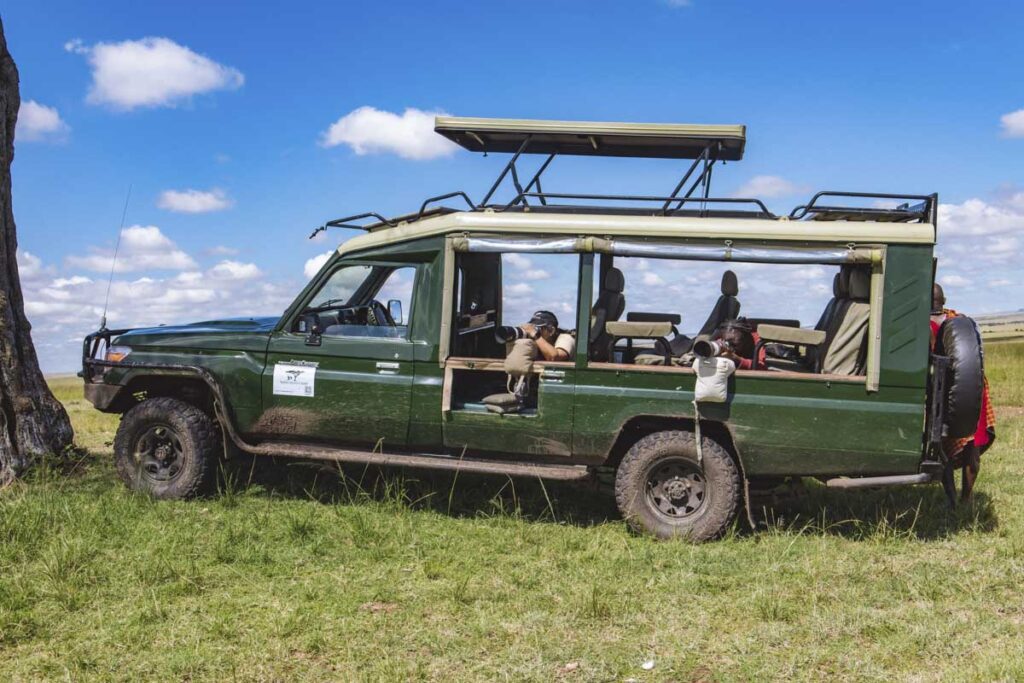
Morning and evening drives drain batteries quickly. Always carry backups within reach. - Bean bag or monopod for vehicle stability
A bean bag works exceptionally well on safari vehicles for steady shots. - Lens cleaning kit (dust is common)
The Mara’s dry terrain creates fine dust. Clean your lens daily to maintain image clarity. - Backup storage device
Back up your files every evening. Protect your work.
You can also consider:
- Dual camera bodies to avoid switching lenses in dusty conditions
- Rain protection covers during seasonal showers
- Comfortable neutral-colored clothing for long game drives
Photography Tips Before You Arrive
Strong preparation improves your confidence and consistency. Before your safari:
- Practice tracking moving subjects
Photograph birds, vehicles, or pets to improve your reflexes. - Learn to adjust ISO quickly in changing light
Safari lighting changes fast between open plains and shaded bushes. - Understand burst mode for action sequences
Continuous shooting increases your chances of capturing peak predator moments. - Research animal behavior patterns
Knowing when predators hunt or when elephants gather near water improves anticipation. - Shoot in RAW format
RAW files give you more flexibility during editing. - Familiarize yourself with your autofocus modes
Switching quickly between single-point and zone focus helps in dynamic situations.
When you book structured Masai Mara photography tour packages, your game drives align with sunrise and golden hour — the most productive light windows for wildlife photography. Early departures and late afternoon sessions give you soft, directional light that enhances texture, depth, and drama in your images.
With the right preparation, you arrive ready. You focus less on settings and more on storytelling. And that’s when your masai mara wildlife photography tour truly begins to deliver unforgettable results.
Day 1: Capturing Iconic Landscapes and Sunrise Moments
Your first morning in the Mara shapes your entire Masai Mara photography tour experience. You focus on atmosphere, scale, and emotion. Instead of chasing action immediately, you build visual context. You tell the story of the land before zooming into its wildlife.
Sunrise in the savannah delivers soft light, pastel skies, and long dramatic shadows. This is when the plains glow in warm tones and silhouettes stand out beautifully.
Sunrise Photography Checklist
- Acacia tree silhouettes against pastel skies
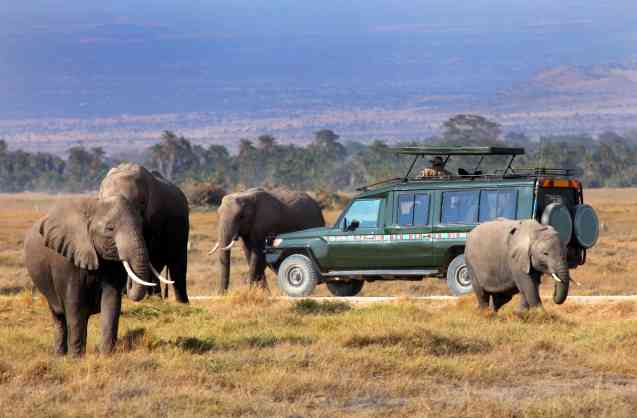
- Elephants walking across glowing horizons
- Mist rising over grasslands
- Wide panoramic savannah shots
- Giraffes framed against the rising sun
- Herds moving through golden backlight
Early morning light remains soft and flattering. You capture rim lighting around ears and trunks. You photograph dust glowing in warm tones. You document long shadows stretching across open plains — defining moments of your Masai Mara photography tour packages.
Composition Tips
- Shoot wide before zooming in to establish the scene
- Use foreground elements like grass or branches for depth
- Position wildlife against open skies for clean silhouettes
- Slightly underexpose for richer sunrise colors
- Keep horizons straight for balanced landscapes
Day 1 is all about atmosphere. You’re not just taking photos—you’re documenting space, light, and scale. These frames become the emotional backbone of your safari portfolio, elevating your storytelling and ensuring your Masai Mara photography tour starts on a high note.
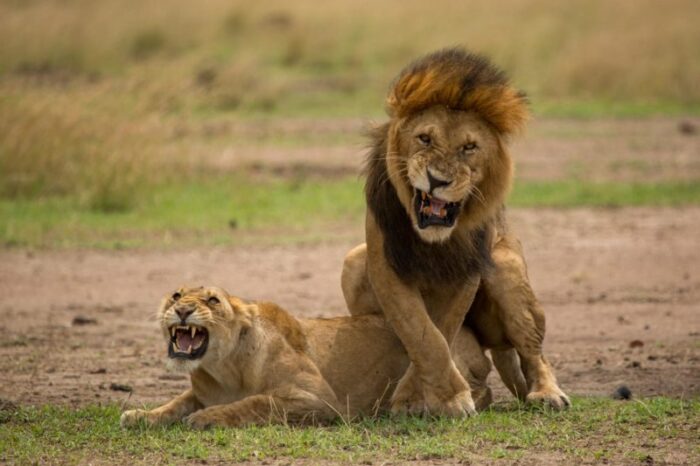
Day 2: Focusing on Big Cats and Predators in Action
Day 2 raises the intensity. Your Masai Mara photography tour packages now prioritize predator territories during cooler morning and late afternoon hours. Big cats become active. Tension rises. Energy shifts.
You stay alert. You anticipate movement. You watch behavior carefully before pressing the shutter.
Big Cat Photography Checklist
- Lions returning from a hunt
- Cheetahs scanning the horizon or sprinting
- Leopards resting on tree branches
- Cubs interacting playfully
- Hyenas competing over prey
- Predators stalking through tall grass
Action Settings for Sharp Results
- Shutter speed 1/1600 or faster to freeze motion
- Continuous autofocus tracking for moving subjects
- Burst mode for high-speed sequences
- Eye-level framing for emotional impact
- Frame slightly wider to allow room for movement
Instead of rushing toward every sighting, you wait for behavior. A lion’s slow yawn. A cub’s sudden leap. A cheetah lowering its body before a chase. Patience transforms a simple sighting into a storytelling sequence.
Day 2 turns your Masai Mara photography tour into a high-adrenaline wildlife narrative. You move beyond documentation. You capture anticipation, power, and raw emotion — the defining elements of true safari photography.
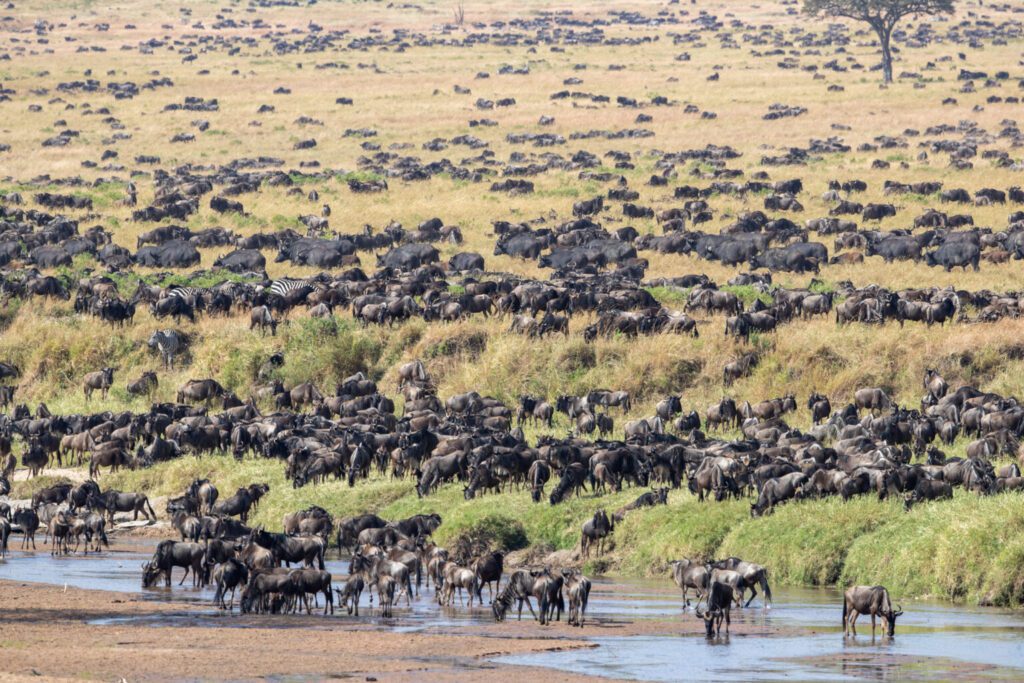
Day 3: Documenting Herds, Migration, and Grazing Wildlife
If you visit during migration season, Day 3 becomes unforgettable. The plains transform into a moving canvas of thousands of animals. The Masai Mara Great Migration brings unmatched scale, tension, and rhythm to your photography experience.
During the peak of the Masai Mara wildebeest migration, you witness dramatic crossings, dust storms, and synchronized herd movement. This phase of your Masai Mara photography tour shifts your focus from individual portraits to powerful wide-angle storytelling.
Migration & Herd Checklist
- Wildebeest river crossings with splashing water and chaos
- Elephant herds walking through golden dust
- Zebras grazing in perfect symmetry
- Antelope leaping mid-run
- Buffalo herds under storm clouds
- Long lines of wildebeest stretching across the horizon
You position yourself to capture scale. You show how one herd blends into another. You document tension before a river crossing and movement after the first animal jumps.
Storytelling Tips
- Capture wide herd movement to show magnitude
- Include dust in backlight for cinematic glow
- Shoot sequences instead of single frames to build narrative
- Frame interactions between species for ecosystem storytelling
- Watch the edges of the herd for predators waiting
This stage of your Masai Mara photography tour packages emphasizes motion and balance. You photograph rhythm, migration patterns, and survival instincts. Instead of isolated moments, you document the heartbeat of the savannah.
The Masai Mara Great Migration offers raw, unscripted drama. With patience and positioning, you transform large-scale wildlife movement into powerful portfolio images that define your safari story.
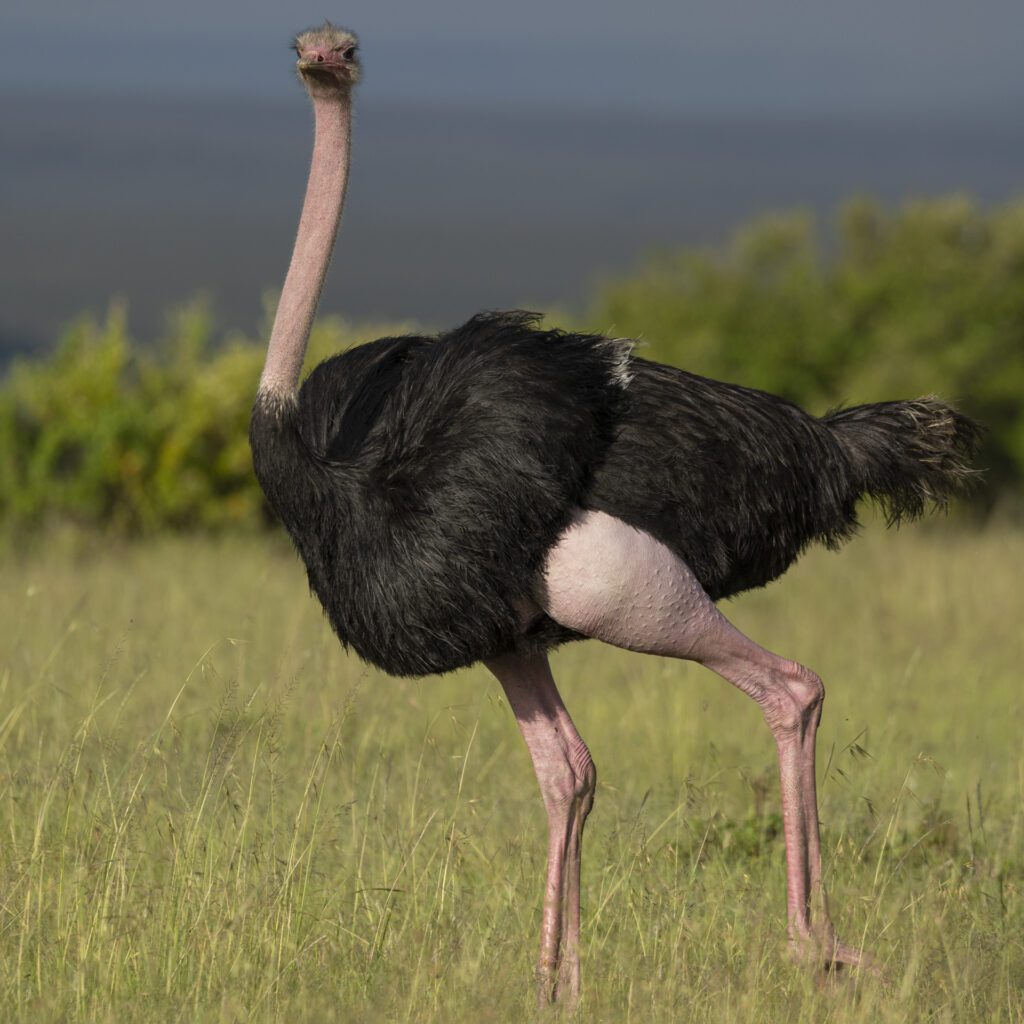
Day 4: Birds, Flora, and Hidden Wildlife Details to Photograph
Your final day slows the pace and sharpens your eye. Instead of chasing dramatic action, you focus on the finer elements that complete your safari narrative. A well-designed Masai Mara photography safari is not only about predators and migration — it is also about detail, texture, and quiet beauty.
Bird Photography Checklist
- Lilac-breasted rollers in flight with vibrant wings spread wide
- Eagles perched dramatically against open skies
- Vultures circling high above in clean blue backdrops
- Crowned cranes walking gracefully in wetlands
- Kingfishers and bee-eaters near riverbanks
Birds challenge your timing and focus skills. You use faster shutter speeds and continuous tracking to capture wing movement with clarity. These images add color, elegance, and contrast to your Masai Mara wildlife photography tour portfolio.
Detail & Texture Checklist
- Elephant skin textures highlighting wrinkles and patterns
- Zebra stripe abstracts for artistic compositions
- Insects on grass stems glowing in soft light
- Acacia tree bark patterns with rich contrast
- Close-up portraits of grazing antelope
Midday light works beautifully for texture and definition. Strong sunlight enhances detail, making this the ideal time to experiment with black-and-white conversions or tight framing.
On your final day of the Masai Mara photography safari, you refine your storytelling. You balance grand landscapes and predator action with intimate frames that show the ecosystem’s complexity.
A complete Masai Mara photography tour package ensures you leave with variety — landscapes, big cats, migration drama, birdlife, and hidden details. Your portfolio feels layered, thoughtful, and professionally curated, capturing the full spirit of the wild.
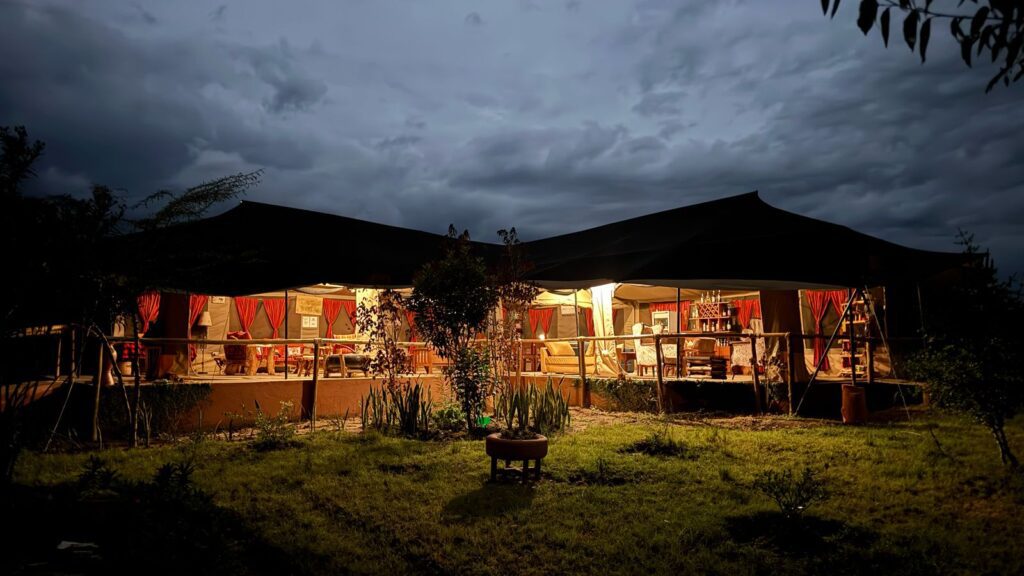
How Mara Siligi Camp Enhances Your Photography Experience
A successful Masai Mara photography tour depends on more than wildlife sightings. Your comfort, flexibility, and access to prime locations directly influence the quality of your images. When logistics run smoothly, you stay focused on light, behavior, and composition.
At mara siligi camp, your photography-focused stay includes:
- Prime location near active wildlife zones to maximize shooting time
- Flexible sunrise and sunset game drives aligned with golden light
- Experienced guides trained in photography positioning and animal behavior
- Spacious safari vehicles designed for stable, unobstructed shooting angles
- Charging points for camera gear and backup equipment
- Comfortable tents ideal for rest, reviewing images, and editing
Location reduces unnecessary travel time. Flexibility ensures you never miss the best time for wildlife photography. Knowledgeable guides position the vehicle with light direction and clean backgrounds in mind — essential for professional-quality frames.
After each drive, you return, review your captures, back up files, clean your gear, and prepare for the next session. This rhythm of shoot, refine, and reset keeps your creative energy sharp throughout your Masai Mara photography tour packages experience.
Your safari feels seamless. You focus on timing, light, and storytelling while mara siligi camp manages the details behind your journey.
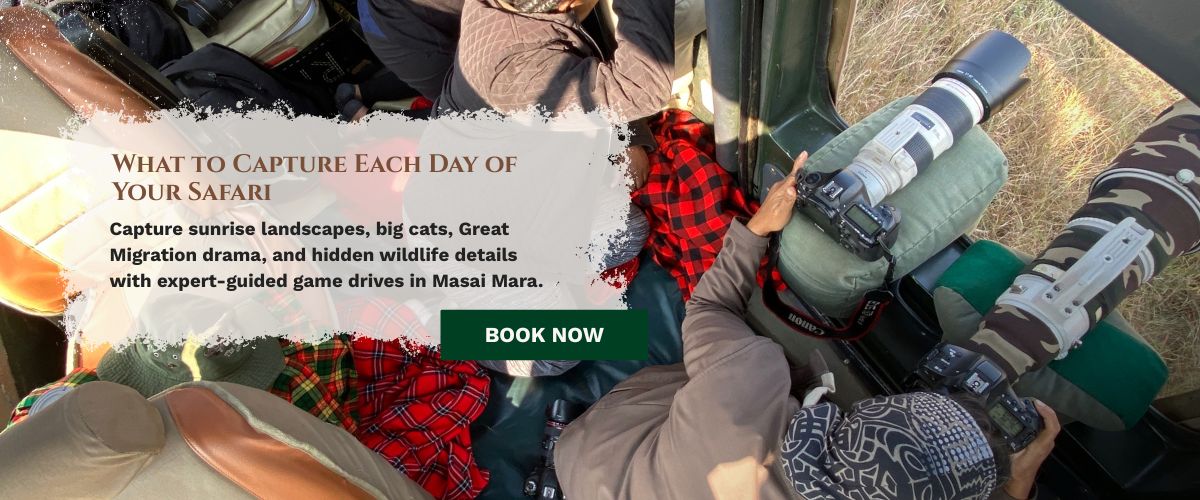
Final Thoughts: Build a Complete Safari Portfolio
A powerful Masai Mara photography tour is not defined by one dramatic sighting. It is built through layers — sunrise landscapes, predator intensity, migration movement, birdlife elegance, and intimate wildlife details.
When you choose well-structured Masai Mara photography tour packages, you leave with:
- Balanced wildlife coverage across multiple species
- Strong sunrise and golden hour frames
- Action-packed predator sequences
- Migration storytelling moments
- Artistic close-ups and texture compositions
Your camera captures more than animals.
You capture behavior, emotion, scale, and rhythm.
You build a complete safari narrative.
If you are ready to experience a game drives in masai mara designed around your creative goals, mara siligi camp welcomes you to explore the Masai Mara through your lens and transform each day into a portfolio of unforgettable wildlife stories.
FAQs
A Masai Mara photo safari includes sunrise and sunset game drives, predator tracking, migration scenes, and diverse wildlife photography opportunities guided by experts who understand positioning and light.
Game drives in Masai Mara are timed around golden hour and peak wildlife activity, ensuring optimal light conditions, strategic vehicle positioning, and extended sightings for better storytelling frames.
A Great Migration photo safari is best planned between July and October, when the Masai Mara wildebeest migration brings dramatic river crossings, herd movement, and intense predator action.