Masai Mara Camp and Lodge for Your Great Migration
Planning your Great Migration trip and wondering how much your choice of camp actually matters? A lot more than most people expect. Where you sleep decides how close you get to the river crossings, how early you’re on the road, and whether you’re guided by people who actually know this land.
We will walk you through exactly what a well-located Masai mara camp and lodge does for your migration experience, and what to look for before you book. By the end, you’ll know exactly what separates a forgettable stay from one you’ll talk about for years.
Table of Contents:
- What Makes a Great Masai Mara Camp and Lodge for the Migration?
- Why Location Matters During the Great Wildebeest Migration
- Inside Mara Siligi: Tents, Comforts, and What’s Included
- Guided Experiences That Bring the Migration to Life
- What to Look For Before You Book a Safari Camp in Masai Mara
- Planning Your 2026 Migration Stay
What Makes a Great Masai Mara Camp and Lodge for the Migration?
Not every camp is built with the migration in mind. The right one does three things well: puts you close to the action, gives you guides who can read the land, and looks after you properly at the end of a long day.
Here’s what we believe defines a genuinely great migration base:
- Proximity to the gates — less driving means more time actually watching wildlife
- Local, experienced guides — people who track herd movement daily, not seasonally
- Comfortable, all-inclusive stays — so you’re rested and ready for early starts
- Small group sizes — you shouldn’t feel like one of fifty vehicles at a crossing
- A personal touch — a camp that knows your name, not just your booking number
We built our camp around exactly this idea. We’re not a big resort chain, we’re a warm, family-run camp at the foothills of Oldonyo Loip Hill, and it shapes everything from how guests are welcomed to how our guides approach a sighting.
Who This Kind of Stay Suits Best
- First-time safari travellers who want expert guidance without feeling like a number
- Photographers chasing golden-hour light and migration action
- Families looking for a relaxed pace and guides comfortable with children
- Couples wanting a quieter, more intimate base than a large lodge can offer
Whatever brings you to the Mara, the right camp shapes the entire trip around what you actually came here for.
Why Location Matters During the Great Wildebeest Migration
If the migration is the reason you’re coming to Kenya, location isn’t a small detail, it’s the whole trip.
How Close Is Close Enough?
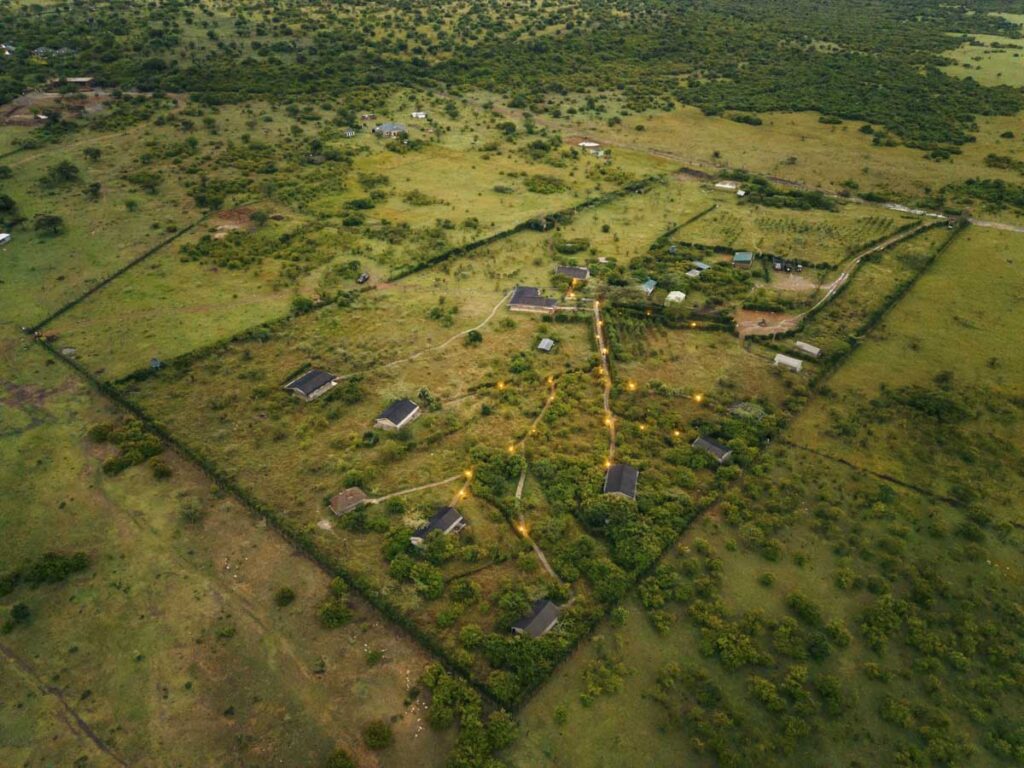
Mara Siligi Camp sits just 10 minutes from Mpuaai Gate (formerly Ol Kiombo Gate) and 15 minutes from Talek Gate. That puts you inside the reserve before camps further out have even finished breakfast, which matters when a crossing can start and end within the hour.
What This Means for Your Day
- You reach the northern game circuits, where migration activity concentrates, faster than guests staying further away
- Your guide can respond in real time to a building crossing instead of racing to catch up
- You spend more of your day watching wildlife and less of it in a vehicle on transit roads
When to Expect the Action
- Mid-July 2026: Herds begin arriving in the Mara from the Serengeti
- Early August–mid-September 2026: Mara River crossings peak
- Into early October: Crossing activity continues, though it thins out
Because crossings depend on the herd and not the calendar, a longer stay gives you more chances to see one. We generally recommend a minimum of four nights during peak weeks.
A Typical Migration Day at Camp
Here’s roughly how a day unfolds when you’re staying close to the action:
- Early morning: Coffee on your private deck, then out before the light turns golden
- Mid-morning: Tracking herd movement toward the river, guided by radio contact between local guides
- Midday: Back at camp for lunch, a rest, or time in the photography lounge to review your shots
- Afternoon: A second game drive timed around whatever’s building in the ecosystem that day
- Evening: Sundowner drinks in the bush, followed by dinner around the campfire
No two days look identical, and that’s exactly the point. Your guide adjusts the plan around what the migration is actually doing, not a printed itinerary.
Inside Mara Siligi: Tents, Comforts, and What’s Included
A long day of tracking the migration only works if you come back to a comfortable, well-run camp. Here’s what your stay actually includes.
Your Accommodation
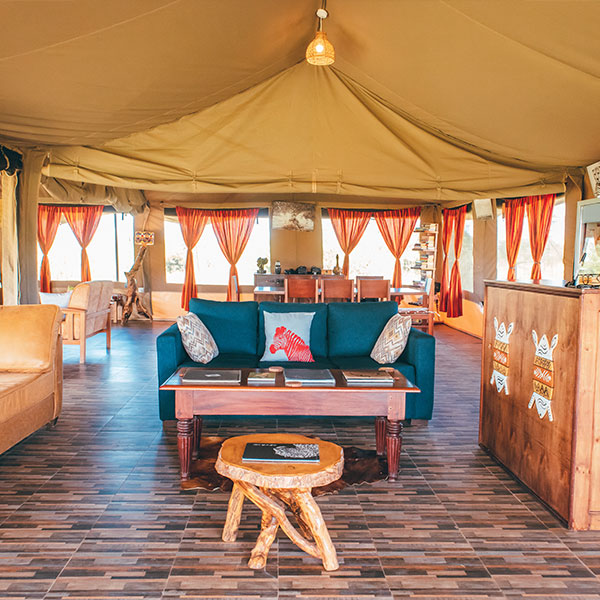
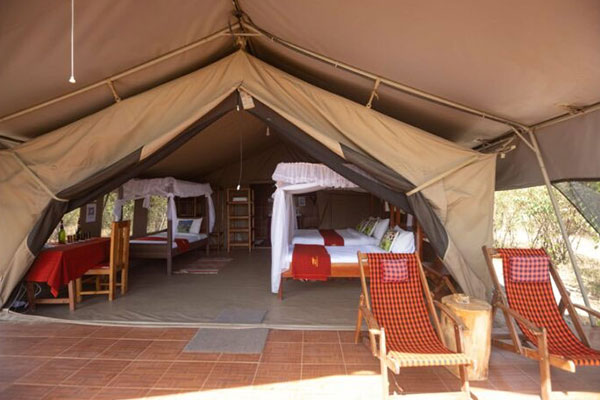
We offer 10 fully equipped tented suites, all facing the wild:
- 5 Standard Tents — built for solo travellers and couples, with double or twin beds, an ensuite bathroom with hot water, a private wooden deck, solar lighting, and a writing desk
- 5 Family Tents — a wider layout with separate sleeping areas, ideal for groups and families with children
What’s Included in Every Stay
As a fully all-inclusive camp, we cover the essentials so there’s nothing left to arrange once you arrive:
- Accommodation in your choice of tent
- All meals — breakfast, lunch, and dinner
- Morning and evening guided game drives
- Guided nature walks
- Wi-Fi in the guest lounge
- A photography lounge to review and discuss your shots
- A massage area to unwind after back-to-back drives
Sustainability Built In
Our camp runs entirely on solar power, keeping our footprint light while still giving you hot showers, charging points, and reliable lighting in every tent.
Dining After a Day in the Bush
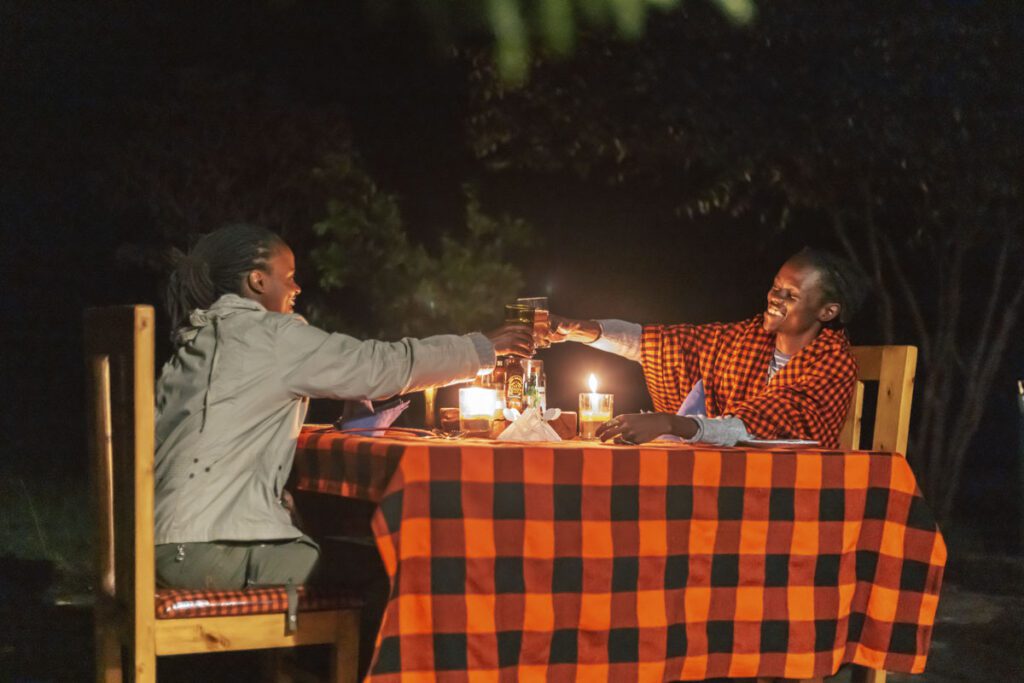
Good food matters just as much as a good bed after hours spent tracking herds. We offer both indoor dining and bush meals set out in nature, depending on the mood and the weather.
- Fresh, locally sourced breakfasts overlooking the savannah
- Hearty dinners around a campfire or in the tented lounge
- Bush picnic lunches available on full-day drives
- Vegetarian, vegan, and allergy-specific options on request
As a fully all-inclusive safari camp in Masai Mara, every meal is covered in your stay, with no surcharges for bush settings.
What Guests Say About Staying With Us
Trust matters when you’re choosing where to spend your migration trip, so here’s what real guests consistently tell us.
- Families appreciate the spacious tents, noting there’s plenty of room even with young children along
- Solo travellers and couples highlight how warm and personal the staff feel, more like being hosted than checked in
- Photographers praise the quality of light and the guides’ understanding of golden-hour timing
- Returning guests often mention the food as a genuine highlight of their stay
Across more than 450 reviews on Google and TripAdvisor, we hold a 5.0 out of 5 rating. For a Masai mara camp and lodge, consistent guest satisfaction at that scale is one of the clearest signs you’re in good hands.
Guided Experiences That Bring the Migration to Life
A migration trip is about more than the crossings themselves. Here’s how we round out your days at camp.
Activities Available During Your Stay
- Guided game drives covering Big Five sightings, migration routes, and active predator zones
- Nature walks led by Masai guides
- Birdwatching safaris across an ecosystem home to 400+ species
- Sunset drinks out in the bush
- Masai cultural village visits
- Hot air balloon safaris over the Mara
- Beadwork workshops with local Masai artisans
- Tree planting to offset your footprint
- Stargazing sessions under open Mara skies
Why Our Guides Make the Difference
Our guides grew up near Oldonyo Loip Hill, and their knowledge of this land isn’t something you learn in a classroom. They stay in daily contact with other guides across the ecosystem, so when a crossing is building, you’re already moving, not stuck at the wrong bend of the river.
What to Look For Before You Book a Safari Camp in Masai Mara
With so many options, it helps to know what actually separates a good stay from a great one. Use this comparison as a quick checklist.
What to Check | Why It Matters | What We Offer |
Distance to the gates | Less driving, more time on wildlife | 10 min to Mpuaai Gate, 15 min to Talek Gate |
Guide experience | Local knowledge finds sightings faster | Masai guides raised near the reserve |
What’s included | Avoids surprise costs | Fully all-inclusive, no hidden charges |
Group sizes | A crowded sighting isn’t a personal one | Small camp, 10 tents total |
Sustainability | Matters for eco-conscious travellers | 100% solar-powered camp |
Family suitability | Not every camp welcomes children comfortably | Family tents, no minimum age |
Whether you’re comparing a budget-friendly option or a mid-range safari camp in Masai Mara with full amenities, this list will tell you almost everything you need to know within a few minutes of research.
A Note for Photographers
If photography is part of why you’re travelling, ask whether a camp offers a dedicated space to review and edit your shots, and whether guides understand golden-hour timing. We offer both, along with custom photography tour packages on request.
Planning Your 2026 Migration Stay
Here’s what you actually need to know to book your migration trip with confidence.
- Book early. Riverfront-adjacent camps for August and September routinely fill 6 to 12 months in advance, so early planning gives you far more choice of tents and dates.
- Stay longer if you can. A minimum of four nights significantly improves your odds of witnessing a crossing, since it depends on the herd rather than a fixed schedule.
- Fly or drive. Reach us via Ol Kiombo Airstrip, roughly 15 minutes from camp, or take the scenic 5–6 hour road route from Nairobi through the Rift Valley.
- Tell us what matters to you. Whether it’s photography, a family trip, or a honeymoon, we personalise your stay around your priorities rather than fitting you into a fixed package.
Guests consistently rate Mara Siligi Camp 5.0 out of 5 across more than 450 reviews on Google and TripAdvisor, and it’s largely down to this combination of location, guiding, and genuine hospitality.
Final Thoughts
The migration is the reason you’re coming to the Mara, but where you stay decides how much of it you actually get to see. A well-located camp with experienced local guides puts you at the crossings when they happen, not an hour away when they’re already over.
We’d love to host you for the 2026 season. Tell us your dates, your group size, and what you’re hoping to see, and we’ll build your stay around it, right down to tent type, meal preferences, and add-on experiences like a hot air balloon safari or a private bush dinner.
FAQs
Herds arrive in the Masai Mara from mid-July 2026, with Mara River crossings peaking between early August and mid-September, and activity continuing into early October.
As close as possible. Camps within 10–15 minutes of the main gates give you a real advantage, since crossings can start and finish within an hour and every extra minute of driving costs you sightings.
Yes. Riverfront-adjacent camps for August and September routinely book out 6 to 12 months ahead, so early booking gives you far more choice of dates, tent types, and package styles.