
How Close Should Your Masai Mara Camp Be to River Crossing Points?
You’ve booked your migration-season trip, you’ve packed your telephoto lens, and now there’s one detail that could make or break the whole experience: where you’re actually staying. A stunning Masai Mara camp sitting an hour and a half from the river isn’t going to help you much when the herds finally commit to a crossing at 7 a.m.
Location isn’t a minor detail on a migration safari, it’s arguably the biggest factor separating a trip where you catch the action and one where you’re still driving when it’s over. Let’s talk about exactly how close is close enough, and what to check before you book.
Table of Contents:
- Why Camp Location Matters More Than You Think
- How Far Is Too Far? Understanding Drive Times to the River
- Talek Gate vs. Other Gates: Which Puts You Closest?
- What to Look For in a Well-Located Camp
- Our Location Advantage at Mara Siligi Camp
- Booking Tips for Migration-Season Stays
Why Camp Location Matters More Than You Think
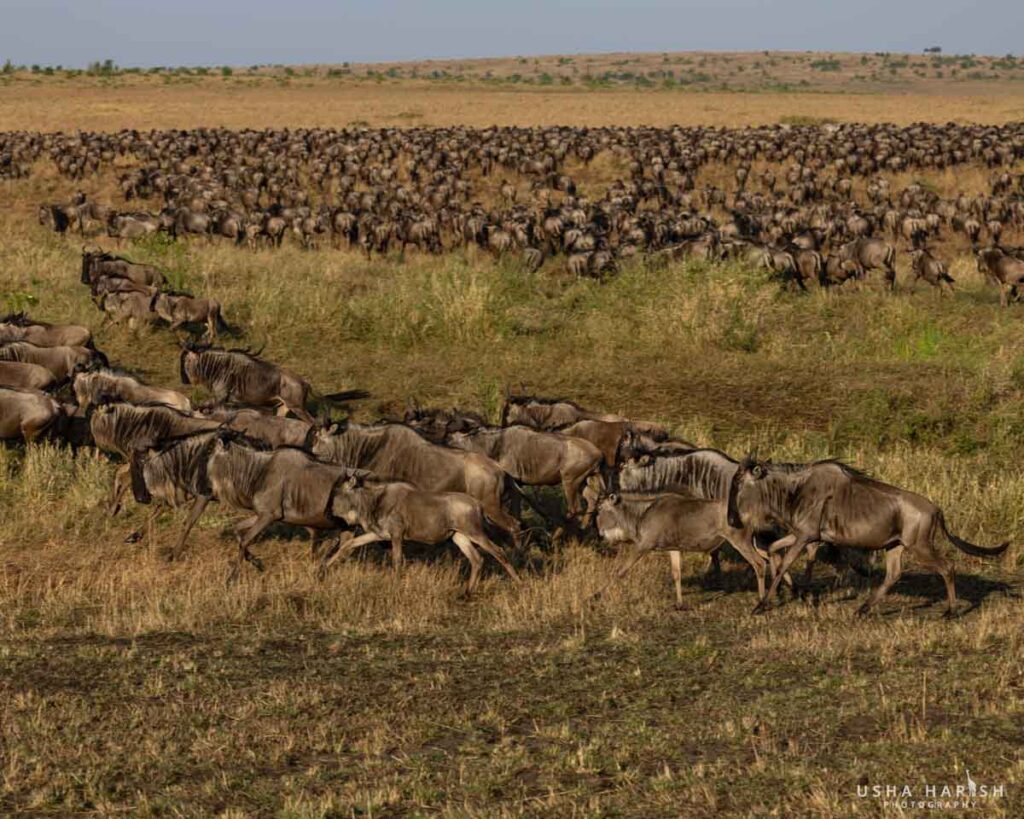
Here’s something a lot of first-time visitors don’t realize: the Great Migration doesn’t wait for you to finish your drive from camp. Wildebeest and zebra herds can gather at a crossing point for hours, then suddenly commit within minutes, and if you’re not already close by, you’ll miss it entirely.
This is exactly why proximity matters so much when choosing a safari Camp in Masai Mara:
- You get more usable daylight. Every extra 30 minutes spent driving to the reserve is 30 minutes you’re not spending photographing or watching wildlife.
- You can respond to real-time sightings. Guides communicate with each other constantly, a camp close to the action can get you to a developing crossing while it’s still happening.
- You’re not exhausted before your day even starts. Long transfer drives on rough roads add up over a multi-day stay, and comfort matters when you’re up before sunrise every morning.
- You have more flexibility to stay out longer. Camps near the reserve boundary can offer full-day drives without the stress of a long return trip in fading light.
If you’re planning your trip specifically around the migration, camp location deserves just as much attention as the dates you choose.
How Far Is Too Far? Understanding Drive Times to the River
Not all camps advertised as “near the Masai Mara” are actually close to where the action happens. Some sit well outside the reserve boundary, adding significant time to every single game drive.
Here’s a rough guide to what different drive times mean for your migration experience:
- Under 20 minutes to the gate — Ideal. You’re in the main game loops almost immediately after leaving camp, with plenty of flexibility to chase a developing crossing.
- 20–40 minutes to the gate — Workable, but you’ll want to leave earlier and may miss the very first movements of the day.
- Over an hour to the gate — This is common with camps outside the ecosystem entirely. You’ll spend a meaningful chunk of your morning just getting into position, which can mean arriving after the best light — or after the crossing itself.
Keep in mind that “distance to the gate” isn’t the same as “distance to the river.” Once you’re inside the reserve, known crossing points can still be a further drive depending on where your camp sits relative to the Mara River and Talek River systems.
It’s also worth asking about road conditions, not just distance. A camp that’s technically 25 minutes from the gate on paper can feel much further if the route involves rough, seasonal roads that slow your guide down during the rains. Ask specifically how conditions change between the dry season and the shoulder months, especially if your trip falls right at the edge of migration season.
Talek Gate vs. Other Gates: Which Puts You Closest?
The Masai Mara has several entry points, and which one your camp sits nearest to has a real impact on your day-to-day experience during migration season.
A few things worth knowing:
- Talek Gate sits close to some of the most active migration territory, including areas near the Talek River where herds frequently pass through on their way toward the Mara River crossings.
- Sekenani and Oloolaimutia Gates, on the southeastern side, tend to involve longer drives if the migration action is concentrated further north or west that week.
- Mpuaai Gate (formerly Ol Kiombo) offers another strong entry point, often used alongside Talek by camps positioned centrally in the ecosystem.
- Camps outside all gates entirely — often in conservancies bordering the reserve, can offer a quieter experience, but usually mean longer drives specifically for river crossing viewing.
If witnessing a crossing is your top priority, ask any camp you’re considering exactly which gate they use and how long the drive typically takes during peak season traffic.
Traffic is a real factor too, by the way, not car traffic, but vehicle congestion at popular crossing points during peak migration weeks. A camp near a well-known, well-trafficked gate might get you there fast, but so will every other vehicle in the area. Some of the best sightings actually come from guides who know quieter, less obvious crossing points near the same gates, another reason local knowledge matters just as much as raw proximity.
What to Look For in a Well-Located Camp
Beyond simple distance, a handful of other factors determine whether a camp’s location actually works in your favor during migration season.
Look for these signs of a genuinely well-positioned stay:
- Local, experienced guides who track herd movement daily and know current crossing patterns, not guides relying on outdated information
- Flexible drive schedules that can extend into full-day outings when the migration is active nearby
- Direct radio communication with other guides in the field, so your vehicle can respond quickly to a developing sighting
- Proximity to multiple gates, giving your guide more route options depending on where the herds are that week
- A base camp inside or very near the ecosystem, rather than a distant lodge marketed loosely as “Masai Mara adjacent”
A Masai Mara camp and lodges search online will turn up dozens of options claiming to be “close to everything.” Don’t take that at face value, ask for specific drive times to the gate and to known crossing zones before you commit.
It also helps to read recent guest reviews rather than relying only on a camp’s own website copy. Reviews mentioning specific gate names, drive times, or crossing sightings tend to be far more reliable than generic claims about being “minutes from the reserve.” When you’re comparing any Masai Mara camp and lodges shortlist side by side, these small details add up to a very different real-world experience.
Our Location Advantage at Mara Siligi Camp
At Mara Siligi Camp, we built our location around exactly this problem. We sit at the foothills of Oldonyo Loip Hill, just 10 minutes from Mpuaai Gate and 15 minutes from Talek Gate, putting us firmly in the game loops within minutes of leaving camp.
Here’s what that means in practice for guests visiting during migration season:
- You’re not sitting in a vehicle while the sun rises. You reach the main circuits before larger lodge convoys further out have even finished breakfast.
- You’re close to the Talek River corridor, which sees regular herd movement as animals travel toward the larger Mara River crossings.
- Our guides grew up on this land, which means real, current knowledge of where the migration is moving, not a script.
- We keep group sizes small, so when a crossing does happen, you’re not fighting for a clear view among a crowd of vehicles.
As a locally owned safari resort near Talek, we’ve watched guests get to witness crossings that camps further out simply couldn’t reach in time. It’s the single biggest reason location should top your checklist when comparing options for a migration trip.
We’re also honest about the trade-offs of choosing any safari resort near Talek during peak season, the area does get busier in July through October, since it’s a genuinely strong entry point. What matters is having a guide who knows how to work around the crowds rather than simply following the same route as everyone else.
We also know not every traveler wants a high-end price tag attached to a good location. That’s part of why we position ourselves as a genuinely Mid range tented camp in Masai Mara, you get the proximity and comfort that matters most for migration viewing, without paying luxury-lodge rates for it.
Booking Tips for Migration-Season Stays
If you’re serious about witnessing a river crossing, a few practical steps will help you choose the right stay and avoid disappointment.
- Ask for exact drive times, not vague claims like “close to the reserve.” A specific number in minutes tells you far more than marketing language.
- Check which gate the camp uses, and whether that gate has good access to current crossing zones for your travel dates.
- Book early for peak migration weeks. Camps with strong locations near Talek and the river corridors fill up months in advance for July through October.
- Ask how guides track herd movement. Camps with strong local knowledge adjust drives daily rather than following a fixed route.
- Consider full-day drive options, especially if herds are gathering at a crossing point but haven’t yet committed, patience is often rewarded, but only if your camp supports longer outings.
A well-located Masai Mara camp turns “we hope to see a crossing” into “we’re positioned to see one.” That difference is worth prioritizing over almost anything else on your packing list.
At the end of the day, choosing the right safari Camp in Masai Mara comes down to being honest about your priorities. If witnessing a crossing matters more to you than a fancier pool or a bigger room, location should outrank almost every other factor on your list.
It’s also worth remembering that no camp, however well-placed, can guarantee a crossing on any single day, the herds decide that, not your itinerary. What a strong location does guarantee is that you’re never far away when it finally happens, and that your guide has the flexibility to get you there while it’s still unfolding.
Ready to Plan a Trip Built Around the Migration?
Location isn’t the flashiest detail on a safari itinerary, but it’s the one that decides whether you’re watching a crossing unfold in front of you or hearing about it secondhand from another vehicle. If proximity to the river and gates matters to your trip, it’s worth asking hard questions before you book anywhere.
Get in touch with us at Mara Siligi Camp with your travel dates, and we’ll walk you through exactly how our location near Talek sets you up for the best possible shot at witnessing this year’s migration.
As a Mid range tented camp in Masai Mara built specifically around this kind of access, we’d rather you know exactly what to expect before you book, no exaggerated claims, just an honest look at what our location can realistically offer during your travel dates.
FAQs
Ideally, your Masai Mara camp should be within 15–30 minutes of the main reserve gates and key river crossing areas. Staying closer gives you more time for wildlife viewing and increases your chances of witnessing a Great Migration river crossing.
The Talek and Mpuaai (Ol Kiombo) gate areas are among the best locations for migration safaris. Camps near these entry points provide quicker access to popular game-viewing routes and river crossing zones during the migration season.
No, river crossings are unpredictable and cannot be guaranteed. However, choosing a well-located Masai Mara camp with experienced local guides significantly improves your chances of reaching active crossing points before the action is over.