
The first light of day can change the way you see the Masai Mara. As the sun rises above the plains, the landscape gradually takes on warmer colours, shadows stretch across the grass, and the details of the surrounding wilderness become easier to notice. Later, as the sun begins to set, the same landscape takes on a different character.
For anyone who enjoys photography, these moments offer more than attractive skies. They create opportunities to capture the relationship between wildlife, light and the open landscape.
Where you stay also shapes your photography experience. A well-positioned safari camp gives you a place to prepare before an early game drive, return to after time in the bush, and review your photographs at the end of the day. At Mara Siligi Camp, we welcome travellers who want to experience the Masai Mara at a relaxed pace while enjoying the natural surroundings.
Here is what you can look forward to when photographing sunrise and sunset around a Masai Mara safari camp.
Table of Contents:
- Sunrise and Sunset Photography Around a Masai Mara Safari Camp
- Why Are Sunrise and Sunset Special in the Masai Mara?
- What Makes Sunrise Photography Around a Safari Camp Unique?
- What Can You Capture During Sunset?
- How Does Natural Light Change the Safari Landscape?
- Tips for Better Sunrise and Sunset Photography
- Experiencing Sunrise and Sunset at Mara Siligi Camp
- Frequently Asked Questions
Why Are Sunrise and Sunset Special in the Masai Mara?
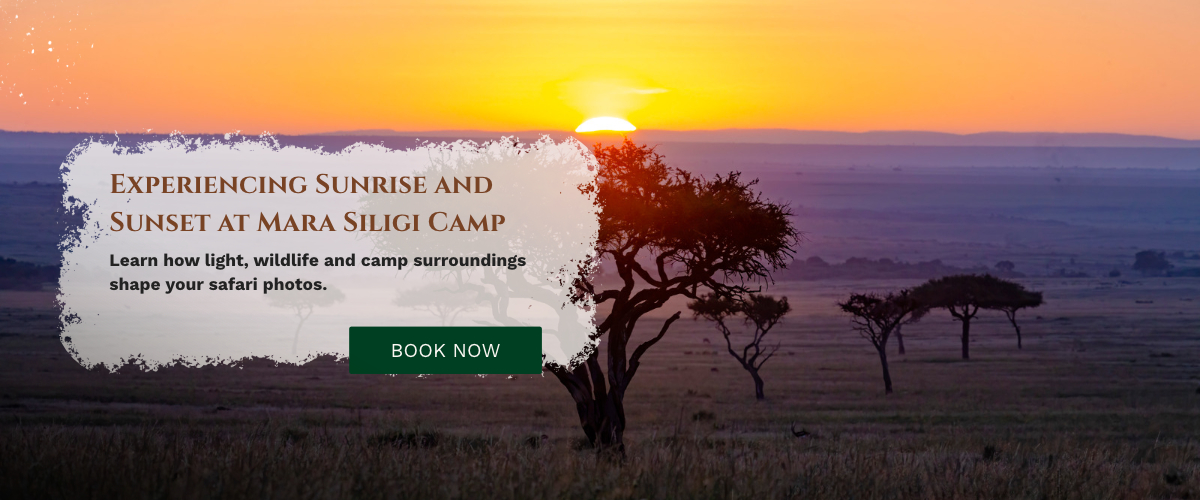
Sunrise and sunset are often called the golden hours because the sun sits lower in the sky, producing softer, warmer and more directional light. This can bring out details in animal coats, grass, trees and the wider landscape that may be less noticeable under strong midday sunlight.
In the Masai Mara, these changing conditions can create different photographic opportunities throughout the day.
During sunrise, you may notice:
- Warm light spreads across the open grasslands.
- Long shadows that add depth to landscape photographs.
- Birds become active as the day begins.
- Wildlife moving through the plains during early game drives.
- Changing colours in the sky as daylight increases.
During sunset, you may notice:
- Golden and orange tones across the horizon.
- Silhouettes of trees, animals and grass.
- Backlit dust when conditions allow.
- Dramatic cloud formations and changing sky colours.
- Wildlife moving through the landscape in the softer evening light.
These conditions are not identical every day. Cloud cover, weather, season and the position of wildlife all influence what you can photograph. That variety is part of what makes photography in the Mara interesting.
What Makes Sunrise Photography Around a Safari Camp Unique?
A morning in the Masai Mara often begins before the sun is fully above the horizon. If you are staying at a safari camp in Masai Mara, the early hours become part of the experience, from preparing for the day to setting out for a morning game drive.
For photographers, this time offers opportunities to capture the landscape as it changes from the cooler tones of dawn to the warmer light of morning.
Photographing the landscape at first light
Start by looking beyond individual animals. The open plains, distant hills, scattered trees and morning sky can create strong landscape compositions.
You can experiment with wide shots that show the scale of the surroundings. Including a single tree or an animal in the frame can also give the photograph a focal point and a sense of distance.
Capturing wildlife in morning light
A morning game drive can offer opportunities to photograph animals in their natural surroundings. You might capture an elephant moving across the plains, a giraffe feeding, birds perched in a tree or a predator resting in the grass.
Rather than concentrating only on close-up portraits, try taking photographs that show the animal within its habitat. These images help tell a fuller story of the Masai Mara.
Wildlife sightings are never guaranteed, and animal activity changes from day to day. Your guide can help you observe wildlife responsibly and understand what is happening around you.
Including the camp experience in your photographs
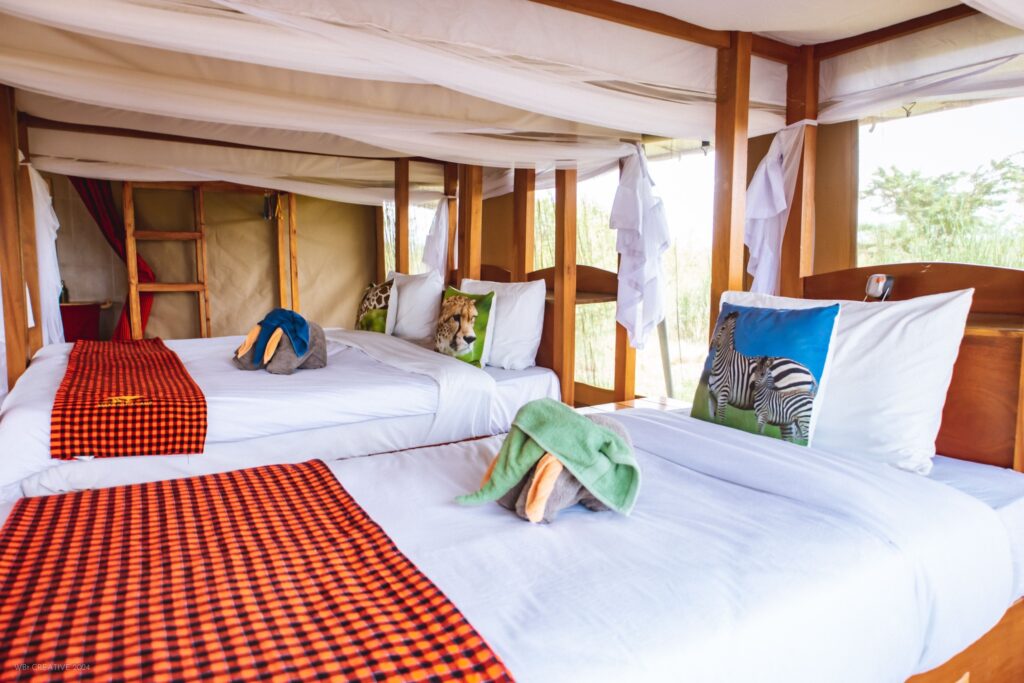
Photography does not have to begin and end with wildlife sightings. You can also document the quieter parts of a safari stay, such as the morning light around your tent, the surrounding vegetation or the changing colours of the landscape.
At a tented camp, these details can help you build a more complete visual record of your journey.
What Can You Capture During Sunset?
As the day moves towards evening, the light across the Masai Mara changes again. The sun creates warmer tones, the landscape becomes more contrast-rich, and the horizon can become an important part of your composition.
Sunset photography is not limited to photographing the sun itself. In fact, some of the most interesting images come from observing how the evening light falls on the surroundings.
Silhouettes against the evening sky
A tree, a group of animals or a bird in flight can become a strong silhouette when positioned against a brighter sky.
To create this effect, expose for the brighter part of the scene and keep the subject’s shape clear. Look for simple compositions where the outline is easy to recognise.
Wildlife in warm evening light
The softer evening light can add warmth to wildlife portraits. It may highlight the texture of an animal’s coat or create a gentle contrast between the subject and the background.
You can also try wider compositions that show animals moving across the plains. These photographs place the wildlife within the landscape instead of separating it from its surroundings.
Colours and details in the landscape
Pay attention to the smaller details as well. The light on dry grass, the outline of distant hills and the colours of the clouds can all become useful elements in a photograph.
You do not always need a dramatic sunset to create an interesting image. Sometimes, a subtle change in light can make an ordinary landscape look different.
How Does Natural Light Change the Safari Landscape?
Light influences the colours, textures and overall mood of a photograph. Understanding these changes can help you make better use of your time during a safari.
Time of day | Lighting conditions | Photography opportunities |
Early morning | Soft, low-angle light | Landscapes, wildlife and long shadows |
Later morning | Brighter and more direct light | Clear wildlife details and wider scenes |
Afternoon | Stronger light, depending on weather | Environmental photographs and animal behaviour |
Late afternoon | Warmer, lower-angle light | Wildlife portraits and landscape compositions |
Sunset | Changing colours and fading light | Silhouettes, skies and atmospheric scenes |
The golden-hour effect is not simply about making everything look orange. Low-angle light can add depth and texture, while softer contrast may help retain detail in brighter and darker areas of the frame. National Geographic explains how early-morning and late-afternoon light can create more dimensional photographs.
You can also use cloudy conditions creatively. Clouds may soften direct sunlight or add visual interest to the sky. Instead of waiting for a perfectly clear sunrise or sunset, look at how the available light interacts with the landscape.
Tips for Better Sunrise and Sunset Photography
You do not need professional equipment to enjoy photography during a Masai Mara safari. A camera or smartphone, a little preparation and an understanding of light can help you make the most of these moments.
Here are a few practical tips to try when planning your Masai Mara safari stays, especially if you want to make time for photography alongside your wildlife experiences.
1. Prepare your equipment before sunrise
Early mornings can be busy, especially when you are getting ready for a game drive. Charge your camera batteries, check your memory card and keep your equipment accessible before going to bed.
If you use interchangeable lenses, decide which ones you are likely to need so you can avoid unnecessary changes in dusty conditions.
2. Experiment with different compositions
Do not photograph every subject from the same angle. Try wide landscape frames, closer wildlife portraits and compositions that include the surrounding environment.
Look for natural elements such as trees, grass and the horizon to add context to your photographs.
3. Pay attention to exposure
Sunrise and sunset scenes can include both bright skies and darker foregrounds. Your camera may struggle to balance these areas automatically.
Check the exposure on your screen and adjust it when necessary. If you are using a smartphone, tapping the brighter or darker area of the frame can help you control the exposure.
4. Keep your subject in focus
When photographing wildlife, focus on the animal rather than only the background. For portraits, the eyes are especially important. If the animal is moving, use a faster shutter speed where your camera allows it.
5. Be patient and observe wildlife
Good wildlife photographs often depend on patience. Watch the animal’s behaviour, listen to your guide and wait for a natural moment rather than trying to force a pose or movement.
Always follow your guide’s instructions and maintain a respectful distance from wildlife.
6. Protect your equipment
Dust and changing outdoor conditions can affect cameras and lenses. Keep your equipment in a protective bag when it is not in use, and carry a clean lens cloth.
Avoid changing lenses unnecessarily in dusty surroundings.
7. Remember to enjoy the moment
It is easy to spend an entire game drive looking through a camera or phone screen. Take time to observe the landscape directly as well.
Not every memorable safari moment needs to become a photograph. Sometimes, simply watching the sunrise over the plains is an experience worth holding on to.
Experiencing Sunrise and Sunset at Mara Siligi Camp
Where you stay is an important part of planning a photography-focused safari. Your accommodation gives you a place to rest, organise your equipment and return to after spending time exploring the reserve.
At Mara Siligi Camp, we are located at the foothills of Oldonyo Loip Hill, approximately 10 minutes from Mpuaai Gate (formerly Ol Kiombo Gate) and 15 minutes from Talek Gate. This location provides access to the surrounding Masai Mara safari areas while giving you a peaceful setting to return to after your day.
Our camp has 10 tented suites, including Standard and Family accommodation options. Each tent has facilities such as an ensuite bathroom with hot water, solar-powered lighting, a private deck and charging facilities. Wi-Fi is available in the lounge area.
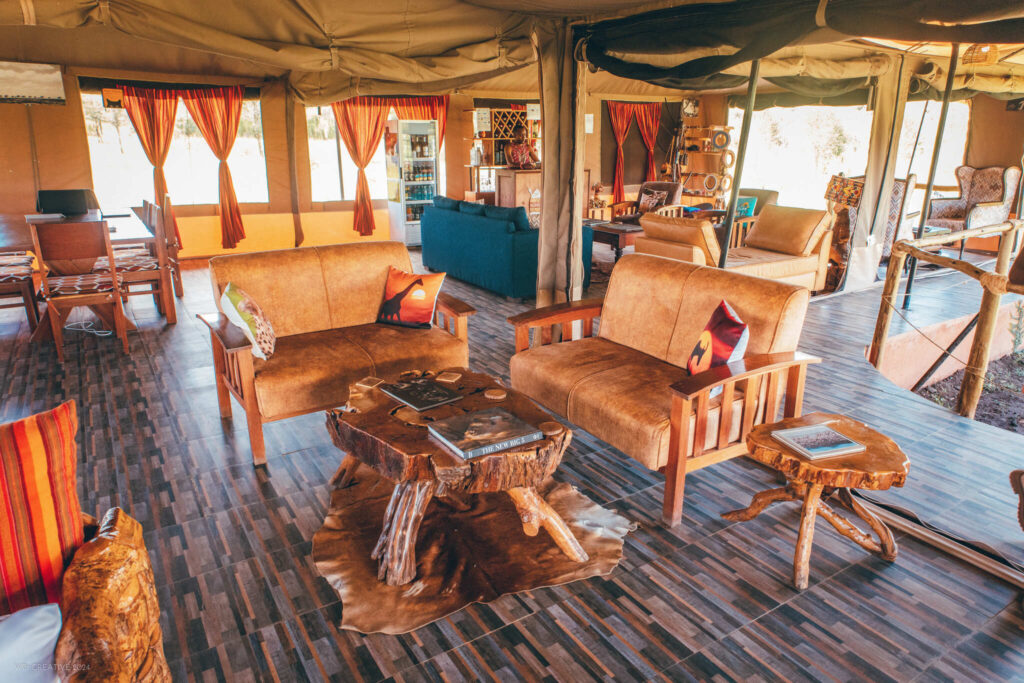
For guests interested in photography, our camp also has a dedicated photography lounge where you can review and edit your photographs. It gives you a comfortable space to organise your images and reflect on the day’s experiences.
We welcome travellers looking for comfortable Masai Mara safari accommodations that bring together a natural setting and practical facilities. Whether you are comparing a Masai Mara camp, exploring Masai Mara camps and lodge options or researching mid-range tented camps in Masai Mara, consider how the camp’s location and facilities support the kind of safari you want.
If you are looking for a safari camp in Masai Mara or a budget-friendly camp near Talek, it is worth looking beyond the accommodation itself. Think about the location, the time you can spend exploring, the facilities available and how comfortably the camp fits into your overall safari plans.
Our aim is to give you a welcoming base from which to experience the Mara, enjoy its changing landscapes and make your own memories.
Planning your Masai Mara safari stay? Visit Mara Siligi Camp to learn more about our camp and accommodation.
FAQs
The period around sunrise is a useful time for wildlife and landscape photography because the light is generally softer and warmer than during midday. The exact conditions depend on the weather, season and location.
Yes. Late-afternoon and sunset light can create warm tones, longer shadows and silhouettes. Wildlife may also be active during this period, although sightings and behaviour vary.
Yes. You can photograph the surrounding landscape, changing skies and natural details from appropriate areas around your accommodation. Always follow camp guidance and respect any restrictions on where guests may walk.
A camera or smartphone is a good starting point. If you use a camera with interchangeable lenses, consider bringing a versatile zoom lens for wildlife and a wider lens for landscapes. Extra batteries, memory cards and a protective camera bag are also useful.
Yes. Location, access to game-drive areas and facilities for storing or reviewing equipment can influence your overall experience. A photography lounge, for example, gives you a dedicated space to review and organise your images after a game drive.
Yes. Our camp has a dedicated photography lounge where guests can review and edit their photographs. You can also explore our photography safari information to learn more about photography-focused experiences.
Conclusion
Sunrise and sunset offer two different ways to experience and photograph the Masai Mara. From the first light over the grasslands to the warm colours of the evening sky, these moments allow you to notice details that can easily be missed during the rest of the day.
A thoughtful choice of accommodation can make your safari more comfortable, giving you a place to prepare, rest and review your photographs. At Mara Siligi Camp, we bring together a natural setting, tented accommodation and a dedicated photography lounge to support your time in the Mara.
Whether you are visiting for wildlife photography or simply want to capture the beauty of the landscape, we look forward to welcoming you.