Great Migration Masai Mara Photography Tour Packing List
Planning your first (or fifth) trip to watch the wildebeest thunder across the Mara River? What you pack can make or break your shots. We don’t want you missing the moment because you brought the wrong lens, or because your battery died right as a cheetah started to move. So we put together this guide to help you pack smart, travel light where it counts, and show up ready.
We’ve built this checklist around real field conditions here in Kenya’s Masai Mara National Reserve, dusty tracks, early golden-hour drives, sudden downpours, and long hours out in an open-sided 4×4. Whether you’re comparing different Masai Mara photography tour packages or you’ve already booked your dates with us, this is everything you need in your bag, and a few things you can happily leave at home.
By the time you’re done reading, you’ll know exactly what to pack, what we already take care of for you at Mara Siligi Camp, and how to travel light without leaving anything important behind.
Table of Contents
- Camera Gear You Actually Need for the Migration
- Clothing & Footwear for Game Drives
- Power, Storage & Backup Essentials
- Health, Comfort & Safety Items
- What Your Camp Already Provides (So You Don’t Overpack)
- Quick-Masai Mara photography tour Packing Checklist
Camera Gear You Actually Need for the Migration
Let’s start with the part you probably care about most: your camera bag. The Great Migration moves fast, and you won’t get a second take, so your kit needs to be ready for anything the moment you step off the plane.
Here’s what we recommend you bring:
- A DSLR or mirrorless camera body — ideally two, in case one lets you down mid-safari
- A telephoto lens, 300mm or higher — this is non-negotiable if you want wildlife shots from a safe, respectful distance
- A mid-range zoom (24-70mm or similar) for landscapes, camp shots, and wider scenes
- A wide-angle lens if you want dramatic sky and acacia silhouettes
- A bean bag or monopod to steady your shots from the vehicle
- Two camera batteries minimum, plus a charger
If you’re joining a guided Masai Mara photography tour, your host will usually help you fine-tune your lens choices before the trip, so don’t be shy about asking what the current migration action looks like before you fly out. We do this with every guest who reaches out to us, because the right lens for a river crossing is very different from the right lens for a lounging leopard.
Don’t Forget the Small Stuff
You’ll thank yourself later for packing these:
- Lens cleaning cloths and a blower brush (the Mara dust is relentless, and it gets everywhere)
- A rain sleeve or dry bag for sudden showers
- Neutral density and polarizing filters, if you use them
- A spare camera strap and lens caps, because small things go missing fast in a moving vehicle
We’ve seen guests arrive with beautiful gear and no way to clean it after a dusty morning drive, so trust us on this one, the cleaning kit matters just as much as the lens.
Clothing & Footwear for Game Drives
Temperatures swing a lot between a 5:30 a.m. departure and a midday break back at camp. Layering is your best friend out here, and it’s something we always remind our guests about before they arrive.
Here’s what to pack:
- Neutral-colored clothing (khaki, olive, brown) — skip bright colors and pure white
- A warm fleece or light jacket for those early morning drives, when the open vehicle can feel colder than you’d expect
- Breathable long-sleeve shirts and trousers for sun and insect protection
- A wide-brimmed hat and sunglasses
- Comfortable closed-toe shoes for walking around camp
- A light rain jacket, especially if you’re traveling outside the driest months
Avoid heavy cotton that takes forever to dry after a wash, and skip anything with strong scents or loud patterns. You’re trying to blend into the landscape out there, not stand out in it, and the wildlife will thank you for it too.
What You Won’t Need
We get this question a lot, so let us save you some suitcase space. You don’t need formalwear, heels, or a different outfit for every day. Most of your time is spent in the vehicle or relaxing at camp, so a handful of practical, mix-and-match layers will carry you through the whole trip.
Power, Storage & Backup Essentials
Nothing hurts more than filling your last memory card an hour before the best sighting of your trip. We always tell our guests to bring more storage than they think they’ll need, because you really don’t want to be deleting photos in the field to make room for more.
Pack these:
- Fast SD cards (bring at least 2-3, ideally UHS-II if you shoot bursts)
- A portable SSD or backup drive so you can offload images each evening
- A laptop or tablet for reviewing and editing your shots
- An international power adapter (Kenya uses Type G plugs)
- A portable power bank for charging on the move
Our vehicles come fitted with power inverters, so you can top up your batteries between drives without missing a beat, but it’s still smart to carry your own backup power source for peace of mind. We’d rather you have a spare and not need it than the other way around.
A Word on Backups
We can’t stress this one enough: back up your images every single evening. Between the dust, the long days, and the excitement of it all, cards do occasionally get lost or corrupted. If you back up nightly, you protect the work you’ve put in, and you can relax knowing your best frames are safe no matter what happens to your card.
Health, Comfort & Safety Items
A few practical items go a long way toward keeping you comfortable through long game drives, and we want your focus on your camera, not on how tired or uncomfortable you feel.
- A reusable water bottle
- Sunscreen and lip balm with SPF
- Insect repellent
- Your personal medications and a basic first-aid kit
- Hand sanitizer and wet wipes
- A dust mask or buff for open-vehicle drives on windy days
If you’re prone to motion sickness, pack something for that too. Mara roads can get bumpy, especially when we’re chasing a moving herd across open country, and you’ll want to feel your best when the action finally arrives in front of your lens.
We also recommend packing a light day bag you can keep with you in the vehicle, so your essentials, water, snacks, spare batteries, are always within reach and you’re not digging through a big suitcase mid-drive.
What Your Camp Already Provides (So You Don’t Overpack)
Here’s the good news: not everything falls on your shoulders. When you stay with us, several essentials are already covered, which means you can pack lighter and use your luggage space for camera gear instead of backup toiletries and extra chargers.
When you stay at our camp, you’ll find:
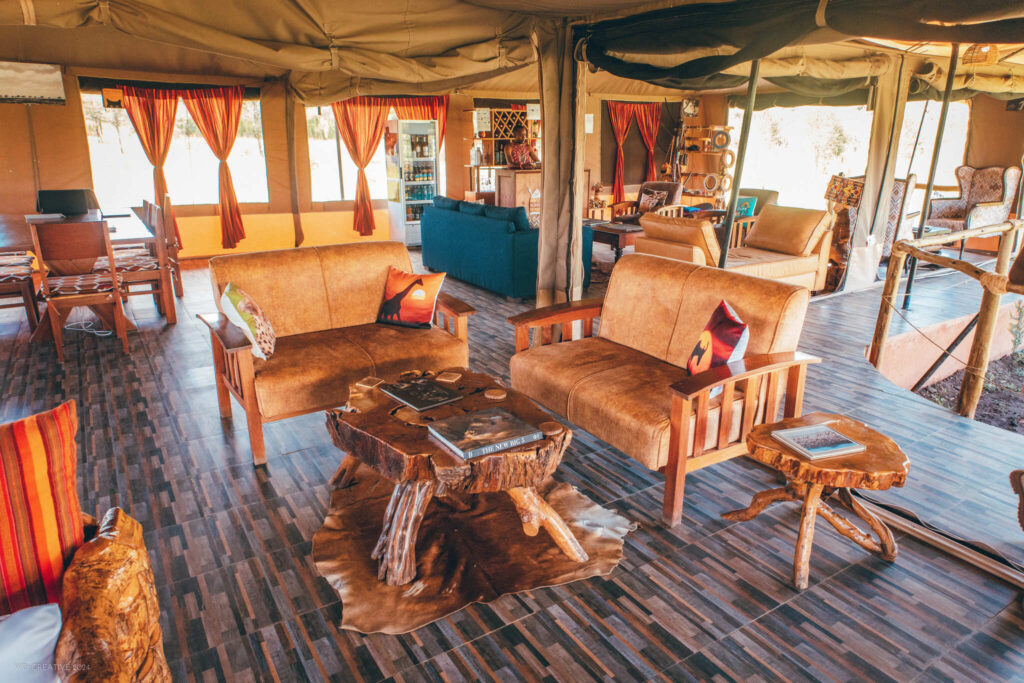
- Spacious tents with private bathrooms, comfy beds, and dedicated work surfaces for your gear
- Charging stations in tents and common areas, so your batteries are always topping up while you rest
- Reliable Wi-Fi at the lounge for backing up and uploading your images
- Fresh, homemade meals with vegetarian and special dietary options available
- Evening bonfire hangouts where we review the day’s shots together and plan the next shoot
Mara Siligi Camp sits at the foothills of Oldonyo Loip Hill, right in the heart of the reserve, so you’re never far from the action. That means less time bumping along in transit and more time actually shooting.
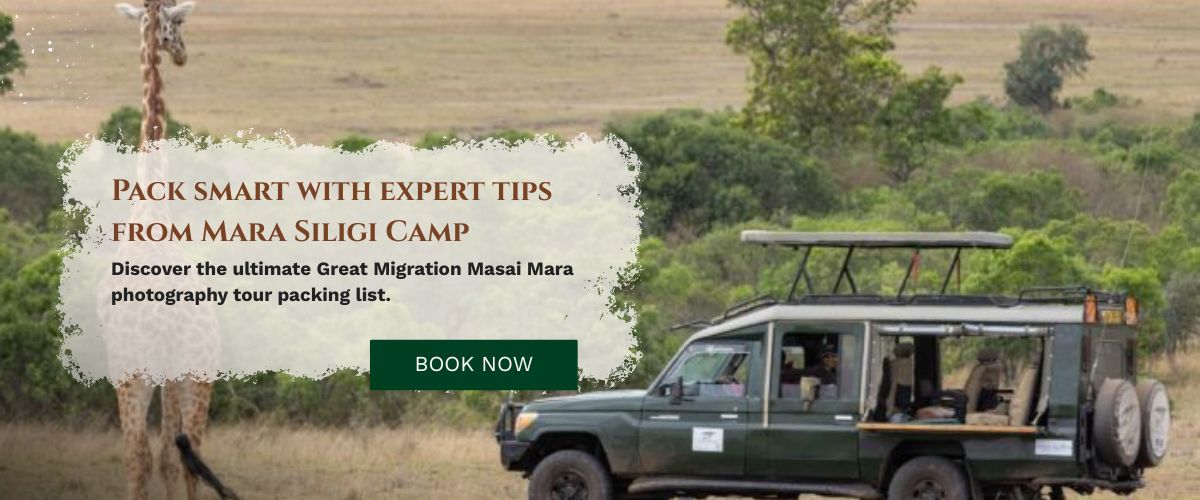
Our vehicles are purpose-built for photographers too, fitted with bean bags, roof hatches for 360-degree shooting, and in-vehicle charging points, so that’s one less thing for you to source or rent before your trip. We built this experience around what photographers actually need, not what a standard tour operator assumes you want, and it shows in every detail from the tent to the truck.
Little Comforts We Add In
Beyond the essentials, we like to make sure your downtime feels as good as your drives. Homemade meals waiting for you after a long morning out, a warm bonfire to trade stories around at night, and a team that genuinely feels like family, these are the things our guests tell us they remember just as much as the wildlife itself.
Quick-Masai Mara photography tour Packing Checklist
Print this out or save it to your phone before you head our way:
Camera gear: two camera bodies, 300mm+ telephoto lens, mid-range zoom, wide-angle lens, bean bag or monopod, lens cloths, rain sleeve
Storage & power: 2-3 fast SD cards, portable SSD, laptop, power adapter, power bank, two-plus batteries
Clothing: neutral tones, layers, rain jacket, hat, sunglasses, closed-toe shoes
Health & comfort: sunscreen, insect repellent, water bottle, first-aid basics, dust mask
Documents: passport, visa, travel insurance, printed booking confirmation
Getting this list right before your Masai Mara photography tour packages departure means you spend less time worrying about logistics and more time watching for that perfect crossing shot. We’ve seen this checklist save guests from last-minute scrambles more times than we can count, and we’d love for your trip to start off just as smoothly.
Why Packing Right Matters for Great Migration Photography
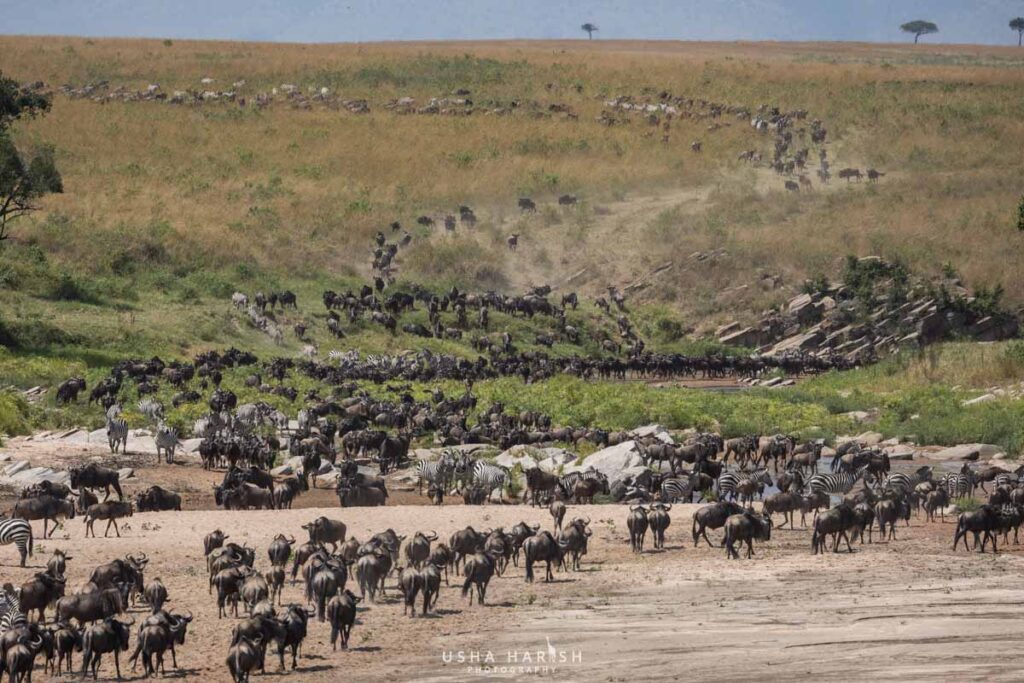
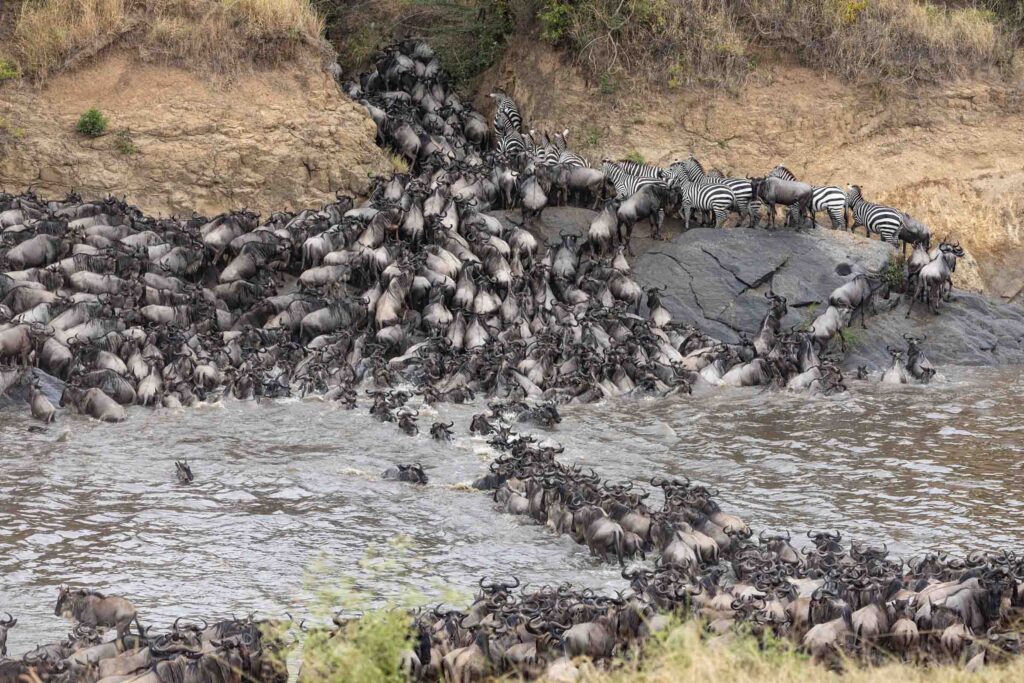
The migration season, running roughly July through October, is one of the most demanding, and most rewarding, windows for wildlife photography in Africa. Dust, heat, sudden light changes, and unpredictable animal movement all test your gear and your patience in equal measure.
A well-planned kit means you’re never scrambling when a cheetah starts a chase or a wildebeest herd surges toward the riverbank. It also means you’re comfortable enough, hour after hour, to stay sharp and notice the smaller moments most visitors miss, the tension before a hunt, the light catching a herd’s dust trail, the quiet stare of a lioness watching her cubs.
This is exactly why photographer-led trips tend to outperform standard game drives. When your host understands framing, light, and animal behavior, not just a route to drive, you’re positioned before the action happens, not after. That’s the difference we built our entire experience around, because we know what it feels like to wait for a shot and get there just a moment too late. We don’t want that for you.
Final Thoughts
A great photography trip to the Mara isn’t just about being in the right place, it’s about being properly equipped when you get there. Pack smart, layer for temperature swings, carry more storage than feels necessary, and lean on your camp for the essentials that don’t need to travel in your suitcase.
If you’re still finalizing your itinerary, a well-run Masai Mara photography tour takes a lot of the guesswork out of timing and logistics, leaving you free to focus purely on the shot in front of you. We’d love to help you plan yours. With the right kit in your bag and the right guidance by your side, you’ll come home with images worth every hour you spent chasing the light.
So if you’re dreaming of standing in the dust as a thousand hooves thunder past, let’s make it happen. Pack your bag, trust the list above, and we’ll take care of the rest once you land.
FAQs
Bring a DSLR or mirrorless camera with a 300mm+ telephoto lens, a mid-range zoom, extra batteries, and plenty of fast SD cards. A bean bag or monopod helps stabilize your shots taken from the vehicle.
Yes. Early morning game drives can be surprisingly cold, even though afternoons warm up quickly. Pack layers, including a fleece or light jacket, so you’re comfortable whatever the hour.
Yes. Camps built for photographers offer charging stations in tents and common areas, plus power inverters fitted in the safari vehicles themselves, so you’re never far from a top-up.