Masai Mara Photography Tour: Best Wildlife Subjects
A Masai Mara photography tour offers some of the world’s most incredible wildlife photography opportunities. From powerful lion portraits and lightning-fast cheetah chases to elusive leopards, dramatic river crossings, and colourful birdlife, every subject requires a different approach. Knowing where to find these animals and when to photograph them can make all the difference.
In this guide, we’ll cover the best wildlife subjects to capture in the Masai Mara and share practical tips to help you return home with unforgettable images.
Table of Contents
- Why Your Subject Choice Defines Your Entire Photography Tour
- Lions — The Most Rewarding and the Most Patient Subject in the Mara
- Cheetahs — Speed, Light, and the Art of Anticipation
- Leopards — The Most Elusive Shot in the Ecosystem
- The Great Migration and River Crossings — Drama at Scale
- Birds, Elephants & the Subjects Most Photographers Underestimate
- Why Mara Siligi Camp Is the Right Base for Your Photography Safari
Why Your Subject Choice Defines Your Entire Photography Tour
Every photographer lands in the Masai Mara with a list. Lions, leopards, cheetahs, the Great Migration. And the Mara, one of the most wildlife-dense ecosystems on earth, will deliver most of it, most of the time.
But here’s what separates a good Masai Mara photography tour from a truly exceptional one: knowing how to approach each subject before you’re sitting twenty metres from it with your finger on the shutter.
Different animals require completely different strategies, different times of day, different positions in the vehicle, different camera settings, different amounts of patience. A photographer who goes in with a single game plan for every sighting comes home with technically correct images that feel interchangeable. A photographer who understands the behaviour, the light, and the positioning logic of each subject comes home with images that have weight.
At Mara Siligi Camp, our family-run safari camp at the foothills of Oldonyo Loip Hill, 10 minutes from Mpuaai Gate and 15 minutes from Talek Gate, we’ve built our Masai Mara photography tour packages around exactly this: guiding photographers to the right subject, at the right time, with enough context about behaviour that every frame has a reason behind it.
This guide covers the Mara’s key wildlife subjects, and more importantly, how to find them and photograph them well, helping you make the most of your African safari photography experience.
Lions — The Most Rewarding and the Most Patient Subject in the Mara
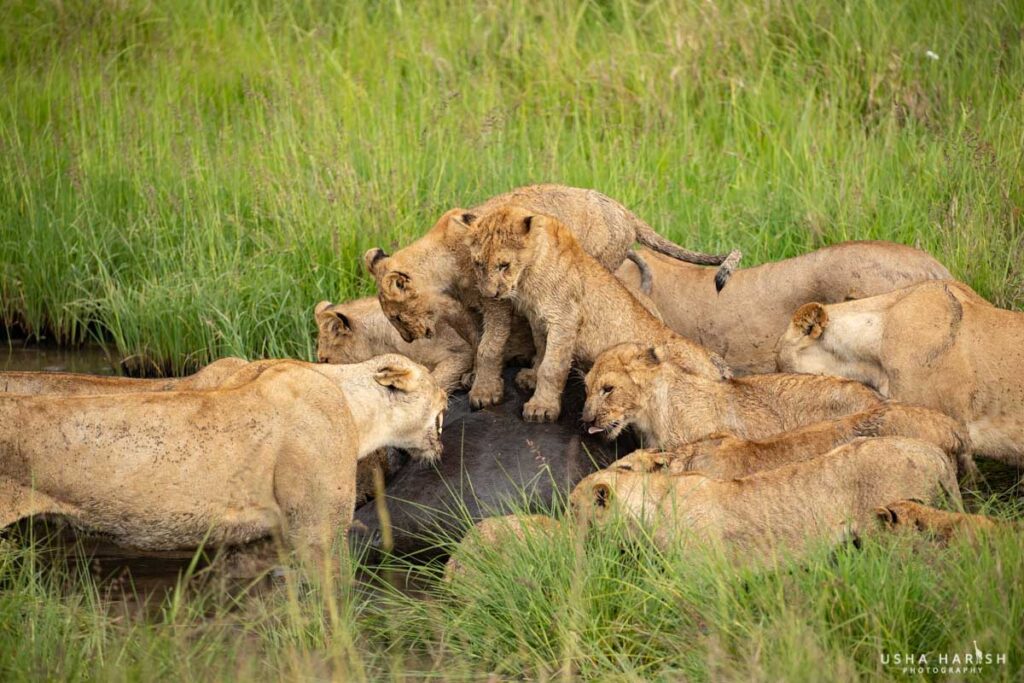
Lions are the subject most photographers come to the Mara specifically to shoot. And rightly so, a well-composed lion portrait, taken in the right light with a clean background, is one of the strongest wildlife images a photographer can come home with, and often the defining shot of an African wildlife photography safari.
But lions are also the subject that most guests approach wrong.
How to find them
Lions in the Mara spend roughly twenty hours of every day resting. They’re visible, pride members sprawled under acacia trees, cubs climbing on sleeping adults, dominant males scanning territory from raised ground. The challenge isn’t finding them. It’s finding them at a moment worth photographing.
Your guide will start tracking from the previous evening’s sightings and fresh morning reports from other vehicles. At Mara Siligi Camp, our guides communicate through a local network that updates in real time, meaning if there’s a pride on the move at dawn, your vehicle positions ahead of the movement rather than following behind it.
When to shoot
Golden hour, the 45 minutes after sunrise and before sunset, is when lions are most photogenic and most active. The light is warm, directional, and flattering. In midday light, lions flatten into the shade and the harsh overhead sun creates unflattering shadows on their faces.
Get out early. At Mara Siligi Camp, our drives leave at first light, earlier than most standard game drives, specifically because that window matters more than any other for predator shots.
How to position yourself
- Shoot from vehicle level wherever possible, a low angle puts you eye-to-eye with the lion and blurs the foreground grass into a clean frame
- Wait for the glance. A lion looking directly at your lens, even for a single second, produces a completely different image from one looking away
- Watch the cubs. Cub interaction, play, feeding, climbing on adults, produces some of the most emotionally resonant wildlife images in the entire ecosystem
- If a lion is approaching your vehicle, stay still and let the guide manage distance. Don’t rush the shot. The best frames often come in the final few seconds before a lion passes
Camera settings starting point
- Shutter speed: 1/800s minimum for any head movement; 1/1600s if the pride is active
- Aperture: f/5.6–f/8 for pride shots to keep multiple animals in focus; f/4 or wider for single portraits
- ISO: push it, a sharp image at ISO 3200 is better than a blurred one at ISO 800
Cheetahs — Speed, Light, and the Art of Anticipation
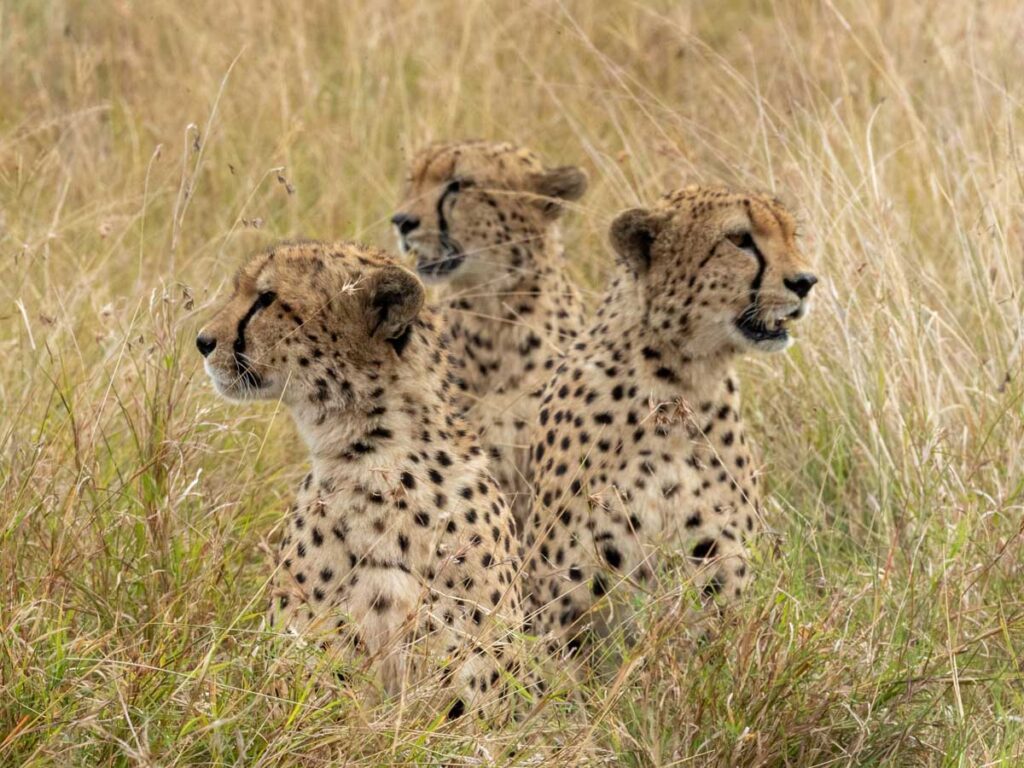
If lions are the Mara’s most patient subject, cheetahs are the most demanding. A cheetah hunt unfolds in seconds. A well-timed burst sequence of a cheetah at full sprint is one of the most technically difficult, and most celebrated, wildlife images a photographer can capture.
The Mara’s Talek area, where Mara Siligi Camp sits, has consistently strong cheetah density. Our guides know the primary territories and the individuals, meaning you’re not scanning empty plains hoping to get lucky. You’re being positioned based on known behavioural patterns.
How to find them
Cheetahs hunt in the early morning and late afternoon, the same windows when the light is best. They use elevated ground to scan for prey: termite mounds, raised kopjes, the roofs of vehicles parked near well-used circuits. If your guide spots a cheetah scanning from height, that’s pre-hunt behaviour. Position downwind and wait.
Reading the hunt
A cheetah about to hunt lowers its posture, flattens its ears slightly, and locks its gaze on a single prey animal. At this point, your guide will stop the vehicle and cut the engine. You have somewhere between thirty seconds and three minutes before the chase begins, or doesn’t.
Use that time to:
- Set your focus to continuous tracking
- Confirm your shutter speed is at least 1/2000s, ideally 1/3200s
- Frame wide enough to give the cheetah space to run into the frame
- Take a test shot on the stationary animal to confirm exposure
During the chase
Track with your longest focal length and let the autofocus do its job. Don’t stop shooting between acceleration bursts, the peak moment is often three to four seconds into the chase when the cheetah is fully extended at top speed. The dust, the motion blur on the grass, and the frozen split-second of full stride are what make these images extraordinary.
After the hunt
Whether or not the cheetah makes a kill, stay with the animal. A cheetah recovering from a successful hunt, panting, surveying its surroundings, calling for its cubs, gives you portrait time in natural behaviour that many photographers miss because they’ve moved on to find the next sighting.
The best Masai Mara photography tour packages give you the flexibility to stay with a single sighting for as long as it’s productive, no fixed timetable pulling you away at the wrong moment. At Mara Siligi Camp, that flexibility is built into every drive, making every photography safari in Africa more rewarding and productive.
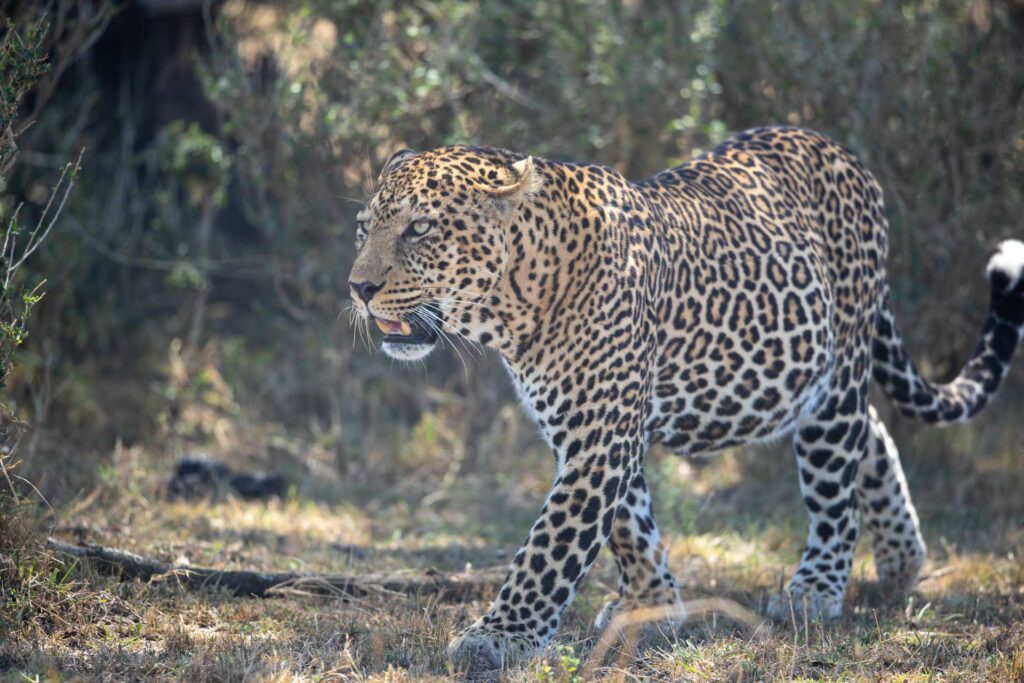
Leopards — The Most Elusive Shot in the Ecosystem
A leopard in the Masai Mara is never guaranteed. That’s precisely what makes it the most coveted subject on any Masai Mara photography tour, and one of the defining experiences of a Masai Mara photography safari.
Leopards are solitary, largely nocturnal, and master camouflage artists. Finding one in usable light, not half-hidden in a fig tree at 200 metres, requires the kind of localised knowledge that takes years to develop. Our guides at Mara Siligi Camp have that knowledge. They know which trees the resident leopards use, which territories overlap with the main game circuits, and what time of day gives you the best chance of a clear sighting.
How to find them
- Listen for alarm calls from baboons and impalas, they’re the first to spot a leopard and will signal loudly
- Watch vultures gathering in or above a specific tree, a leopard may have a kill cached in the branches
- Check fig trees and sausage trees along river courses at dawn and dusk, these are favoured resting spots
- Your guide’s network is your biggest advantage, real-time sighting reports from other vehicles working the same circuits
Shooting in difficult conditions
Leopard sightings are often in dappled light under tree cover, the most challenging conditions for wildlife photography. What works:
- Switch to spot metering and expose for the animal’s face rather than the average of the scene
- Use your widest aperture to separate the subject from the background branches
- Increase ISO aggressively, a sharp f/4 shot at ISO 6400 is far more valuable than a blurred attempt at ISO 1600
- Be patient with focus. Let the camera lock before shooting rather than spraying frames hoping one lands
If you find a leopard with a kill in a tree, position for the angle that shows the kill and the animal together. That context is what elevates a leopard image from a portrait to a story.
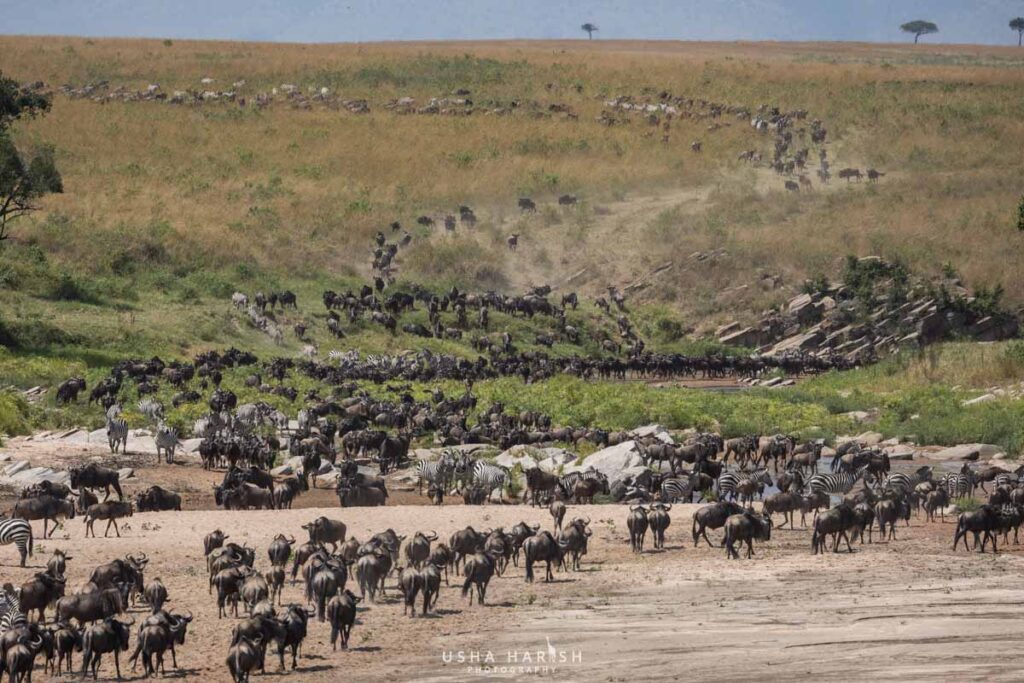
The Great Migration and River Crossings — Drama at Scale
Between July and October, the Great Wildebeest Migration brings over a million animals through the Masai Mara ecosystem, and the Mara River crossings are the single most dramatic wildlife spectacle on earth to photograph.
Nothing else comes close. Thousands of wildebeest and zebras packed at the riverbank, the moment of decision, the chaos of the crossing, crocodiles, the far bank scramble, it’s forty-five minutes of pure photographic intensity.
Getting it right requires strategy, not just presence.
Position first, not last
River crossings attract many vehicles. The photographers who get the best images arrive early, before the herd reaches the bank, and choose their position deliberately. A low angle close to the water gives you the chaos of the crossing at eye level. A higher position gives you scale, the full scope of the herd stretching back across the plain. Decide which story you’re telling before you get there.
At Mara Siligi Camp, our position near Mpuaai Gate means we reach the main crossing points significantly faster than camps based further from the reserve, often before the large lodge convoys have assembled. That head start is not trivial. It’s the difference between choosing your position and taking whatever’s left.
Settings for river crossings
- Shutter speed: 1/2000s minimum, you’re shooting movement in every direction simultaneously
- Aperture: f/6.3–f/8 to keep depth of field across a wide scene
- Continuous burst: use it and use it hard, crossings last minutes, not hours, and the peak of chaos passes fast
- Frame wider than you think you need, you can crop, but you can’t recover cut-off animals at the edges
Beyond the crossing
Migration season offers more than just river shots. Wildebeest calving in the plains, predator activity at its most intense (lions and cheetahs following the herds), and the aerial scale of the migration visible from a hot air balloon above the Mara are all experiences our Masai Mara photography tour packages can incorporate, making it a truly unforgettable Masai Mara wildlife photography tour. Enquire about balloon photography add-ons when you book; they pair naturally with a migration-season itinerary.
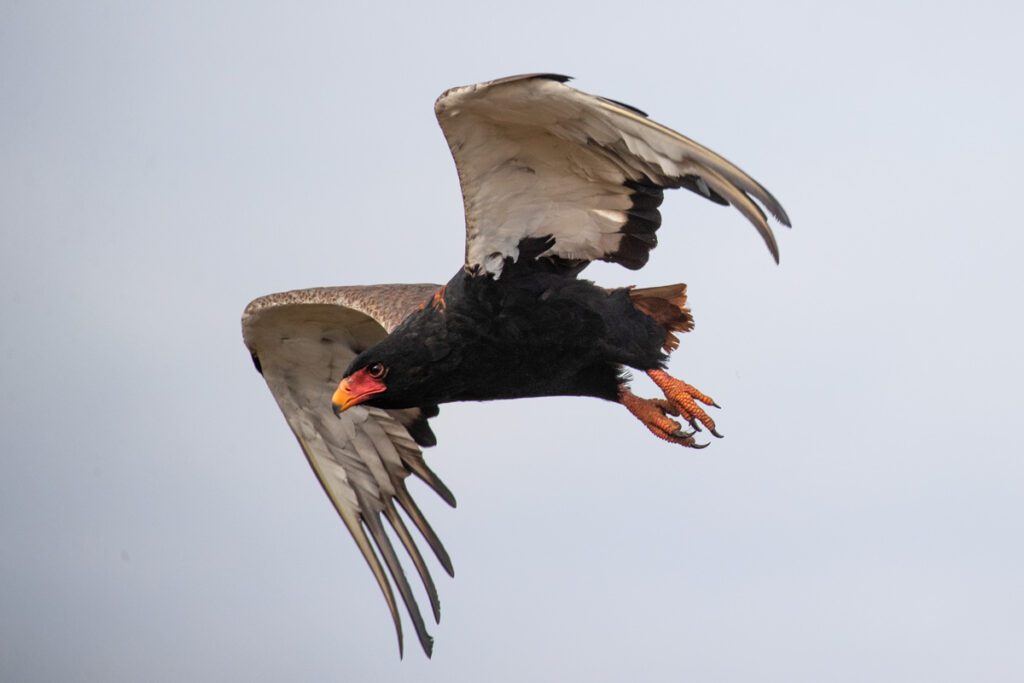
Birds, Elephants & the Subjects Most Photographers Underestimate
Most photographers arrive in the Mara fixated on the big cats. Many leave wishing they’d paid more attention to two other subjects that consistently produce exceptional images: birds and elephants.
Birds — 400+ species and almost no competition for the shot
The Masai Mara ecosystem holds over 400 recorded bird species. Lilac-breasted rollers, one of Africa’s most visually spectacular birds, perch on low branches along the main circuits and tolerate vehicles at close range. Secretary birds stride through open grass in the early morning. Martial eagles, African fish eagles, and bataleur eagles provide dramatic flight shots. Oxpeckers work the backs of buffalo and giraffe at close proximity.
Most vehicles drive past all of this in pursuit of big cats. On a dedicated photography-focused drive with us, your guide knows when to stop for the bird on the branch and when to keep moving for the predator sighting. You get both, not just one.
What works for bird photography in the Mara:
- A focal length of at least 400mm for perching birds; 500–600mm for flight
- Shutter speeds of 1/2500s or faster for any bird in motion
- Morning light is your friend, birds are most active and the light most flattering in the first two hours after sunrise
- Position the vehicle so the bird is between you and the light source, backlit bird images rarely work
Elephants — herd dynamics and quiet drama
Elephant photography in the Mara is consistently undervalued. The interactions within a herd, matriarch behaviour, juveniles playing in mud, young bulls practising dominance displays, family members touching trunks in greeting, produce images that carry enormous emotional weight.
Elephants also allow much closer approach than many guests expect, particularly in the Mara. Vehicles can sit within fifteen to twenty metres of a relaxed herd without disturbance. At that distance, with a 400mm lens, a single elephant eye fills the frame.
For elephant portraits:
- Get low in the vehicle to shoot upward at the animal, this gives you sky as background rather than vehicles or other elephants
- Shoot into the herd rather than at the edges, the layering of multiple animals at different distances creates depth that a single isolated animal doesn’t
- Wait for the touching moments, trunks on backs, calves between legs, juveniles running to keep up. These tell the story of the herd in a single frame
Whether you’re spending your entire trip on big cats or building a portfolio that covers the full range of the Mara’s wildlife, the principles are the same: know your subject, arrive with a strategy, stay patient, and let your guide put you in the right position.
That’s exactly what we do at Mara Siligi Camp on every drive, with every photographer, at every level of experience.
Our Masai Mara photography tour is led by Usha Harish, co-founder of the camp and a wildlife photographer who has spent years working this ecosystem. She understands not just where the animals are, but how to photograph them in a way that makes the image speak, making every wildlife photography safari Kenya experience more rewarding for photographers of all skill levels.
Why Mara Siligi Camp Is the Right Base for Your Photography Safari
Where you stay shapes everything about your photography — and not just because of the tent.
At Mara Siligi Camp, we sit at the foothills of Oldonyo Loip Hill, 10 minutes from Mpuaai Gate and 15 minutes from Talek Gate. That proximity means you’re inside the game loops before the light changes — no long morning transfers burning your golden hour before you’ve fired a single frame.
Here’s what makes us the right base for photographers specifically:
- Photography lounge — review, cull, and edit your shots every afternoon in a dedicated space. Compare frames with other guests, plan the next morning’s positioning with your guide, and back up your cards properly before the next drive.
- Charging points in every tent — batteries, laptops, hard drives. We know how much power a photographer burns through in a day. You won’t run out.
- Small camp, small groups — 10 tents maximum. Your vehicle carries a handful of photographers, not a full coach. Everyone gets a clean shooting angle. No one is blocked by another lens.
- Drives timed for light, not convenience — we leave at first light and stay out through the golden evening window. The schedule is built around the Mara’s light, not a fixed resort timetable.
- Usha Harish, your host and guide — co-founder of Mara Siligi and a working wildlife photographer. She doesn’t just know where the animals are. She knows the shot.
Whether you book one of our dedicated Masai Mara photography tour packages or join us for a shorter stay with photography-focused drives, your base at Mara Siligi Camp gives you every logistical and creative advantage the Mara can offer, creating an unforgettable Kenya wildlife photography safari for photographers of every experience level.
If you’re ready to plan your trip, whether you want a full six-day dedicated photo package or a shorter stay with photography-focused drives, get in touch and we’ll build it around your subjects, your schedule, and your goals.
FAQs
The Masai Mara offers a wide range of iconic subjects including lions, cheetahs, leopards, elephants, birds, and the Great Wildebeest Migration. Each subject behaves differently, so the best images come from understanding timing, light, and animal behaviour rather than just finding the animals.
Early morning and late afternoon are the best times for photography in the Mara. The golden light during these hours enhances animal portraits and reduces harsh shadows. These periods also coincide with peak predator activity, increasing your chances of capturing action shots.
No, advanced skills are not required. While professional photographers can take full advantage of settings and techniques, beginners can also capture excellent images with guidance. Understanding basic composition, patience, and working with an experienced guide can significantly improve your results.