Masai Mara Great Migration Photography Guide
If you’ve ever dreamed of witnessing thousands of wildebeest thundering across the Mara River while crocodiles wait below, you already know why the Great Migration is one of the most powerful wildlife events on earth. This is exactly why many travellers plan a Masai mara photography tour to experience and capture this once-in-a-lifetime spectacle in its most dramatic form.
But capturing it well, especially those intense river crossings, is not just about being there. It’s about being in the right place, at the right time, with the right approach.
At Mara Siligi Camp, we host travellers and photographers who come specifically for this experience. And we’ve seen one truth again and again: great migration photography is not luck, it’s preparation, positioning, and patience.
Table of Contents
- What Makes Great Migration River Crossings So Special
- When and Where to Photograph River Crossings in Masai Mara
- How to Prepare for a Masai Mara Photography Tour
- Best Camera Settings for Wildlife Action Shots
- How You Should Position Yourself for River Crossing Shots
- Mistakes You Should Avoid During Migration Photography
- Why Staying Near Talek Improves Your Photography Chances
- How Mara Siligi Camp Supports Your Photography Journey
What Makes Great Migration River Crossings So Special
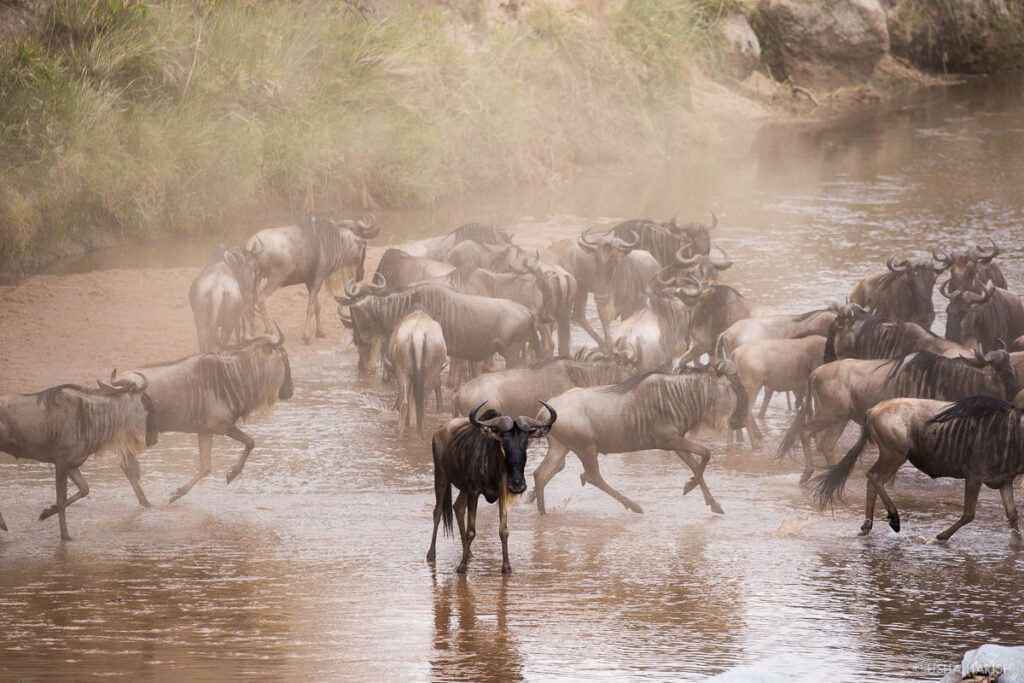
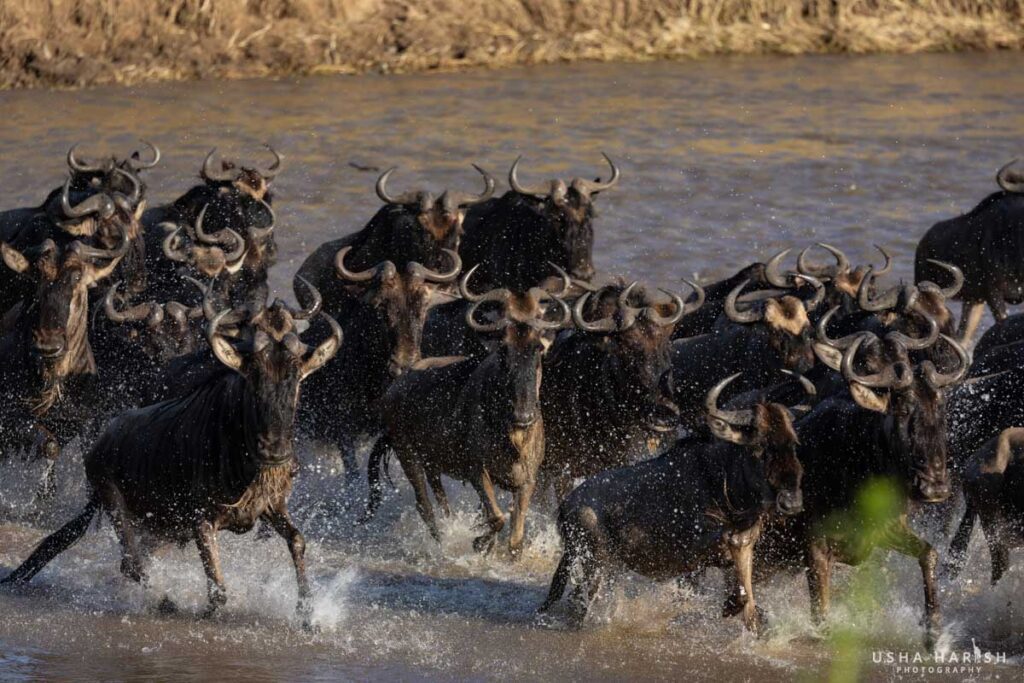
River crossings are the most intense and unpredictable part of the migration. You don’t just see wildlife, you witness survival in real time, unfolding right in front of you.
During a crossing, you may experience:
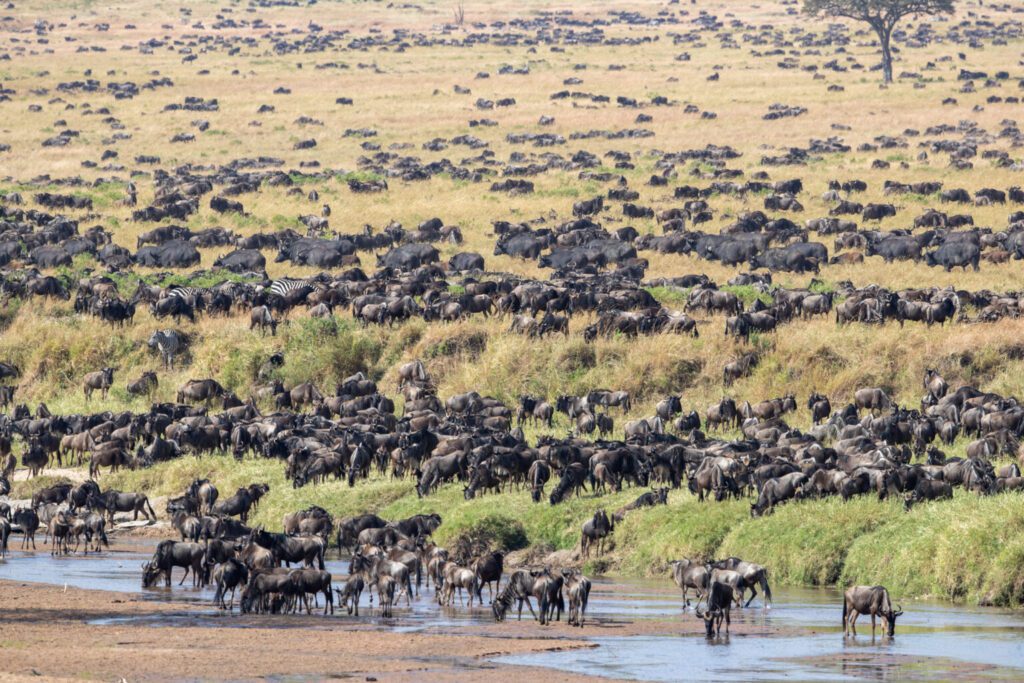
- Thousands of wildebeest gathering at riverbanks, building tension before the first move
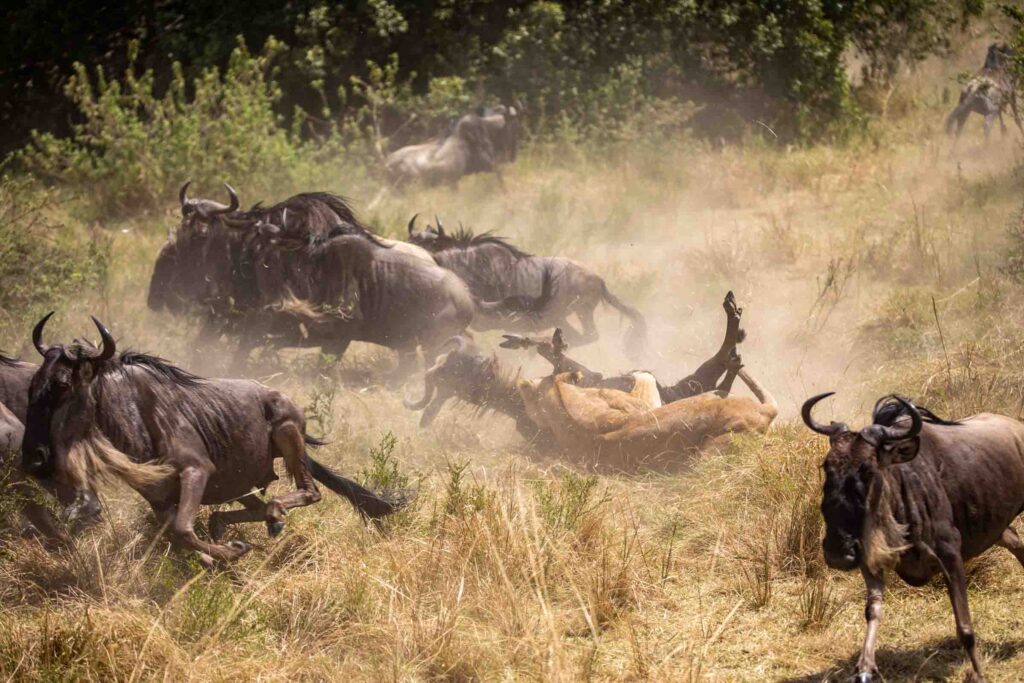
- Sudden movement triggered by herd instinct, where everything changes in seconds
- Crocodiles lying in wait beneath muddy waters, completely still until the moment strikes
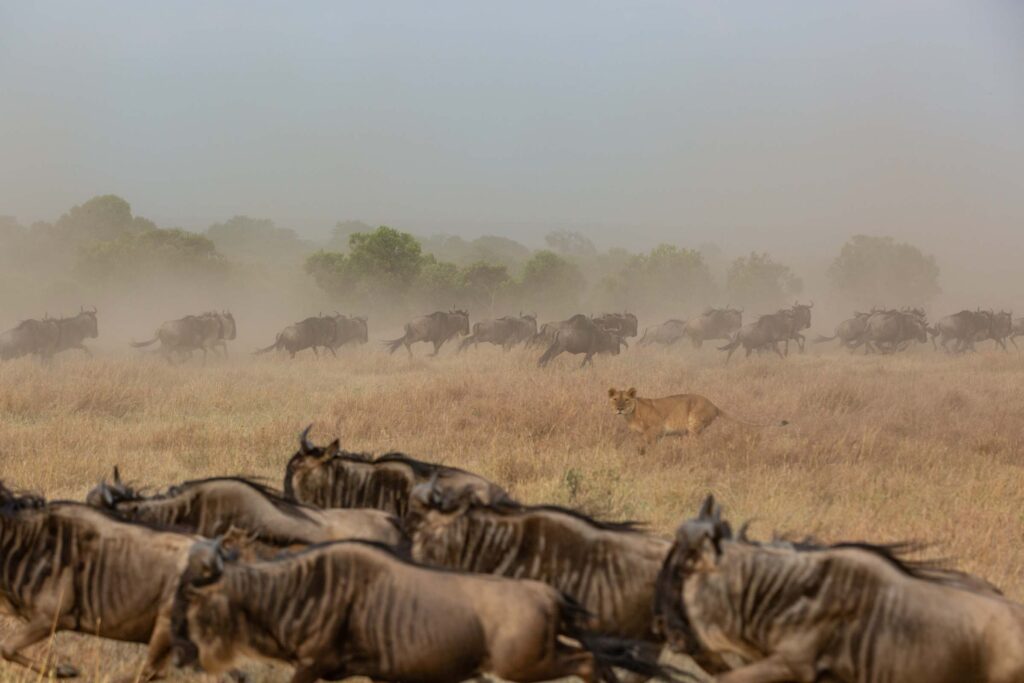
- Dust, chaos, movement, and silence often all at once, creating dramatic natural storytelling
This is exactly why a Masai mara photography tour package experience is considered one of the most sought-after wildlife journeys in the world. It gives you structured access to these unpredictable moments while keeping you close to high-activity zones.
Every second changes the frame completely. One moment the river is still, and the next it becomes pure motion, instinct, and survival.
You’re not just clicking photos, you’re documenting raw nature in motion, where every frame tells a different part of the story. That’s what makes this experience so powerful for anyone planning a serious Masai mara photography tour focused on the Great Migration.
When and Where to Photograph River Crossings in Masai Mara
Timing is everything when it comes to capturing river crossings. The Great Migration usually reaches the Masai Mara between July and October, but the exact moment of a crossing is never guaranteed; it follows nature, not a timetable.
That’s exactly why a well-planned Masai mara photography tour is less about rigid schedules and more about being in the right zones at the right time.
Key points you should know:
- Crossings often happen near the Mara River in northern and central regions, where herds naturally gather before attempting to cross
- Early mornings and late afternoons are the most active periods, especially when light is also ideal for photography
- Weather conditions influence herd movement heavily rain, river levels, and grazing patterns all play a role
- Patience at crossing points is essential sometimes hours of waiting lead to just seconds of intense action
If you are planning Masai mara photography tour packages, always choose experiences that allow flexibility in movement and timing. Fixed itineraries can reduce your chances of being present when a crossing actually happens.
At Mara Siligi Camp, we help you stay closer to high-probability movement zones around the Mara ecosystem so you spend less time traveling and more time actually waiting where the action is likely to unfold.
How to Prepare for a Masai Mara Photography Tour
Preparation can make or break your safari photography experience. You don’t need the most expensive gear but you do need the right setup, the right expectations, and the right mindset to truly capture the wild.
When you’re planning a Masai mara photography tour, think of it less like a normal trip and more like a field experience where timing, patience, and readiness matter more than anything else.
Before your trip, make sure you have:
- A DSLR or mirrorless camera with fast autofocus to track unpredictable wildlife movement
- A zoom lens (200mm–600mm ideal for wildlife distance) so you can capture action even from afar
- Extra batteries and memory cards because long waits and sudden action both demand readiness
- Dust protection gear for equipment since safari conditions can be dry and challenging for gear
- Lightweight clothing in neutral colors to stay comfortable and blend into the natural surroundings
But beyond gear, your mindset matters even more than your equipment.
To truly succeed in a Masai mara photography tour packages experience, you need to approach it differently:
- You need patience over instant results, because the most powerful moments often take time to unfold
- You need flexibility for long waiting periods where nothing seems to happen—until everything suddenly does
- You need readiness for sudden movement, because river crossings and predator action can start without warning
We always remind our guests that great photography in the Mara is not about chasing moments it’s about allowing them to happen in front of you.
A successful Masai mara photography tour is built on anticipation, not urgency.
Best Camera Settings for Wildlife Action Shots
River crossings happen fast, unpredictable, and often without warning. That’s why your camera settings should never be something you adjust in the moment—the real preparation happens before the action begins.
When you’re on a Masai mara photography tour, your ability to react quickly is what helps you capture those once-in-a-lifetime frames.
You should generally use:
- Fast shutter speed (1/1000 or higher) to freeze movement during intense river action
- Continuous autofocus (AI Servo / AF-C mode) to track animals as they move across uneven terrain
- Burst mode to capture multiple frames in a single second, increasing your chance of getting the perfect shot
- Mid-range aperture (around f/5.6 to f/8) for balanced sharpness across moving subjects
These settings give you control, but they don’t guarantee results on their own.
While technical setup helps, what truly makes the difference is anticipation. You should already be focused on the herd’s behavior before the crossing starts—watching movement patterns, direction shifts, and pressure building at the riverbank.
In most Masai mara photography tour packages, the best photographers are not the ones constantly adjusting settings—they are the ones who are already ready when the moment breaks.
How You Should Position Yourself for River Crossing Shots
Positioning is often the difference between an average photo and a truly powerful wildlife frame. On a Masai mara photography tour, your camera settings matter—but your position matters even more.
River crossings are not random chaos. They build up slowly, and if you read the situation correctly, you can place yourself exactly where the action will unfold.
When you are at a crossing point, keep in mind:
- Stay close to the likely entry or exit points of the herd where movement pressure builds first
- Avoid blocking other photographers or vehicles so you don’t lose visibility or disrupt the scene
- Maintain a stable seating position for long waiting periods, since crossings can take time to happen
- Keep your camera ready at all times, not packed away when tension starts building near the riverbank
- Observe animal behavior before sudden movement—gathering, hesitation, and shifting direction are key signals
The most important skill here is anticipation. You should always think ahead—where the herd is looking, gathering, or hesitating is often where they are most likely to move next.
In many Masai mara photography tour packages, the photographers who get the strongest shots are not the ones who rush around but the ones who stay still, observe deeply, and position themselves early.
Our guides help you read these patterns in real time so you’re not guessing you’re positioning strategically with experience-backed insight.
Mistakes You Should Avoid During Migration Photography
Even experienced travellers can miss powerful river crossing moments simply because of small, avoidable mistakes. On a Masai mara photography tour, success is not just about skill—it’s about discipline, patience, and reading the situation correctly.
Here are the most common mistakes you should avoid:
- Constantly changing locations instead of waiting patiently at a promising crossing point
- Using incorrect zoom levels when action starts, leading to missed framing or unstable shots
- Ignoring light direction during early morning or sunset, which can reduce image quality significantly
- Getting distracted during “quiet” waiting periods when the most important build-up is actually happening
- Moving too early before the herd fully commits to crossing, which often means missing the entire event
The biggest mistake? Leaving too soon.
Many of the most dramatic crossings during a Masai mara photography tour packages experience happen after long periods of complete silence. Nothing seems to move—until suddenly everything does.
At Mara Siligi Camp, we always remind our guests that patience is part of the craft. The longer you stay observant and steady, the higher your chances of capturing something truly extraordinary.
Why Staying Near Talek Improves Your Photography Chances
Location plays a huge role in wildlife photography success especially when your focus is capturing fast-moving events like river crossings. On a Masai mara photography tour, even a short delay in reaching the right spot can mean missing the moment entirely.
That’s why staying near Talek gives you a real advantage.
When you stay close to this region, you get:
- Faster access to key river crossing zones where migration movement is most active
- Reduced travel time during peak wildlife hours, so you spend more time photographing and less time driving
- Ability to respond quickly to movement alerts from guides tracking herd direction in real time
- More time on the ground instead of on the road, which directly increases your chances of capturing action
In wildlife photography, timing is everything but proximity decides how well you can act on that timing.
This is exactly why many travellers specifically choose a safari camp in masai mara near Talek when planning photography-focused trips. Being closer to the action means you’re already positioned when the herd begins to move, instead of arriving after the moment has passed.
When you’re closer to the movement zones, you don’t miss the moment waiting in transit—you’re already there when it unfolds.
How Mara Siligi Camp Supports Your Photography Journey
At Mara Siligi Camp, we understand that photography safaris are very different from regular safaris. You are not just travelling for sightseeing—you are waiting for hours, observing patterns, tracking movement, and staying ready for rare, split-second moments that cannot be repeated.
That’s why we don’t treat your journey like a standard stay. We actively support how you experience the wild from the moment you arrive.
We support your photography journey by:
- Positioning you closer to key migration movement routes so you spend less time driving and more time shooting
- Helping you plan flexible game drive timings based on light, wildlife movement, and your photography priorities
- Guiding you with experienced safari drivers who understand wildlife behavior and photography requirements, not just routes
- Ensuring you don’t rush through key wildlife moments, giving you the time needed to wait for the right frame
- Offering a calm, comfortable base where you can rest properly between long shooting sessions and early departures
We also understand the physical and mental rhythm of a Masai mara photography tour early mornings, long waits, sudden action, and late returns. So everything we do is designed to support that cycle, not disrupt it.
When you stay with us, your focus stays exactly where it should be—on photography, not logistics, coordination, or uncertainty.
And that’s what truly makes your experience smoother, more focused, and far more rewarding in the Mara.
Final Thoughts
Capturing river crossings is not about chasing wildlife, it’s about understanding it. The more you observe, wait, and respect the rhythm of the Mara, the more powerful and authentic your images become.
On a Masai mara photography tour, the real transformation happens when you stop rushing from moment to moment and start learning how nature actually moves. That’s when you begin to anticipate action instead of reacting to it.
At Mara Siligi Camp, we make sure your experience is structured around real wildlife movement, not rigid schedules. We align your days with nature’s flow morning light, herd behavior, and migration patterns so you are always closer to meaningful action.
Whether you are a beginner picking up your first wildlife shots or an experienced photographer refining your craft, we help you stay in the right place at the right time with calm, guided support throughout your journey.
If you’re planning a Masai mara photography tour packages, remember this simple truth: the best shots don’t come from rushing, they come from being prepared, positioned, and fully present when nature decides to unfold.
FAQs
The best time is typically between July and October, when the Great Migration reaches the Masai Mara. Crossings are unpredictable, but early mornings and late afternoons offer the best chances due to higher animal activity and ideal lighting.
Use a fast shutter speed (1/1000 or higher) to freeze motion, continuous autofocus (AF-C/AI Servo) to track movement, burst mode for multiple frames, and a mid-range aperture (f/5.6 to f/8) for sharp results.
Staying close to key areas like Talek reduces travel time and increases your chances of witnessing crossings. Being near active wildlife zones helps you position early and capture moments without missing the action.